
Trees
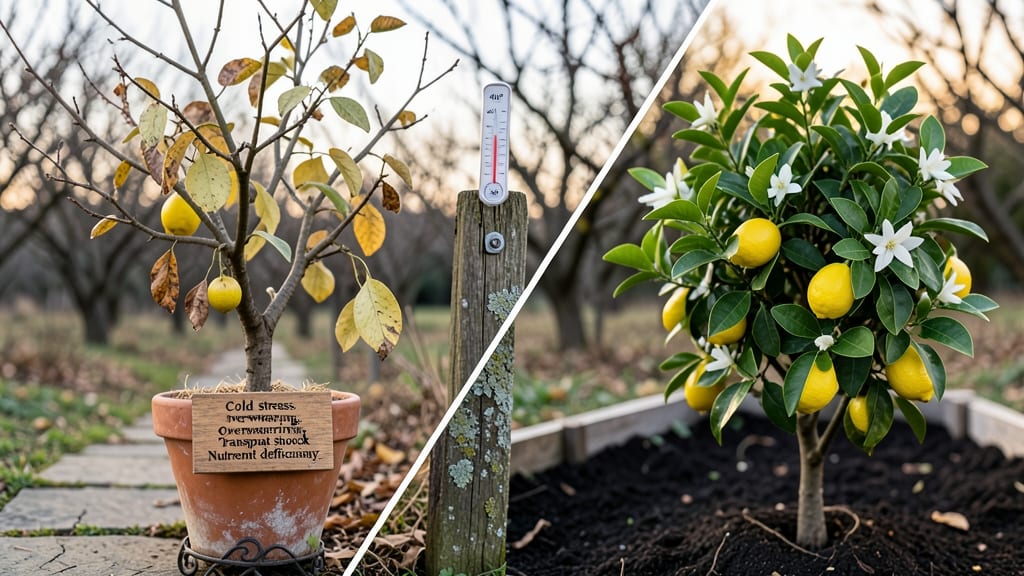
Seeing your lemon tree losing leaves in winter isn’t a death sentence—it’s a wake-up call for better care. 🌿 I’ve nursed back three lemon trees from bare branches to vibrant growth, and the fix starts with understanding why it’s happening: cold stress, overwatering, or pests.
The good news? With a few adjustments, you’ll see fresh green leaves by spring.
First, cut back on watering—lemon trees need less in winter. Mulch around the base to insulate roots, and move potted trees indoors if temperatures dip below 40°F. A sheer curtain by a sunny window gives them the light they crave without scorching.
Pests like spider mites love dry air, so a quick spray with water can keep them at bay.
📚 In This Guide
- What you need
- Instructions
- Tips and common mistakes
- Wrapping up and next steps
What you need
- ● Diagnostic Tools: Magnifying glass (for inspecting leaves up close)
- ● pH test kit (for soil acidity check)
- ● Moisture meter (to monitor soil hydration)
- ● Protective Supplies: Frost cloth or burlap (enough to wrap the tree’s canopy)
- ● Plastic tree guard or bubble wrap (for extra insulation)
- ● Stakes or clips (to secure protective coverings)
- ● Soil & Fertilizer: Well-draining potting mix (citrus-specific if possible)
- ● Slow-release citrus fertilizer (e.g., 6-6-6 NPK ratio)
- ● Organic mulch (e.g., straw or shredded bark, 2–3 inches thick)
- ● Watering & Maintenance: Watering can with a fine rose nozzle (for gentle hydration)
- ● Spray bottle (for misting leaves if humidity is low)
- ● Pruning shears (sterilized, sharp)
- ● Grow lights (LED, full-spectrum for indoor lemon trees)
- ● Humidifier or pebble tray (to boost air moisture)
- ● Epsom salt (for magnesium deficiency fixes)
- ● Citrus-specific fungicide (e.g., neem oil or copper spray)
- ● Thermometer (to track indoor/outdoor temps)
How to save a lemon tree dropping leaves in winter
Winter stress is the #1 reason lemon trees shed leaves—here’s how to reverse it before it’s too late.
☀️ Step 1: Adjust Light Exposure Immediately
Move your lemon tree within 3-4 feet of a south-facing window or supplement with a grow light for 12-14 hours daily. Lemon trees need bright, indirect light—direct winter sun through glass can scorch leaves while still causing stress. You’ll notice new growth within 2-3 weeks if light is the issue.
Check for these signs: Yellowing leaves with crispy edges mean too much harsh light, while leggy stems and pale leaves mean it’s not getting enough. Rotate the pot quarter-turn weekly so all sides get even exposure.
💧 Step 2: Water Only When Soil is Bone-Dry
Overwatering in winter is just as deadly as underwatering. Stick your finger 1-2 inches into the soil—if it feels dry, water deeply until it drains from the bottom. Lemon trees in winter need less water because cooler temps slow evaporation. Let the top 3-4 inches of soil dry out completely between waterings.
Use room-temperature water (cold water shocks roots) and avoid letting the pot sit in saucers of water. Yellow leaves with soft, mushy stems? That’s root rot from overwatering. Brown, crispy leaves? Too little water. Adjust until you see firm stems and glossy new growth.
⏰ Step 3: Mimic Natural Winter Dormancy
Drop daytime temperatures to 55-65°F and nighttime to 50-55°F—this mimics lemon trees’ natural winter slowdown. If your home stays above 70°F, move the tree to a cooler room or basement (but never below 45°F). You’ll see slower leaf drop and healthier regrowth in spring.
Reduce fertilizer completely until spring. Winter feeding stresses the tree. Instead, mist leaves lightly 2-3 times weekly to combat dry indoor air. Watch for new buds forming—that’s your sign the tree is recovering.
🌿 Step 4: Prune Strategically to Encourage Regrowth
Once new growth appears, prune only dead or yellowed leaves with clean, sharp scissors. Avoid heavy pruning—lemons need all their energy for survival. Cut 1/4 inch above a leaf node to encourage branching. Never prune more than 20% of the foliage at once.
Dip pruned cuts in cinnamon powder (natural antifungal) to prevent disease. If you see small green buds at leaf joints, your tree is recovering. These will grow into new leaves—just give them time.
✂️ Step 5: Protect Against Pests and Drafts
Inspect leaves for scale insects or spider mites (common winter stressors). Wipe leaves with a neem oil solution (1 tsp neem oil + 1 quart water) if you spot sticky residue or tiny webs. Keep the tree away from cold drafts, vents, or heaters—temperature swings cause leaf drop.
Group lemon trees together if possible—they release humectant compounds that help each other retain moisture. Within 6-8 weeks, you should see new leaf flushes and fewer dropped leaves. If not, revisit light and water first—they’re usually the culprits.
Tips & tricks for reviving a lemon tree in winter
Here's what nobody tells you about saving your lemon tree from winter stress—these small tweaks make all the difference.
Lighting Strategy: If you're supplementing with a grow light, position it 6-12 inches above the tree for the 12-14 hour daily requirement. I use a simple LED bulb on a timer—it's energy efficient and mimics natural daylight. The key is consistency; sudden light changes cause more stress than the original problem. For south-facing windows, use sheer curtains to diffuse harsh afternoon sun that can scorch leaves through glass.
Watering Wisdom: The 1-2 inch soil check is your best friend, but here's the secret: use a moisture meter for accuracy. I've ruined trees by guessing—especially in winter when soil stays cooler and dries slower. Water until it drains completely from the bottom, then wait until that top 3-4 inches is truly dry. If your pot lacks drainage holes, create some with a drill—root rot from waterlogging is silent but deadly.
Temperature Transition: Moving your tree to cooler temps is crucial, but don't just shove it in a cold room. Create a gradual transition by placing it near (not directly in) a cooler area for 3-4 days before the full move. Watch for leaf drop during this adjustment—it's normal as the tree adapts to its new environment. If your home stays above 70°F, consider a basement with a small window for natural light exposure.
Pruning Precision: When you see those small green buds at leaf joints, that's your signal to be patient. Wait until they've grown 1/2 inch before pruning anything. I've made the mistake of pruning too early—only to have the buds drop off. Use sterilized scissors (wipe with rubbing alcohol) and make clean cuts at that 1/4 inch above the node for best results. The cinnamon powder tip works wonders for preventing fungal issues during this vulnerable phase.
Pro Tips for Lemon Tree Losing Leaves In Winter
- Here's what nobody tells you about saving your lemon tree from winter stress—these small tweaks make all the difference.
- Lighting Strategy: If you're supplementing with a grow light, position it 6-12 inches above the tree for the 12-14 hour daily requirement.
- Watering Wisdom: The 1-2 inch soil check is your best friend, but here's the secret: use a moisture meter for accuracy.
Frequently asked questions
Got questions about your lemon tree’s winter leaf drop? You’re not alone! Here are answers to the most common concerns—plus quick fixes to keep your tree thriving.
Is it normal for lemon trees to lose leaves in winter?
Yes! Lemon trees (Citrus × limon) are evergreen, but they may drop some leaves in cold weather (below 40°F/4°C) as a survival tactic. If only a few leaves fall and new growth appears in spring, it’s likely natural. Watch for excessive shedding—that could signal stress or disease.
How cold is too cold for a lemon tree?
Most lemon trees thrive in USDA Zones 9-11 and struggle below 28°F (-2°C). If temps dip near freezing, protect your tree with frost cloth, mulch, or move potted trees indoors. Young trees or tender varieties (like Meyer lemons) need extra care in colder climates.
Why is my lemon tree dropping leaves suddenly in winter?
Sudden leaf drop could mean root rot, overwatering, or pest damage. Check for:
- Mushy roots (overwatering)
- Yellowing leaves (nutrient deficiency)
- Sticky residue (scale or spider mites)
Can I prune my lemon tree in winter?
Light pruning is safe in late winter (Feb–March) to shape the tree and remove dead/diseased branches. Avoid heavy pruning—it stresses the tree. Sterilize tools with rubbing alcohol to prevent bacterial spread. Focus on outward-facing branches for airflow.
What’s the best way to revive a lemon tree after winter damage?
Revive your tree with these steps:
- Repot if roots are crowded or soil is waterlogged.
- Water deeply but let soil dry slightly between waterings.
- Move to bright, indirect light (south-facing window or grow lights).
- Fertilize lightly in spring with citrus-specific food (low nitrogen).
Wrapping up and next steps
Don’t worry—your lemon tree losing leaves in winter is often just a natural part of its seasonal rhythm!
With the right care—like adjusting watering, protecting from cold drafts, and providing gentle light—you’ll help it bounce back stronger than ever. Stay patient and consistent, and soon you’ll be enjoying fresh lemons again!
Ready to take action? Start by checking your tree’s soil moisture this week and give it a little extra TLC. Your efforts will pay off in lush, vibrant growth come spring! 🌱✨