
Pests and Diseases
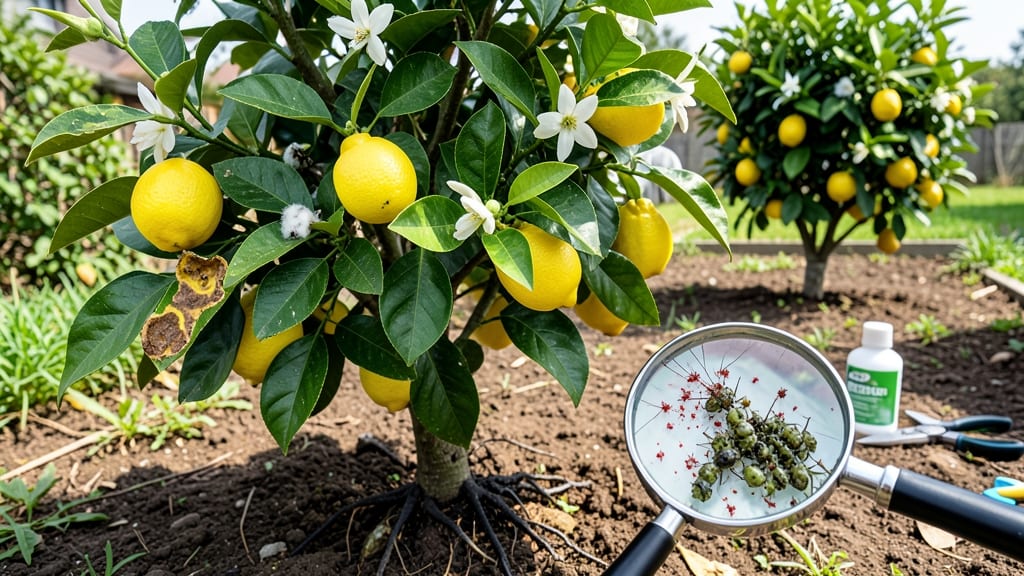
Your lemon tree’s yellowing leaves aren’t just a seasonal quirk—they’re often the first cry for help from a plant fighting diseases or pests. 🌿 I’ve watched citrus canker and root rot turn vibrant trees into sad shadows, but there’s hope: catching these issues early means saving your harvest (and your patience).
The real game-changer? Preventing problems before they start. A simple spray of neem oil every few weeks keeps aphids and leaf miners off your tree, while proper drainage stops root rot before it begins. Most gardeners overlook soil health—yet that’s where 80% of lemon tree struggles begin.
By the time you spot black spots on leaves or sticky residue on branches, it’s already a battle. But with the right organic treatments—like copper fungicide for canker or insecticidal soap for pests—you can turn things around in weeks.
Your tree will reward you with glossy leaves and sweet fruit again.
Whether you’re growing in a pot or in the ground, these strategies work for any lemon tree. The key is consistency: check leaves weekly, water at the base, and never ignore those first warning signs. Here’s how to keep your tree thriving all season.
Root Causes Behind Tree Struggles
Lemon trees, like any living plant, are susceptible to diseases and pest invasions—but these issues rarely appear out of thin air. Understanding the why behind these problems is the first step toward prevention and treatment.
Below, we break down the most common triggers, from environmental factors to biological invaders, and explain how they create the perfect storm for trouble.
Extreme or inconsistent environmental conditions weaken lemon trees, making them vulnerable to pests and pathogens. When stress builds up, the tree’s natural defenses drop, leaving it an easy target.
🔥 Heat and Drought
Lemon trees thrive in warm climates, but prolonged heatwaves or insufficient water can cause severe stress. When soil dries out, roots struggle to absorb nutrients, and the tree’s leaves wilt or develop brown edges—a signal that it’s fighting for survival.
Weakened trees are more susceptible to fungal infections like root rot or bacterial canker, as their immune response slows down.
🌧️ Overwatering and Poor Drainage
While drought stresses trees, excessive moisture is just as damaging. Lemon trees hate soggy roots, which can lead to Phytophthora (a water-mold fungus) or root rot. Poor drainage—often caused by compacted soil or improper planting—traps water at the roots, creating anaerobic conditions where harmful microbes thrive.
❄️ Temperature Swings and Cold Damage
Lemon trees are sensitive to sudden temperature drops, especially below 30°F (-1°C). Cold stress can cause bacterial leaf spot or citrus canker by damaging the protective waxy layer on leaves, allowing pathogens to enter.
Even in mild winters, chilly nights followed by warm days can shock the tree, weakening its resilience.
Pests and pathogens are opportunistic—they don’t just attack healthy trees. Instead, they exploit weaknesses caused by poor growing conditions or human errors. Here’s how they gain the upper hand.
🍄 Fungal Infections Spread Quickly
Fungi like Melanose (a common citrus disease) or Powdery Mildew thrive in humid, shaded conditions. Overhead watering or dense foliage traps moisture on leaves, creating the ideal breeding ground.
Once spores land on a stressed tree, they germinate and spread rapidly, causing black spots, leaf drop, or stunted growth.
🐜 Insects Target Weakened Trees
Pests such as aphids, citrus leaf miners, or scale insects don’t randomly attack lemon trees—they’re drawn to sap-rich, nutrient-deficient, or water-stressed plants. For example:
- Aphids cluster on new growth where sugars are concentrated.
- Scale insects latch onto bark cracks caused by drought or physical damage.
- Citrus psylla prefers young, tender leaves—often found on trees recovering from cold snaps.
A single infestation can quickly escalate if the tree is already struggling.
🦠 Bacterial and Viral Threats Hitchhike
Bacteria like Xanthomonas citri (citrus canker) and viruses such as Tristeza virus often enter through wounds or pruning cuts. They spread via contaminated tools, infected nursery stock, or even wind and rain.
Once inside, they multiply in trees that are nutrient-deficient or under stress, leading to blister-like lesions, dieback, or systemic decline.
Sometimes, the biggest culprits are gardening mistakes that create the perfect conditions for problems to flourish. Here’s how well-meaning actions backfire:
🪴 Overcrowded or Improper Planting
Lemon trees need 6–10 feet of space for proper airflow. When planted too closely, humidity builds up between leaves, promoting fungal diseases. Additionally, root competition weakens the tree, making it easier for pests to take hold.
💀 Neglected Pruning and Sanitation
Leaving dead branches, diseased leaves, or old fruit on the tree creates hiding spots for pests and pathogens. Pruning wounds that aren’t properly sealed with copper fungicide or pruning paint can also invite infections. Even reusing contaminated tools spreads bacteria and fungi from one tree to another.
🌿 Chemical Overuse or Imbalance
While fertilizers boost growth, over-fertilizing—especially with nitrogen—can burn roots and attract pests like spider mites. Conversely, under-fertilizing leads to weak, yellowing leaves that pests find irresistible. Even harsh pesticides can kill beneficial insects, disrupting the tree’s natural pest control balance.
By identifying these root causes, you can proactively adjust care routines to strengthen your lemon tree’s defenses. The key? Balance—watering wisely, pruning strategically, and monitoring for early signs of trouble before small issues become major crises.
Quick Fixes for Lemon Tree Troubles
When your lemon tree starts showing signs of distress, acting fast can mean the difference between a saved harvest and a lost one. Below, we’ve mapped out practical, organic solutionsno harsh chemicals required!—to tackle the most common lemon tree diseases and pests. Each fix is paired with prevention tips to keep your tree thriving long-term.
🔥 Powdery Mildew: The Fluffy White Threat
Fix: - Prune & Clean: Remove heavily infected leaves and branches with sterilized pruners (wipe with rubbing alcohol between cuts).
Dispose of debris in a sealed trash bag. - Neem Oil Spray: Mix 1 tbsp neem oil + 1 tsp mild liquid soap + 1 quart water. Spray early morning or evening (avoid direct sunlight) until leaves are damp.
Repeat every 7–10 days until symptoms fade. - Improve Airflow: Thin out dense foliage to reduce humidity near the tree.
💡 Prevention Tip: Space trees 6–8 feet apart and water at the base (not overhead) to keep leaves dry.
🍳 Root Rot: The Silent Killer
Fix: - Stop Watering Immediately: Let the soil dry out completely for 3–5 days.
Check moisture by sticking your finger 2 inches into the soil—if it’s soggy, hold off. - Repot or Amend Soil: If the tree is in a container, repot into fresh, well-draining soil (add perlite or sand).
For in-ground trees, dig a trench around the root zone and fill with a mix of compost and coarse sand. - Fungicide Boost: Apply a copper fungicide (like copper sulfate) to the soil surface, following label instructions.
🌡️ Prevention Tip: Ensure pots have drainage holes and never let trees sit in saucers of water.
👨🍳 Citrus Canker: The Ulcer-Like Spots
Fix: - Scrape & Burn: Use a sharp knife to sterilize and remove canker lesions down to healthy wood.
Burn or trash infected branches (do not compost). - Baking Soda Spray: Mix 1 tbsp baking soda + 1 quart water + a few drops of soap. Spray weekly for 3–4 weeks. - Copper Fungicide: Apply a fixed copper fungicide (like Bordeaux mixture) every 2–3 weeks during wet seasons.
✨ Prevention Tip: Avoid overhead irrigation and sanitize pruning tools after each cut.
🥘 Aphids: The Sap-Sucking Menace Fix:
- Blast Them Off: Spray the tree with a strong stream of water to dislodge aphids (repeat daily for 3–4 days).
- Insecticidal Soap: Mix 2 tbsp castile soap + 1 quart water.
Spray directly on pests (test on a small leaf first). - Ladybugs & Lacewings: Release beneficial insects like ladybugs or lacewings to eat aphids naturally.
🎯 Prevention Tip: Encourage natural predators by planting marigolds or dill nearby.
🔪 Scale Insects: The Sticky Stowaways
Fix:
- Rub Them Off: Use a soft brush dipped in rubbing alcohol (70% or higher) to scrub off scale clusters.
- Horticultural Oil: Apply dormant oil (like neem oil) when temperatures are below 85°F. Reapply every 7–10 days.
- Prune Infested Branches: Cut and destroy heavily infested wood to stop the spread.
💡 Prevention Tip: Inspect new plants before bringing them home—scale insects often hitchhike on nursery stock.
⏰ Citrus Leafminers: The Tunnel Makers Fix:
- Yellow Sticky Traps: Hang yellow sticky cards near the tree to catch adult flies.
- Kaolin Clay: Dust leaves with food-grade kaolin clay to create a barrier that repels larvae.
- Handpick Larvae: Look for white, squiggly trails inside leaves.
Gently scrape them off and drop into soapy water.
🌡️ Prevention Tip: Apply beneficial nematodes (like Steinernema feltiae) to the soil to target larvae.
Beyond treating specific issues, these year-round habits will fortify your lemon tree against future problems:
- Water wisely: Deep water 1–2 times per week (more in extreme heat). Avoid wet foliage.
- Fertilize right: Use a balanced citrus fertilizer (like 6-6-6) in early spring and again in midsummer. No fertilizer in winter!
- Inspect regularly: Check leaves, stems, and soil monthly for early signs of trouble.
- Mulch properly: Apply 2–3 inches of organic mulch (like straw) around the base to retain moisture and deter weeds.
With these fixes, your lemon tree can bounce back—often faster than you’d expect! Remember, prevention is the best cure, so stay vigilant and give your tree the care it deserves. 🌱
Frequently asked questions
How do I tell if my lemon tree has a fungal disease vs. pest damage?
Fungal diseases like citrus canker or powdery mildew often show up as spots, powdery coatings, or lesions on leaves, while pests like aphids or scale insects leave behind sticky residue, tiny holes, or visible bugs. Check the undersides of leaves—fungal spots are usually raised or crusty, while pests leave trails or chewed edges. A magnifying glass helps spot tiny larvae or mites.
Can I use the same treatment for all lemon tree pests?
No—different pests need targeted solutions. Neem oil works for soft-bodied pests like aphids but won’t kill scale insects without rubbing alcohol. For leaf miners, sticky traps or kaolin clay are best, while fungal diseases require copper fungicide or baking soda sprays. Always match the treatment to the problem to avoid harming your tree. Test small areas first!
Why does my lemon tree keep getting root rot even after fixing it?
Root rot often returns if the soil doesn’t drain properly or you’re overwatering. After treatment, check your pot’s drainage holes and ensure the soil mix has perlite or sand. Water only when the top 2 inches of soil are dry, and avoid letting the tree sit in saucers of water. If planted in the ground, amend the soil with compost and sand to improve drainage.
Are there any natural predators I can introduce to control pests?
Ladybugs and lacewings devour aphids, while parasitic wasps target leaf miners. Release them in the early morning or evening when pests are least active. Plant marigolds or dill nearby to attract these beneficial insects naturally. Just avoid chemical sprays—they’ll kill the helpers too!
How often should I inspect my lemon tree for early signs of trouble?
Check your tree weekly during growing seasons (spring-fall) and biweekly in winter. Look for yellowing leaves, sticky residue, holes, or unusual spots on both sides of foliage. Early detection means faster fixes—most issues are manageable if caught before they spread. Keep a small notebook to track changes over time.