
Pruning
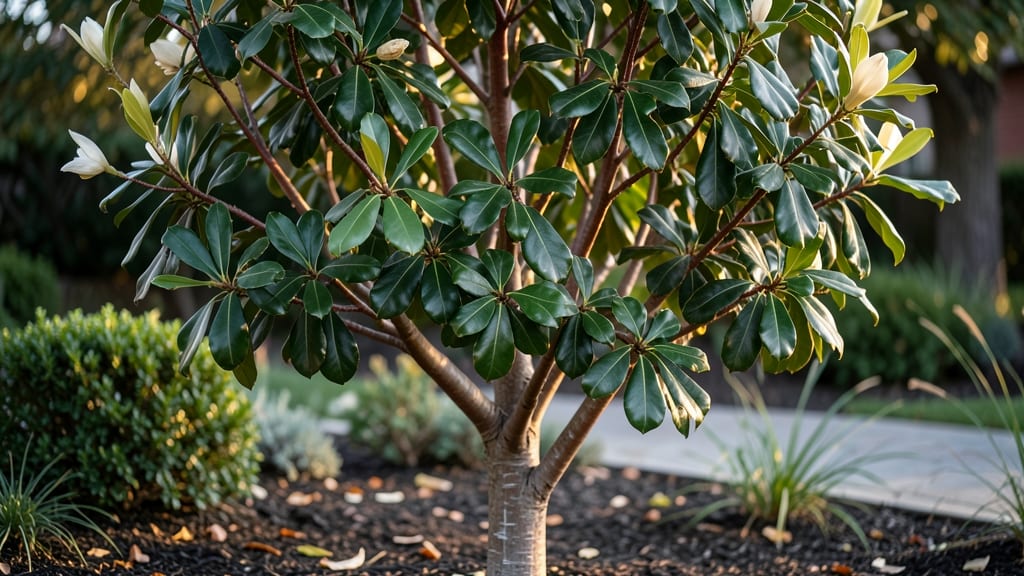
Your Jane magnolia tree is putting on a quiet fall show—rusty-red leaves and those striking seed pods that make it a standout even when not in bloom. 🌿 This is the perfect time to prune for next spring’s boldest blooms, but not just any cuts will do.
The key is working with its natural dormancy while shaping it to avoid next year’s leggy branches.
Start by removing any dead or crossing branches first—they’re easy to spot against the fall foliage. Then, cut back any suckers or water sprouts that popped up this summer; these steal energy from the main structure.
Aim to thin out about 10-20% of the canopy now, so you’re not overstressing the tree before winter.
The payoff? A tree that bursts with saturated pink blooms in spring, supported by a balanced shape that catches every breeze. Prune too late, and you risk encouraging new growth that won’t harden off before frost.
Too early, and you’ll be cutting off next year’s flower buds hidden in this fall’s branches.
Pair your pruning with a 2-3 inch layer of mulch to protect roots from freezing temperatures. This cultivar thrives in partial shade, so if your tree is near evergreens, the fall color contrast will be even more stunning.
Now’s the time to plan where those blooms will shine in your garden!
📚 In This Guide
- What you need
- Instructions
- Tips and common mistakes
- Wrapping up and next steps
What you need
- ● Pruning shears: Bypass pruners (sharp, clean, and sterilized with rubbing alcohol to prevent disease spread). Choose a pair with a 4- to 6-inch blade for medium-sized branches.
- ● Loppers: For branches ½ to 2 inches thick—opt for a 20- to 24-inch handle for leverage.
- ● Pruning saw: A bow saw or folding pruning saw for thicker branches (over 2 inches). Look for a 10- to 12-inch blade with fine teeth.
- ● Gloves: Heavy-duty, cut-resistant gloves (gardening or pruning-specific) to protect your hands from thorns and rough bark.
- ● Disinfectant: 70% isopropyl alcohol or a 10% bleach solution (1 part bleach to 9 parts water) to clean tools between cuts.
- ● Rag or paper towels: For wiping down tools and hands.
- ● Safety gear: Safety glasses (to shield eyes from debris) and closed-toe shoes (no sandals—trust us!).
- ● Ladder or step stool: A stable, extendable ladder (if your tree is over 6 feet tall) or a 3-step stool for shorter trees. Always secure it to the tree or a sturdy surface!
- ● Trash bags or bucket: For collecting pruned branches and debris.
- ● Pruning sealant: A latex-based sealant (like Tanglefoot Tree Wound Pruning Seal) to coat large cuts (over ½ inch) and prevent disease. Only use if the cut is exposed to harsh elements!
- ● Marking twine or flags: For labeling branches you plan to prune later (great for complex trees!).
- ● Extension pole: A 3- to 6-foot pole saw for high branches (if you’re avoiding ladders).
- ● First-aid kit: Just in case—bandages, antiseptic wipes, and tweezers for quick fixes.
- ● Camera or phone: Snap before-and-after photos to track your tree’s progress!
How to prune a Jane magnolia tree in fall for stunning spring blooms
Fall’s the perfect time to shape your Jane magnolia—just a few strategic cuts now mean bigger, brighter flowers next year.
🌿 Step 1: Time Your Pruning for Ideal Conditions
Wait until after the first hard frost but before ground freezes—typically late October to early November in most climates. You’ll see the leaves turn yellow and drop, signaling dormancy. Pruning too early risks stimulating new growth that won’t harden off before winter.
Choose a dry, overcast day to minimize stress on the tree. Wet wood splinters easily, and bright sun can scorch freshly cut surfaces. I like to prune in the late afternoon when temperatures are cooler—this gives any minor damage time to recover before nightfall.
✂️ Step 2: Remove Dead, Diseased, or Crossing Branches
Start by inspecting the tree for dead wood—branches that snap when bent or have no green tissue beneath the bark. Use clean, sharp pruners to make 45-degree cuts just outside the branch collar (the swollen area where the branch meets the trunk). This prevents water from pooling and rotting the wound.
Next, look for crossing branches—where two limbs rub against each other. These create weak points that split over time. Remove the smaller of the two, cutting back to a lateral branch or bud. You’ll notice healthier branches have a smooth bark texture and green leaf buds along their length.
🌱 Step 3: Thin the Canopy for Better Airflow
Magnolias bloom on old wood, so avoid heavy pruning that removes too many branches at once. Instead, focus on thinning the center to let light and air reach the inner branches. Select 1-2 branches per cluster to remove, pruning back to a lateral bud facing outward.
Step back frequently to visualize the tree’s shape. Your goal is an open, vase-like form with no dense clusters. You’ll see the difference next spring—more sunlight means larger, more abundant blooms. Avoid cutting more than 20% of the canopy in one season.
🪴 Step 4: Clean Up and Protect the Tree
After pruning, sterilize your tools with rubbing alcohol to prevent spreading disease. Collect all clippings and dispose of them in a sealed bag—never leave them beneath the tree, as they can harbor pests or fungi over winter.
Apply a 2-inch layer of mulch around the base (but not touching the trunk) to insulate roots. I use shredded bark mulch because it breaks down slowly and improves soil structure. Water deeply if fall has been particularly dry—soil should feel moist 3 inches down when checked with your finger.
⏰ Step 5: Plan for Spring Maintenance
Mark your calendar for late winter (just as buds begin to swell) to do a light shaping trim. This removes any water sprouts (fast-growing, weak shoots) that may have appeared over winter. Avoid pruning during active growth periods—March through May—as this can reduce next year’s flower production.
Watch for bud break timing—when you see pinkish buds forming, it’s your cue to hold off on pruning. These buds hold next year’s blooms, and cutting them off means fewer flowers. A well-pruned Jane magnolia in fall rewards you with showstopping blooms for years to come.
Tips & tricks for perfect fall magnolia pruning
Timing and technique make all the difference when shaping your Jane magnolia for next spring's spectacular blooms.
Timing is Everything: The window between late October and early November is critical because it allows the tree to heal before winter dormancy. I've seen trees stressed by late fall pruning develop weak growth in spring—look for leaves that have turned yellow and dropped completely. This is your cue that the tree has entered dormancy and can handle pruning without stress. If you miss this window, wait until late winter when buds begin to swell, but avoid pruning during active growth periods (March through May) when the tree is most vulnerable.
Tool Prep Makes a Difference: Your pruners are the most important tool here—make sure they're clean, sharp, and sterilized with rubbing alcohol before you start. Dull blades tear wood instead of making clean cuts, which can invite disease. I also recommend using a small pruning saw for thicker branches over 1 inch in diameter. The key is to make cuts just outside the branch collar at a 45-degree angle to prevent water from pooling and causing rot. This might seem like a small detail, but proper cuts heal faster and look more natural.
Visualize the Final Shape: Step back frequently to visualize the tree's structure as you work. The goal is an open, vase-like form that allows sunlight to penetrate the center. I like to imagine the tree as an upside-down cone—thicker at the base and gradually thinning toward the top. This shape not only looks beautiful but also ensures that all branches receive adequate sunlight for maximum bloom production. Remember, you're not trying to create a perfect geometric shape—just a balanced, open structure that promotes airflow and light penetration.
Mulch Matters More Than You Think: That 2-inch layer of shredded bark mulch isn't just for looks—it insulates roots and retains moisture, which is especially important during fall's temperature fluctuations. I've noticed that trees with proper mulching show less stress in spring and produce larger blooms. Just be careful not to pile mulch against the trunk, as this can cause rot. Create a donut shape around the base, leaving about 2 inches of space between the mulch and the trunk. This small detail makes a big difference in the tree's long-term health.
Pro Tips for Jane Magnolia Tree In Fall
- Timing and technique make all the difference when shaping your Jane magnolia for next spring's spectacular blooms.
- Timing is Everything: The window between late October and early November is critical because it allows the tree to heal before winter dormancy.
- Tool Prep Makes a Difference: Your pruners are the most important tool here—make sure they're clean, sharp, and sterilized with rubbing alcohol before you start.
Frequently asked questions
Got questions about your Jane magnolia’s fall transformation? You’re not alone!
Here are answers to the most common queries—so you can prune with confidence and set the stage for next spring’s showstopping blooms.
When is the exact best time to prune a Jane magnolia in fall?
The sweet spot is late fall, after the leaves drop (typically November–early December) but before hard frosts. Aim for 50–55°F (10–13°C) days—cool enough to slow sap flow but warm enough to avoid winter stress. Pro tip: Wait until after the first hard freeze if your region has unpredictable weather.
Can I prune a Jane magnolia in fall if I missed the window?
Yes! Jane magnolias are forgiving. If you miss late fall, prune in early spring (February–March) before buds swell. Avoid pruning in late winter (Jan) or during active growth periods—this can stress the tree. Just keep cuts clean and sterilize tools to prevent disease.
Will pruning in fall reduce next year’s blooms?
Not if done right! Jane magnolias bloom on old wood, so avoid heavy pruning—focus on removing dead, crossing, or weak branches (no more than 10–15% of the canopy). Strategic cuts improve airflow and encourage stronger growth for bigger, healthier blooms next spring.
How do I prune a Jane magnolia if it’s in a windy area?
Wind stress? Shape defensively:
- Thin out the canopy to reduce sail effect—remove branches from the outer third to let wind pass through.
- Avoid topping (cutting the top flat)—this creates weak regrowth.
- Support young trees with tree ties if branches are flopping.
What if my Jane magnolia isn’t blooming well—could pruning help?
Pruning won’t fix poor blooming caused by age, disease, or poor location (e.g., shade). But if the tree is healthy, light pruning to improve sunlight exposure (6+ hours/day) and air circulation can boost flower production. If blooms are sparse, also check for:
- Over-fertilizing (too much nitrogen = leafy growth, fewer flowers).
- Pests like scale or borers.
- Root competition from nearby plants.
Wrapping up and next steps
The Jane Magnolia tree in fall is a stunning sight, but with the right pruning, you can ensure it bursts into even more vibrant blooms next spring!
By following these strategic steps—cleaning up dead branches, shaping for airflow, and protecting against winter—you’re giving your tree the best chance to thrive. Your effort now will reward you with breathtaking blossoms and a healthier tree for years to come.
Ready to take the next step? Mark your calendar for early fall and gather your tools—your magnolia’s future beauty starts with your hands today! 🌿✨