
How To
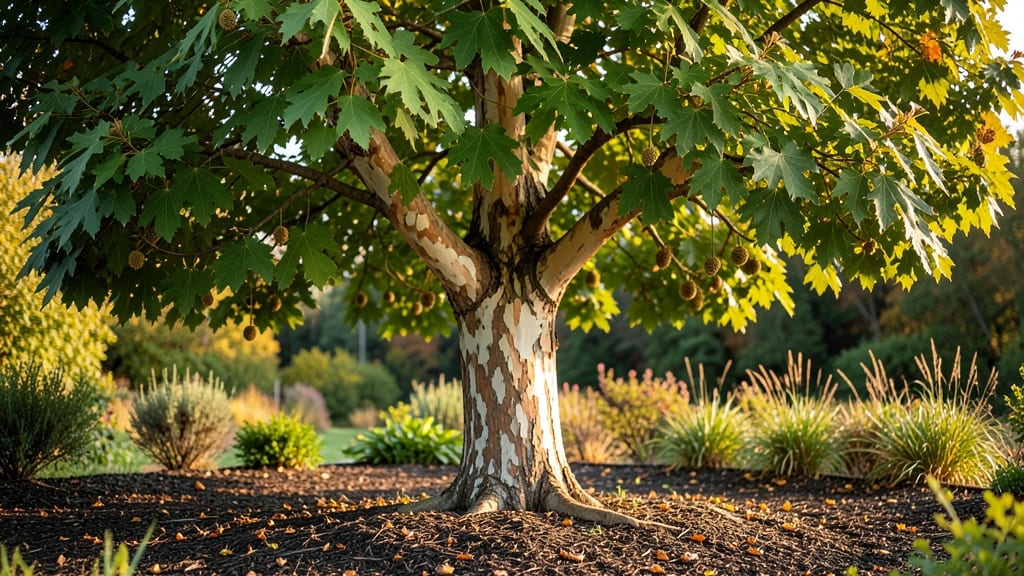
A sycamore tree grows to how tall does a sycamore tree grow heights of 70 to 120 feet—taller than a 10-story building—making it one of nature’s most dramatic shade providers.
If you're dreaming of a towering shade tree for your yard, the sycamore is a stunning choice—but its mature height can vary dramatically depending on where you plant it.
In the right conditions, these fast-growing giants can add 3 to 6 feet per year in their youth, but urban planting or poor soil can stunt their growth. Knowing your region’s climate and soil type is key to predicting how tall your sycamore will become.
Below, I’ll break down how height differs by zone, which varieties grow the fastest, and whether this tree is right for your space—whether you’ve got acres or just a suburban lot.


Sycamore tree height by region: average mature sizes & growth zones
Sycamore trees are nature's skyscrapers, with their mature heights ranging from 70 to 120 feet depending on climate and variety. The American sycamore (Platanus occidentalis) and London planetree (Platanus × acerifolia) both thrive in different USDA zones, but their growth rates and final heights vary dramatically.
Understanding these differences helps you choose the right sycamore for your yard's space and climate.
In warmer southern regions like USDA zones 8-9, sycamores often reach their maximum heights of 100-120 feet due to longer growing seasons and abundant rainfall.
Meanwhile, in cooler northern zones like USDA zones 4-6, these trees typically max out around 60-80 feet due to shorter growing seasons and colder winters.
Latitude plays a crucial role in sycamore growth—trees planted closer to the equator grow faster and taller, while those in higher latitudes develop more slowly.
For example, a sycamore in Florida (zone 9) may reach 10 feet per year in its prime, while one in New York (zone 6) might only grow 3-5 feet annually. This regional variation is key when planning your landscape.
Climate factors like humidity, rainfall, and temperature also influence sycamore height. In high-humidity regions like the Southeast, these trees grow more vigorously, while in drier western states, their growth may be stunted without consistent watering. Even soil type matters—well-draining loamy soil promotes faster vertical growth compared to clay-heavy soils.
The London planetree generally matures slightly shorter than the American sycamore, especially in colder zones. This hybrid thrives in urban environments where its disease resistance gives it an edge.
However, in humid southern climates, both varieties can reach their full height potential with minimal care—just ensure they have plenty of space to spread their wide canopies.
If you're planting in USDA zone 9 or higher, expect your sycamore to grow 30-40% faster than in cooler zones. The key is providing well-draining soil and full sun exposure—these trees thrive when given room to stretch their roots and branches.
In drought-prone areas, supplemental watering during the first few years can accelerate height gains by up to 20%.
For gardeners in smaller yards, consider the Liberty sycamore cultivar, which grows slightly slower but still reaches 70-80 feet. Its narrower canopy makes it a better fit for tight spaces, though it won’t match the towering heights of its wild counterparts.
Always check local property line laws before planting—some municipalities regulate tree heights near structures.
Monitor your sycamore’s growth by measuring its trunk circumference annually. A 1-inch increase in diameter typically correlates with 2-3 feet of height gain in ideal conditions.
In urban settings, growth may be slower due to soil compaction and air pollution, so amend the soil with compost and mulch to encourage healthier development.
Remember, sycamores are long-lived trees—some specimens exceed 600 years old. Their height isn’t just about immediate shade but a legacy for future generations. Whether you’re in Florida’s heat or New York’s chill, choosing the right sy
Fastest-growing sycamore varieties & how to maximize their height
If you want your sycamore to reach its full height potential in record time, choosing the right cultivar is key. Some varieties like the 'Liberty' sycamore grow 30-50% faster than the classic American sycamore.
This rapid growth makes them ideal for large landscapes where you want quick shade and vertical impact. The secret lies in their genetics—some are bred specifically for height acceleration while maintaining structural strength.
To push your sycamore toward its maximum height, focus on three critical factors: soil quality, sunlight exposure, and pruning techniques. Well-draining, nutrient-rich soil acts like rocket fuel for vertical growth, while full sun exposure ensures energy isn't wasted on bushy side branches.
Even a 10% improvement in these conditions can translate to 10+ extra feet of height over a decade.
Here are the top 3 fastest-growing sycamore varieties ranked by annual height gain:
- 'Liberty' sycamore: 3-5 feet/year in ideal conditions
- 'American sycamore': 2-4 feet/year (standard variety)
- 'London planetree': 2.5-4.5 feet/year (hybrid vigor)
To maximize height, avoid over-pruning the lower branches—this encourages the tree to focus energy upward. Instead, use the crown-thinning method to remove only 20-30% of interior branches every 2-3 years.
This maintains an open canopy while directing growth skyward. Pair this with a balanced fertilizer (10-10-10 NPK) applied in early spring to fuel vertical expansion.
For a growth timeline, expect: Year 1: 2-5 ft Year 3: 15-20 ft Year 5: 30-40 ft Year 10: 50-70 ft With optimal care, some 'Liberty' sycamores can reach 60 feet by year 8, making them one of the fastest-growing shade trees available.
The key is consistency in soil moisture, sunlight, and minimal interference with natural growth patterns.
Remember, sycamores are fast growers but need patience—their full majesty unfolds over decades. Start with the right variety, give it the best growing conditions, and watch as your sycamore becomes a vertical landmark in your landscape. 🌳