
How To
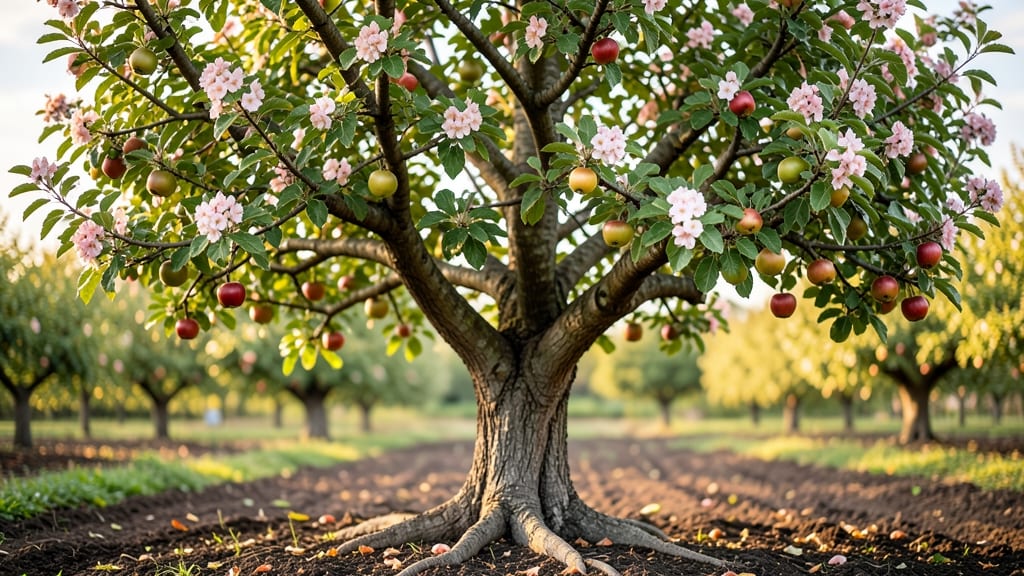
How tall an apple tree grows depends on the variety and growing conditions, ranging from 6 feet to over 30 feet.
Wondering whether your backyard can accommodate an apple tree? The height of mature apple trees varies dramatically—from compact dwarf varieties to towering standards—making variety and climate the key factors in your decision.
For example, a standard 🍎 apple tree can reach 20-30 feet, while dwarf varieties stay between 6-12 feet, perfect for small gardens or even container growing. This means your space, sunlight, and pruning habits will all play a role in how tall your tree becomes.
Below, I’ll break down the height ranges by variety, how climate affects growth, and practical tips to manage size—so you can pick the perfect apple tree for your space.


Apple tree height by variety: dwarf to standard size comparison
Choosing an apple tree often comes down to one critical question: how tall does apple tree grow? The answer depends entirely on the variety you select, as heights range from 6 feet for dwarf types to 30 feet for standard trees.
For small urban gardens, compact varieties like 'Columnar' apples (6-12 ft) are ideal, while rural properties can accommodate standard 'Liberty' apples (20-30 ft). Understanding these size differences helps you plan spacing, pruning, and even harvest accessibility.
Dwarf apple trees (6-12 feet) are bred on specialized rootstocks like M.9 or B.9, which restrict growth while maintaining fruit production. These varieties thrive in containers or tight spaces, making them perfect for balconies or small yards.
Semi-dwarf trees (12-16 feet) offer a middle ground, requiring more space than dwarfs but less than standard trees. Standard varieties (20-30 feet) dominate traditional orchards and large properties.
Spacing is critical—dwarf trees need 6-8 feet of clearance, while standard trees require 20-30 feet to prevent root competition and ensure proper airflow. Poor spacing leads to disease risks and reduced fruit quality. Always check the mature height and spread of your chosen variety before planting, as some, like 'Golden Delicious', can grow unexpectedly tall when grafted onto vigorous rootstock.
If you're growing apples in containers or small spaces, columnar varieties are my top recommendation. Trees like 'Spartan Columnar' stay under 8 feet tall while producing high-yield fruit. These varieties grow vertically, saving horizontal space—a game-changer for patios or rooftop gardens.
Just ensure your container has drainage holes and is at least 18 inches wide for dwarf rootstocks.
For large backyards or homesteads, standard apple trees offer unmatched fruit production but require long-term planning. Varieties like 'Arkansas Black' or 'Winesap' can reach 25 feet, so plant them near driveways or property lines to avoid shading other plants.
Always consider future pruning needs—standard trees need annual structural pruning to maintain health and shape.
Another factor influencing height is pruning practices. Regular summer pruning can keep even standard trees 10-15% shorter by encouraging lateral growth. I recommend using sharp bypass pruners and removing sucker growth (new shoots at the base) to redirect energy upward.
For dwarf trees, light pruning in late winter suffices, while standard trees need heavy pruning every 2-3 years.
Climate also plays a role—cooler regions (Zones 3-5) often see slower growth, while warmer zones (6-9) can accelerate height increases. For example, a 'Gala' semi-dwarf in Zone 7 might max out at 14 feet, but the same tree in Zone 9 could reach 18 feet without proper pruning.
Always check USDA Zone compatibility for your chosen variety to avoid disappointment.
When selecting a tree, prioritize disease resistance and pollination needs. Many dwarf varieties, like 'Liberty', are fire blight-resistant and self-pollinating, making them low-maintenance choices. For standard trees, plant two compatible varieties (e.g., 'McIntosh' + 'Honeycrisp') to ensure fruit set.
Always buy from reputable nurseries that specify rootstock and mature size on tags.
Finally, remember that soil quality impacts height. Poor, compacted soil restricts root growth, leading to stunted trees or excessive height as the tree
How climate zones affect apple tree growth and mature height
Your USDA hardiness zone plays a critical role in determining how tall your apple tree will grow.
Trees in warmer zones (8-9) like Florida or California may reach their mature height faster due to longer growing seasons, while those in colder zones (3-5) like Minnesota or Maine grow more slowly and may stay shorter.
This difference isn't just about height—it also affects fruit production and pruning needs.
In Zone 3-5, apple trees like 'McIntosh' or 'Honeycrisp' often mature between 15-20 feet due to shorter growing seasons. Meanwhile, in Zone 6-7 (common in the Midwest), varieties such as 'Gala' or 'Fuji' can reach 20-25 feet with proper care.
Southern growers in Zone 8-9 might see dwarf varieties like 'Columnar' hit 8-12 feet in just 3-4 years, thanks to year-round warmth.
| USDA Zone | Growth Rate | Mature Height | Best Varieties | Pruning Needs |
|---|---|---|---|---|
| Zone 3-5 | Slow (1-2 ft/year) | 15-20 ft | McIntosh, Honeycrisp | Minimal winter damage |
| Zone 6-7 | Moderate (2-3 ft/year) | 20-25 ft | Gala, Fuji, Red Delicious | Regular thinning |
| Zone 8-9 | Fast (3-4 ft/year) | 8-12 ft (dwarf) / 18-22 ft (standard) | Columnar, Anna, Golden Delicious | Light pruning |
In cooler climates, apple trees often develop stronger wood due to winter dormancy, which can lead to taller, more robust growth over time.
For example, a 'Granny Smith' in Zone 5 might take 8-10 years to reach 20 feet, while the same variety in Zone 8 could hit 15 feet in just 5-6 years. This faster growth means more frequent pruning to manage height and shape.
Regional microclimates also matter. In the Pacific Northwest, where Zone 7-8 prevails, wet winters and cool summers slow growth slightly, while dry, hot summers in the Deep South can accelerate it.
For instance, a 'Pink Lady' in California's Zone 9 may grow 30% faster than one in Oregon's Zone 8 due to milder winters and longer frost-free periods.
If you're in a warmer zone, consider dwarf or semi-dwarf varieties to keep your tree manageable. These types thrive in Zone 8-9 and can be pruned to stay under 12 feet, making them perfect for urban gardens or small backyards.
In colder zones, focus on hardy varieties like 'Liberty' or 'Cortland', which handle harsh winters and still reach 15-18 feet.
No matter your zone, proper pruning is key to controlling height. In warmer zones, prune in late winter to shape growth before the season kicks off. In cooler zones, wait until early spring to avoid winter damage.
Always remove dead or crossing branches first, then thin out 20-30% of the canopy to encourage airflow and fruit production.