
How To
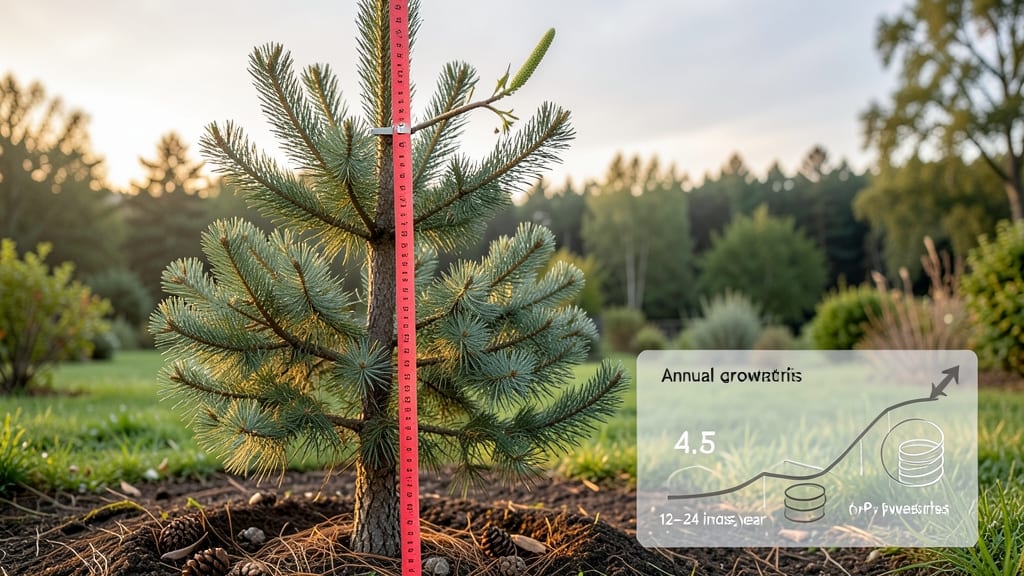
Wondering how tall does a pine tree grow per year? They average 1 to 3 feet annually, though some species surge 6 feet or more under ideal conditions—while others barely reach 6 inches in a decade.
Growth rates vary wildly between species—and climate plays a surprisingly big role in how fast they reach maturity.
Take the Ponderosa Pine, for example: it can grow 3 feet in a single season in the right conditions, while a Mugo Pine might only add 1 inch per year. Even soil type and water availability shift the numbers dramatically.
Below, I break down the fastest and slowest growers by species, how to read your tree’s growth signals, and the one trick that can double annual height gains in just a few years.


Pine tree growth rates by species: fastest and slowest growing varieties
If you're planning to add pine trees to your landscape, knowing their growth rates can help you set realistic expectations. Some varieties grow over 3 feet per year in ideal conditions, while others take decades to reach maturity.
The fastest-growing pines can transform your yard quickly, while slow-growing species require patience but offer unique benefits like drought resistance and longevity.
Growth rates depend on multiple factors, including species, climate, soil quality, and care. For example, a Ponderosa Pine in California's Mediterranean climate may grow twice as fast as the same species planted in a colder, wetter region.
Understanding these differences helps you choose the right pine for your space and goals—whether you want fast shade or a long-lived specimen.
| Species | Annual Growth Rate (ft/year) | Mature Height (ft) | Growth Pattern | Best For |
|---|---|---|---|---|
| Ponderosa Pine | 2–3 ft | 100–150 ft | Fast early growth, slows with age | Large landscapes, timber |
| Lodgepole Pine | 1.5–2.5 ft | 60–90 ft | Rapid early growth, then steady | Wildlife habitat, windbreaks |
| Scots Pine | 1–2 ft | 80–100 ft | Moderate, consistent growth | Cold climates, erosion control |
| Eastern White Pine | 1–1.5 ft | 50–80 ft | Slow steady growth | Shade trees, ornamental |
| Sugar Pine | 2–3 ft | 150–200 ft | Fast early, slows dramatically | Mountain regions, timber |
| Austrian Pine | 1.5–2 ft | 60–80 ft | Moderate, adaptable | Urban landscapes, windbreaks |
| Mugo Pine (Dwarf) | 0.2–0.5 ft | 10–25 ft | Extremely slow, compact | Rock gardens, borders |
| Virginia Pine | 0.5–1 ft | 30–50 ft | Slow, irregular growth | Wildlife, poor soils |
| Jack Pine | 0.5–1 ft | 40–60 ft | Slow, fire-adapted | Northern climates, wildlife |
| Eastern White Spruce (Pine-like) | 1–1.5 ft | 40–60 ft | Steady, cold-hardy | Cold climates, ornamental |
The Ponderosa Pine and Sugar Pine are among the fastest-growing species, adding 2–3 feet annually in optimal conditions. These giants can reach maturity in just 20–30 years, making them ideal for large properties where you need shade quickly.
However, their massive size means they're not suitable for small yards or urban settings.
On the opposite end, Mugo Pine grows at a glacial pace—just 0.2–0.5 feet per year—but its compact size makes it perfect for gardens, borders, and rockeries. This dwarf variety stays under 25 feet tall and is ideal if you want a low-maintenance, long-lived pine that won't outgrow its space.
For urban or suburban gardens, Austrian Pine and Scots Pine strike a balance with 1.5–2 feet of growth annually. These varieties mature at 60–80 feet, making them manageable for medium-sized properties while still providing substantial shade and wildlife benefits.
Their adaptability to different soil types also makes them low-maintenance choices.
If you're planting pines for timber or wildlife, consider Lodgepole Pine, which grows 1
How climate affects annual pine tree growth: sunlight, rainfall, and temperature factors
If you've ever wondered why your pine tree seedlings grow at different rates, the answer often lies in your local climate conditions. While genetics play a role, sunlight exposure, rainfall patterns, and temperature ranges can dramatically alter how much a pine tree grows each year.
For example, a Ponderosa Pine in Arizona might gain 2 feet annually in ideal conditions, while the same species in a cooler, cloudier climate could grow just 1 foot per year.
Pine trees thrive in full sun environments with 6+ hours of direct sunlight daily. In regions with limited sunlight, such as the Pacific Northwest, growth rates slow significantly. Even drought-tolerant species like the Lodgepole Pine struggle when rainfall drops below 10 inches annually.
Meanwhile, in humid climates like the southeastern U.S., consistent moisture supports faster needle and branch development.
Temperature extremes also impact growth—cold-hardy species like the Scots Pine (Zone 3) can survive harsh winters but may enter dormancy earlier, slowing spring growth. Conversely, warm-climate pines such as the Monterey Pine grow year-round in USDA Zone 7+, gaining 3+ feet annually without winter setbacks.
🌲 Key Takeaway: Annual Pine Tree Growth by Climate
🌞 Sunlight
Full sun (6+ hours/day) = 2-3x faster growth than partial shade. Ponderosa Pines in desert climates grow 24-36 inches/year with intense sunlight.
💧 Rainfall
10-20 inches/year = optimal growth. Drought (<10 inches) stunts growth by 30-50%. Eastern White Pines in wet climates grow 18-24 inches/year.
❄️ Temperature
Zone 7+ = year-round growth (3+ ft/year). Zone 3-5 = slower spring growth (12-18 inches/year) due to shorter growing seasons.
💡 Pro Tip: Monitor your local USDA Zone and microclimate—a south-facing slope can add 1-2 extra growth zones compared to shaded areas.
In arid regions, pine trees often develop deeper root systems to access moisture, which can temporarily slow above-ground growth. However, once established, drought-resistant species like the Pinyon Pine adapt by growing 12-18 inches annually with minimal supplemental water.
On the other hand, coastal pines in high-humidity zones (e.g., Monterey Pine) benefit from natural fog, achieving 36-inch growth spurts in ideal conditions.
Extreme temperature fluctuations also stress pine trees. For instance, Scots Pines in Zone 4 may experience growth stasis during sub-zero winters, while Southern Pines in Zone 8 grow continuously. Even one late frost can damage new needles, reducing annual height gains by 20-30%.
To mitigate this, plant cold-hardy species in sheltered microclimates or use windbreaks to protect young seedlings.
Understanding your local climate's impact on pine tree growth helps set realistic expectations. For example, a Lodgepole Pine in Montana's dry climate might only reach 30 feet in 20 years, while the same species in Oregon's wetter conditions could hit 50 feet in the same timeframe.
By adjusting your planting location, watering schedule, and species selection, you can maximize growth potential—even in challenging climates.