
Container Gardens
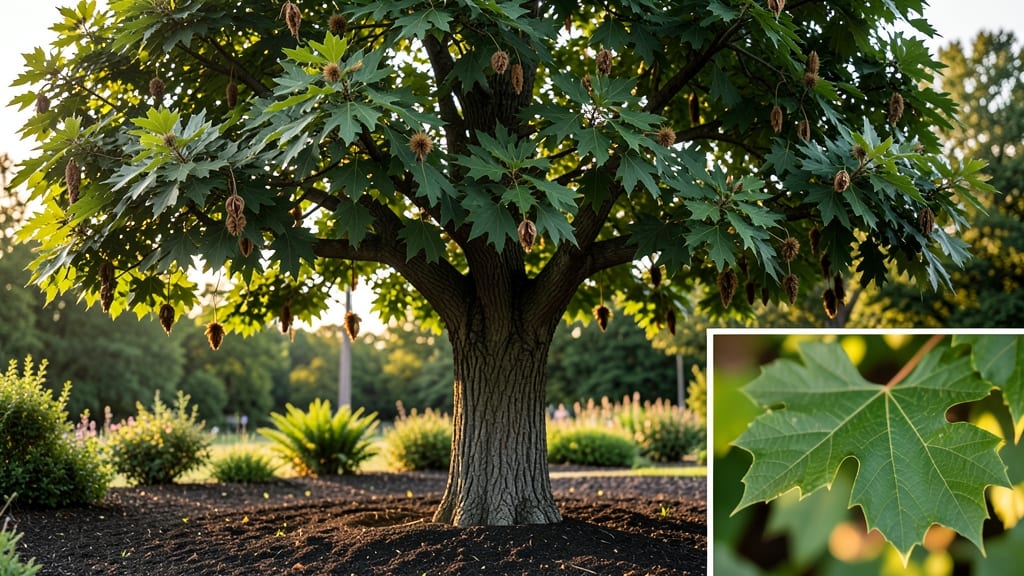
Sweet gum trees grow best in USDA hardiness zones 4 through 9, where they handle humidity, heat, and drought while thriving in various soil types. Their most rapid growth happens in zones 7 and 8, reaching full maturity—60 to 75 feet tall—in 20 to 30 years.
These hardy trees adapt surprisingly well to both cold snaps and scorching summers, making them ideal for regions like the Southeast or Midwest. 🌳 The key to faster growth lies in zones 7 and 8, where consistent warmth and moisture fuel their expansion.
I’ve seen them flourish in urban settings with minimal care, though they prefer slightly acidic soil and regular watering during their first few years. Their ability to tolerate poor soil conditions makes them a favorite for landscapes where other trees might struggle.
For those in colder zones (4-6), focus on well-drained soil and protect young saplings from late frosts. Southern growers can push their limits by planting in full sun and providing occasional deep watering during droughts.
The tree’s resilience extends to its ability to sprout new branches after damage, ensuring long-term survival even in less-than-perfect conditions.
💡 In This Article
- Sweet Gum Tree Hardiness Zones Explained
- Optimizing Sweet Gum Growth by Region
Sweet gum tree hardiness zones explained
Sweet gum trees (Liquidambar styraciflua) thrive across USDA hardiness zones 4-9 thanks to their remarkable physiological adaptations. Their cold tolerance stems from a specialized sap composition that acts like antifreeze, preventing ice crystal formation in cellular structures down to -20°F in zone 4.
This is comparable to how maple trees survive winter, but sweet gums have an added advantage: their deep root systems can access moisture from lower soil layers, reducing frost damage risk. 🌱
Their heat adaptation is equally impressive. In zones 7-9, sweet gums handle summer temperatures up to 100°F by closing leaf stomata during peak heat (12-4 PM), reducing water loss through transpiration. This mechanism explains why they outperform many ornamental trees in the Southeast, where humidity levels often exceed 80%.
Their drought resistance comes from thick, corky bark that insulates roots and a waxy leaf coating that minimizes evaporation.
Regional climate preferences reveal fascinating patterns. In Northern states (zones 4-6), sweet gums grow slower but develop stronger wood density due to colder winters triggering secondary growth cycles.
Southern growers (zones 7-9) enjoy 2-3 feet of annual growth thanks to longer growing seasons—up to 240 days compared to 180 days in zone 5.
The tree's star-shaped leaves also help: their broad surface area captures sunlight efficiently in humid climates, while their vertical orientation reduces water pooling during heavy rains.
What most people don't realize is how soil pH affects their hardiness. While they tolerate pH ranges from 4.5-7.5, optimal growth occurs at 5.5-6.5—slightly acidic conditions that enhance nutrient uptake. In alkaline soils (common in zones 6-8), their growth rate drops by 15-20% due to reduced iron availability.
This explains why urban plantings in cities like Atlanta often require soil amendments despite the tree's reputation for toughness. 🌿
Consider these key factors when evaluating hardiness:
- Zone 4-5: Prioritize well-drained soil to prevent winter root rot from thaw cycles
- Zone 6-7: Mulch heavily (3-4 inches) to maintain root zone temperatures
- Zone 8-9: Provide afternoon shade during extreme heat waves to prevent leaf scorch
The tree's ability to survive in such diverse conditions stems from its evolutionary history as a floodplain species. Their ancestors developed adaptations to handle both seasonal flooding and prolonged droughts—traits that make modern sweet gums exceptionally resilient in today's changing climates. 🌎