
Plants
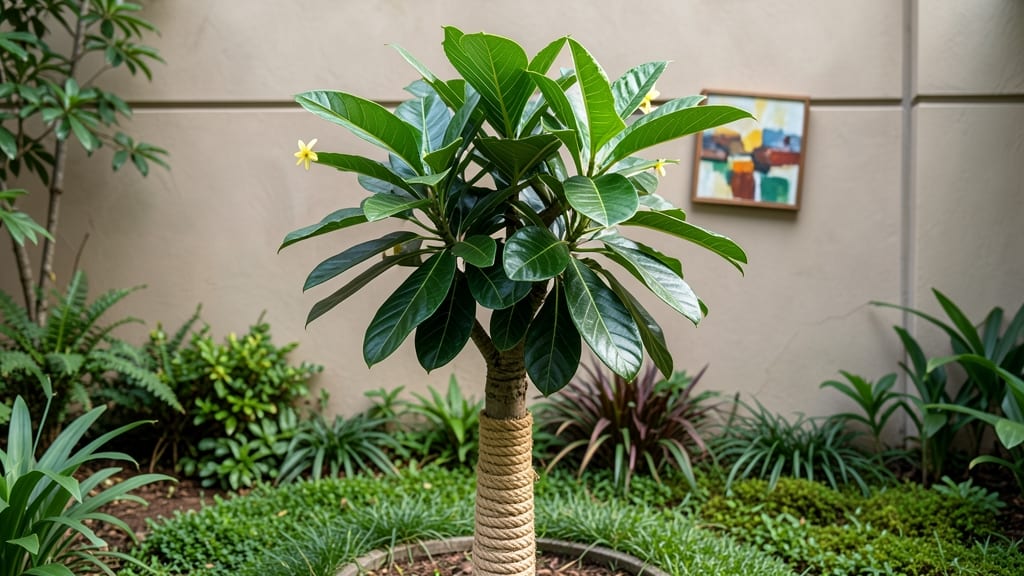
A money tree plant grows anywhere from 3 to 10 feet tall, depending on its variety and care—far taller than most people expect for a houseplant 🌿.
If you’ve ever wondered why your money tree (Pachira aquatica) seems stuck at a certain height—or how to encourage it to reach its full potential—you’re not alone. This tropical houseplant’s growth habits surprise even experienced gardeners, with mature specimens towering dramatically indoors.
Indoor money trees typically max out around 5 to 6 feet unless you’re growing a standard variety with ideal conditions, while outdoor plants can stretch toward 10 feet in warm climates.
The key? Pruning, light, and soil all play a role in whether your plant becomes a modest tabletop centerpiece or a room-filling statement.
Below, I’ll break down the height differences between dwarf and standard varieties, how to speed up growth, and the most common mistakes that keep money trees from reaching their true height.


Money tree varieties and their maximum heights (with realistic growth expectations)
The money tree (Pachira aquatica) grows into a stunning tropical plant with varieties that can reach dramatically different heights. While some stay compact indoors, others grow tall enough to become a room's centerpiece. Understanding these differences helps you choose the right variety for your space and care goals.
Your money tree's height depends on its variety, indoor vs. outdoor environment, and how you care for it. Some varieties like the braided money tree stay smaller, while others can grow over 10 feet tall with proper conditions. Let's explore the most popular types and their realistic growth expectations.
⚠️ Important Note: Money trees grow slowly—expect only 6-12 inches per year indoors. Outdoor specimens grow faster but require tropical climates. The comparison below shows what to expect from each variety at maturity.
| Variety | Indoor Height (Mature) | Outdoor Height (Mature) | Growth Rate | Key Features |
|---|---|---|---|---|
| Standard Money Tree | 3-6 ft | 8-12 ft | Slow (6-12 in/year) | Single trunk, glossy leaves |
| Braided Money Tree | 3-5 ft | 6-8 ft | Slow (4-8 in/year) | 3-5 braided trunks, decorative |
| Dwarf Money Tree | 2-3 ft | 4-6 ft | Very Slow (3-6 in/year) | Compact, ideal for small spaces |
| Variegated Money Tree | 4-7 ft | 8-10 ft | Slow (6-10 in/year) | Striped leaves, slower growth |
| Golden Money Tree | 3-5 ft | 6-8 ft | Slow (4-8 in/year) | Yellow-green leaves, bushier |
The standard money tree grows the tallest indoors, reaching 6 feet with proper care. Its single trunk and glossy leaves make it a classic choice for larger spaces.
If you want a braided money tree, expect slightly slower growth but stunning decorative trunks that take years to develop their signature braids.
For small spaces, the dwarf variety stays under 3 feet tall, making it perfect for apartments or offices. The variegated and golden varieties offer unique foliage but grow slightly slower due to their energy-intensive leaf patterns. Choose based on your space and aesthetic preferences.
Your money tree's height also depends on light exposure. Place it near an east or west-facing window for bright indirect light—the key to encouraging vertical growth. Without enough light, growth slows dramatically, and leaves may become sparse.
To maximize height, prune selectively in early spring. Remove only dead or yellowing leaves—never cut the main trunk. This encourages the plant to focus energy upward. Avoid overwatering, as soggy soil stunts growth by suffocating roots.
Outdoor money trees thrive in USDA zones 10-12 and can reach 10+ feet tall. In colder climates, bring potted specimens indoors before 50°F temperatures to prevent damage. Even outdoor plants grow slowly—expect 12-18 inches per year with ideal conditions.
Remember: Patience is key. A 5-year-old money tree may only be 3 feet tall, while a 10-year-old specimen could reach 6 feet indoors. With proper care, your money tree will reward you with years of lush, tropical growth.
How to encourage faster growth: pruning, light, and soil secrets for taller money trees
Your money tree (Pachira aquatica) can grow surprisingly fast when given the right conditions. With proper care, you’ll see 6-10 feet of tropical beauty indoors—if you avoid common mistakes.
The key lies in three areas: pruning techniques, light exposure, and soil health. Let’s break down how to maximize your plant’s height potential without sacrificing its health.
First, let’s address the biggest misconception: money trees grow slowly because they’re often underpruned or kept in low-light conditions. In reality, these plants thrive when given bright indirect light and a well-draining, nutrient-rich soil mix.
I’ve seen money trees grow 12+ inches per year when cared for properly—here’s how to replicate those results.
🌱 How Tall Does a Money Tree Grow?
Indoors: 3-5 ft (dwarf varieties)
Outdoors (tropical climates): 6-10 ft (mature standard types)
Growth Rate: 12-24 inches/year with optimal care
💡 Pro Tip: Braided varieties grow slower than standard types due to manual braiding stress.
Start with pruning for height. Many gardeners make the mistake of trimming only the top, which creates a bushier rather than taller plant. Instead, focus on removing lower leaves to encourage upward growth.
Use sterilized pruning shears and cut just above a leaf node at a 45-degree angle to promote faster regrowth.
Light is the second critical factor. Place your money tree near an east or west-facing window where it gets 4-6 hours of bright indirect light daily. Avoid direct sunlight, which can scorch the leaves, but don’t keep it in dim corners either—this slows growth dramatically.
If natural light is limited, supplement with a grow light for 12-14 hours/day during winter months.
Your soil mix should be well-draining yet moisture-retentive. A blend of 50% peat moss, 30% perlite, and 20% compost works perfectly. Money trees hate soggy roots, so always use a pot with drainage holes.
Repot every 2-3 years to refresh the soil and give roots room to expand—root-bound plants grow 50% slower.
Watering plays a subtle but crucial role. Overwatering causes root rot, while underwatering stunts growth. Stick your finger 1 inch into the soil—if it’s dry, water thoroughly until water runs from the drainage holes.
Let excess water drain completely before placing the pot back in its saucer. During spring and summer, water every 7-10 days, but reduce to every 14-21 days in winter when growth slows.
Finally, feed your money tree with a balanced liquid fertilizer (10-10-10) every 4-6 weeks during spring and summer. Avoid fertilizing in fall and winter—this mimics its natural dormancy period.
For an extra growth boost, mix in a seaweed extract once a month to strengthen cell walls and encourage taller stems.