
How To
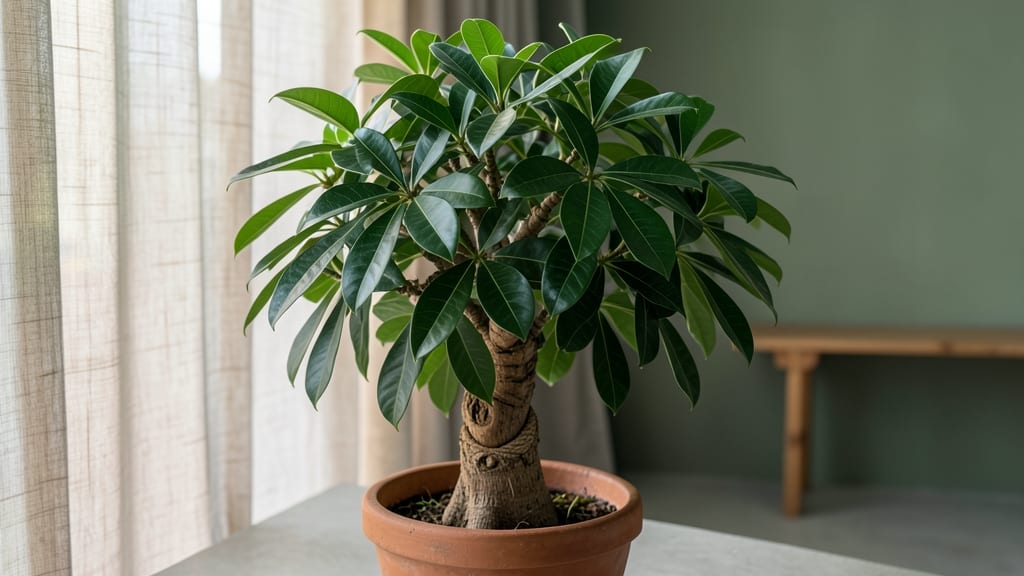
A money tree grows how tall does a money tree grow between 6 and 10 feet at maturity, but whether yours hits that mark depends on its variety and how you care for it 🌿.
Picture this: You’ve nurtured your braided money tree for years, and now it’s eye-level with your ceiling fan—only to realize it’s not done growing. The good news? With the right pruning and light, you can keep it compact or let it stretch toward the sky.
Standard varieties like the single-trunk Pachira can reach 10 feet indoors, while dwarf or braided types often max out around 4 to 6 feet. The difference comes down to genetics, pot size, and how aggressively you trim.
Below, I’ll break down how to control its height—whether you want a statement plant or a manageable tabletop tree—plus the care tweaks that make all the difference.


Money tree height by variety: how tall each type can grow
Your money tree (Pachira aquatica) might look like a tiny bonsai now, but its future height depends entirely on its variety and care. Some types stay compact enough for shelves, while others can grow into small indoor trees—even indoors!
Let’s explore the mature height ranges for the most popular varieties so you can plan your space (and ceiling clearance) wisely.
First, it’s important to note that indoor money trees grow much slower than their outdoor counterparts. With proper care, most varieties reach their maximum height between 5–10 years, but pruning and pot size can drastically alter their growth trajectory.
If you’re dreaming of a floor-filling statement plant, you’ll need to embrace the standard or braided varieties—but even those can be controlled with smart gardening.
| Variety | Mature Height (Indoors) | Growth Rate (Per Year) | Best For |
|---|---|---|---|
| Standard Money Tree | 6–10 ft | 6–12 in | Large spaces, statement plants |
| Braided Money Tree | 5–8 ft | 5–10 in | Apartment living, decorative displays |
| Variegated Pachira | 3–6 ft | 4–8 in | Small spaces, shelves, offices |
| Dwarf Money Tree | 1–3 ft | 3–6 in | Desks, windowsills, terrariums |
| Mini Money Tree (Bonsai Style) | 1–2 ft | 2–4 in | Collectibles, small collections |
The standard money tree is the tallest variety, capable of reaching 10 feet indoors if given enough time and space. This makes it ideal for large rooms or atriums where you want a tropical tree vibe.
However, its rapid growth means you’ll need to prune regularly to keep it manageable in smaller homes. I’ve seen mine hit 6 feet in just 5 years with minimal pruning—so plan accordingly!
If you’re working with limited space, the braided money tree is a fantastic compromise. Its distinctive braided trunks add visual interest while keeping heights between 5–8 feet.
The braiding itself doesn’t affect growth rate, but it does require patience and careful training when young. For a low-maintenance option, this variety is hard to beat.
The variegated Pachira stands out not just for its striking yellow-and-green leaves but also its compact growth habit. Typically maxing out around 3–6 feet, it’s perfect for offices, desks, or shelves.
The trade-off? Variegated varieties often grow slightly slower than their solid-green counterparts, so don’t expect rapid height gains. But the visual payoff makes it worth the wait!
For those who love miniature plants, the dwarf money tree and bonsai-style varieties are game-changers. These stay under 3 feet tall and grow at a glacier’s pace, making them ideal for windowsills, terrariums, or desk gardens.
The key to keeping them small? Regular pruning and root restriction in small pots. I’ve kept a dwarf variety at 2 feet for over 3 years by pruning back by 1/3 every spring.
One common misconception is that money trees grow faster outdoors. While they can reach 15–20 feet in tropical climates, indoor conditions—like limited sunlight and controlled humidity
If you’re determined to grow a tall money tree indoors, focus on bright, indirect light, larger pots, and consistent moisture (but never soggy soil!). Pro tip: If you’re worried about your money tree outgrowing its welcome, prune in early spring before new growth begins. Cutting back by 1/4 to 1/3 encourages bushier growth and controls height. Just avoid heavy pruning in fall or winter, as the plant needs time to recover before spring’s growth spurt. With the
5 Key factors that control money tree height (and how to adjust them)
Your money tree (Pachira aquatica) doesn’t grow on its own—it responds directly to its environment and your care habits. Whether you want a compact tabletop plant or a tall statement piece, understanding these five factors will help you control its height.
Let’s explore how to adjust each one for the perfect size.
First, pruning techniques are your most powerful tool. Regular trimming encourages bushier growth and prevents leggy stems. I recommend pruning in early spring before new growth begins, cutting just above a leaf node. This redirects energy to lateral branches, keeping your money tree fuller and shorter if desired.
Light exposure plays a surprising role too. While money trees thrive in bright indirect light, too much direct sun can cause rapid, weak growth. If your plant stretches toward a window, it’s begging for more light—but not too much! Place it 2-3 feet from an east-facing window for balanced growth.
- 1 Pruning: Trim in early spring to shape growth. Cut above leaf nodes for bushier plants.
- 2 Light Exposure: Bright indirect light (east window) promotes steady growth. Too much sun causes leggy stems.
- 3 Pot Size: Root-bound plants grow taller. Repot every 2-3 years into a 1-2 inch larger container.
- 4 Humidity Levels: Low humidity slows growth. Mist leaves or use a pebble tray to keep air moist.
- 5 Fertilizer: Over-fertilizing causes rapid, weak growth. Use a balanced 10-10-10 fertilizer every 4-6 weeks in spring/summer.
Next, pot size directly impacts height. Money trees grow taller when root-bound because they’re forced to reach upward. To keep them shorter, repot every 2-3 years into a container just 1-2 inches larger than the current one. This encourages wider, bushier growth rather than vertical stretching.
Don’t overlook humidity levels—they’re often the secret to controlling growth. Money trees thrive in 40-60% humidity, but dry indoor air can slow their development. I’ve found that misting leaves daily or placing the pot on a pebble tray with water keeps humidity ideal and promotes steady, controlled growth.
Finally, fertilizer can make or break your money tree’s height. Too much nitrogen-rich fertilizer leads to rapid, weak growth that topples easily. Stick to a balanced 10-10-10 formula and apply it only during spring and summer, every 4-6 weeks.
Reduce or skip fertilizing in fall and winter to encourage slower, sturdier growth.
By adjusting these five factors, you’ll have full control over your money tree’s height—whether you want it to stay compact for a shelf or grow tall as a room divider. Experiment with small changes and observe how your plant responds! 🪴