
Watering
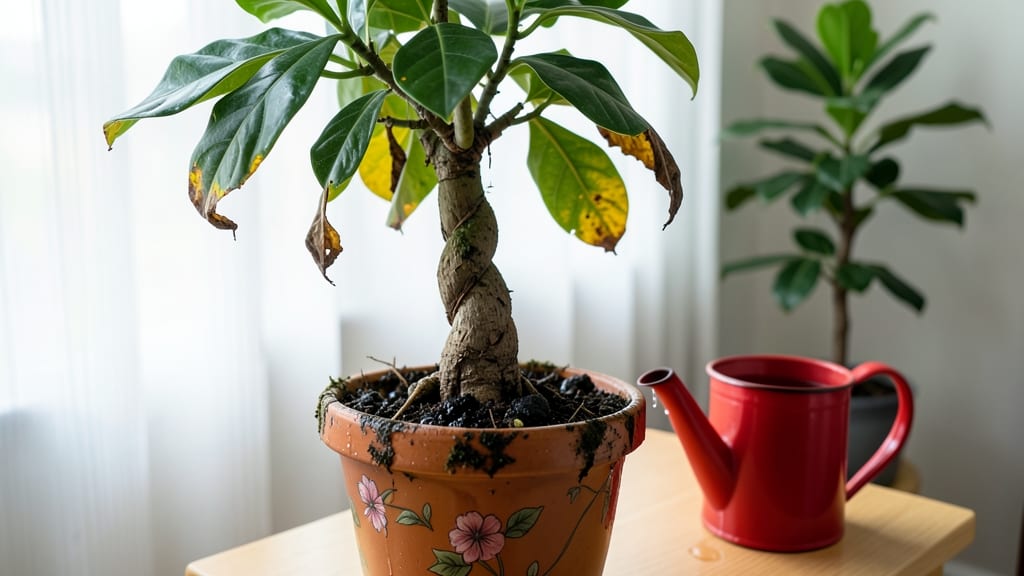
Your overwatered money tree plant’s drooping leaves and mushy stems are screaming for help—but we’ve fixed this exact problem before. 🌱 Overwatering turns lush green foliage into a sad, soggy mess, but with the right drainage fix, your Pachira aquatica can bounce back stronger than ever.
The key? Understanding why it’s happening and acting fast before root rot sets in.
Here’s the thing—money trees store water in their trunks, so they’re far more sensitive to overwatering than most houseplants. Yellow leaves, brown tips, and a squishy stem? Those are your plant’s SOS signals.
The good news? With proper repotting, adjusted watering, and a few simple care tweaks, you’ll see fresh growth within weeks. We’ve revived plants that looked beyond saving.
You’ll start by checking the roots for rot—healthy ones are firm and white, while mushy or black roots need immediate action.
Repot in well-draining soil with a chunk of perlite or orchid bark, and cut back on watering to once every 2-3 weeks (let the top 2 inches dry out first). Within 4-6 weeks, you’ll notice new leaves pushing through, and that signature braided trunk will regain its sturdy shape.
Once your money tree recovers, keep it thriving with bright, indirect light and a consistent watering schedule. These plants are tough once they’re happy—just remember, they’d rather go thirsty than drown. Trust the process, and you’ll have a lush, lucky-looking centerpiece for years.
Root Causes Of Overwatering
Your money tree plant (Pachira aquatica) thrives in moisture but despises soggy conditions—so why does overwatering happen so often? The issue usually stems from a mix of human habits, environmental factors, and the plant’s natural needs.
Let’s break down the key reasons your money tree might be drowning in excess water.
Money trees hate "wet feet," and if their container lacks proper drainage, water pools at the bottom instead of escaping. Here’s why this happens:
- Clogged drainage holes: Over time, soil particles, roots, or mineral buildup can block holes, trapping water. Even if your pot has holes, they might be too small or covered with debris.
- Wrong potting mix: Heavy, compacted soil (like garden soil or clay-based mixes) retains moisture and suffocates roots. Money trees need well-aerated, chunky mixes with perlite, orchid bark, or coconut coir to prevent waterlogging.
- No cache pot setup: If your pot sits in a saucer without elevation, excess water sits indefinitely, promoting root rot. A cache pot (a secondary pot with drainage) solves this by letting water drain away completely.
Pro tip: 💡 Test your pot’s drainage by filling it with water—if it doesn’t drain within 10–15 minutes, your setup needs adjustment.
Sticking to a rigid watering calendar is a fast track to overwatering. Money trees (like most tropical plants) follow a "soak and dry" cycle, not a weekly routine. Here’s why fixed schedules fail:
- Ignoring soil moisture: Watering every 7 days assumes consistent conditions, but humidity, temperature, and pot size vary. A small pot dries faster than a large one, and air-conditioned rooms dry soil quicker than humid bathrooms.
- Overcompensating for dryness: If your plant wilts, you might drown it thinking it’s thirsty—when really, it’s thirsty and suffocating from compacted roots.
- Seasonal changes: Winter slows root activity, so watering less frequently is crucial. Yet many keep summer schedules year-round, leading to rot.
Action step: 🌡️ Stick your finger 1–2 inches into the soil—if it’s damp, wait. If dry at 2 inches, water thoroughly until it drains from the bottom.
Your home’s microclimate plays a huge role in how quickly soil dries. These often-overlooked factors can trick you into overwatering:
| Factor | How It Affects Water Needs |
|---|---|
| 🌡️ Humidity | High humidity (e.g., bathrooms, kitchens) slows evaporation, keeping soil wet longer. Low humidity (e.g., near AC vents) dries soil faster—but you might overwater assuming it’s dry. |
| ☀️ Light Levels | Bright, indirect light increases transpiration (water loss through leaves), so plants dry out quicker. Low light = slower drying = risk of overwatering. |
| 🌡️ Temperature Swings | Cold drafts (e.g., near windows in winter) reduce root activity, while heat (e.g., radiators) speeds up moisture loss. Both can disrupt your watering rhythm. |
Fix it: ✨ Group plants with similar needs together and adjust watering based on their location—not just the calendar.
Water quality and fertilizers can indirectly cause overwatering by altering soil structure or root health:
- Hard water buildup: Minerals like calcium and magnesium in hard water create a crust on soil, reducing drainage. Over time, this makes the pot act like a sponge.
- Over-fertilizing: Excess salts from fertilizers (even "balanced" ones) disrupt soil porosity, causing water to pool instead of draining. Roots also burn, reducing their ability to absorb moisture efficiently.
- Tap water chemicals: Chlorine or fluoride can alter soil pH, making it harder for roots to "breathe." If your water is heavily treated, let it sit out for 24 hours before watering.
Quick test: 🔥 If your soil looks crusty or white residue forms on the surface, flush it with distilled water or rainwater to reset the mix.
Now that you know the real culprits, the next step is fixing them—starting with drainage upgrades and smarter watering habits. Your money tree’s roots will thank you!
Revive Your Money Tree Now
If your money tree plant is suffering from overwatering, don’t panic—it’s often reversible with the right care. Below, we’ll break down practical solutions for each cause, from yellowing leaves to root rot, plus tips to keep your plant thriving long-term.
---
Overwatering causes leaves to turn yellow or brown and droop as they struggle to absorb nutrients. Here’s how to revive them:
#### 💧 Step 1: Stop Watering Immediately - Let the soil dry out completely before watering again. Stick your finger 1-2 inches deep—if it’s damp, wait. - Pro Tip: 🌡️ Use a moisture meter for accuracy, especially in humid climates.
#### 🍃 Step 2: Trim Damaged Foliage - Snip off yellow, brown, or mushy leaves with clean scissors to redirect energy to healthy growth. - Avoid cutting into green stems—only remove fully dead leaves.
#### ☀️ Step 3: Boost Airflow & Light - Move your money tree to bright, indirect light (east or north-facing windows are ideal). - Increase airflow with a small fan (30 min/day) to prevent fungal growth.
#### 💡 Prevention Tip: - Water only when the top 1-2 inches of soil are bone-dry (usually every 2-3 weeks in winter, weekly in summer).
---
Root rot is the most severe issue from overwatering. Act fast to prevent permanent damage.
#### 🔥 Step 1: Remove the Plant & Inspect Roots - Gently take the plant out of its pot and rinse roots with water to assess damage. - Healthy roots are firm and white; rotten roots are black, mushy, or smell foul.
#### ✂️ Step 2: Prune Rotten Roots - Use sterilized scissors to cut away black, soft, or smelly roots (leave only firm white roots). - Pro Tip: 🔪 Dip pruned roots in cinnamon powder (natural antifungal) or hydrogen peroxide (3%) for 10 minutes.
#### 🌿 Step 3: Repot in Fresh, Well-Draining Soil - Choose a terracotta pot (allows evaporation) or a container with drainage holes. - Use a cactus/succulent mix (or amend regular potting soil with perlite or orchid bark for drainage). - Repot at the same depth—burying the stem too deep can cause further rot.
#### 💡 Prevention Tips: - Never let the plant sit in saucers of water—empty excess within 10 minutes after watering. - Avoid overpotting—smaller pots dry out faster.
---
Once your money tree recovers, keep it happy with these long-term fixes:
#### 📊 Watering Schedule Cheat Sheet | Season | Watering Frequency | Soil Check | |------------------|-----------------------|-------------------------| | Spring/Summer| Every 7-10 days | Top 1-2" dry | | Fall/Winter | Every 3-4 weeks | Top 2-3" dry |
#### 🌡️ Adjust for Your Home’s Humidity - Low humidity? Mist leaves 2x/week or place a pebble tray nearby. - High humidity? Reduce watering and ensure strong airflow.
#### 🎯 Choose the Right Pot - Terracotta > Plastic (evaporates moisture faster). - Drainage holes = non-negotiable—no exceptions!
--- Final Thought: 🌟 With patience and the right adjustments, your money tree can bounce back stronger than ever. Monitor its progress, and soon you’ll see fresh, vibrant leaves—and maybe even a few lucky coins in your wallet! 💰🌿
Frequently asked questions about overwatered money trees
Why do my money tree leaves turn yellow when overwatered?
Yellow leaves signal root stress from excess moisture. Overwatering suffocates roots, preventing nutrient uptake, while yellowing often starts at the bottom leaves first. This happens because soggy soil blocks oxygen, causing the plant to "starve" even when surrounded by water.
How often should I water my money tree after fixing overwatering?
Start with every 2-3 weeks in winter and every 7-10 days in summer. Always check soil moisture first—stick your finger 1-2 inches deep. If it feels dry, water thoroughly until it drains from the bottom. Adjust based on your home's humidity and light conditions.
Can I save my money tree if the stem feels mushy?
Yes, but act fast! A mushy stem indicates severe rot. First, trim away all black/mushy roots and let the remaining healthy roots dry for 24 hours. Then repot in fresh, chunky soil with perlite. Keep it in bright, indirect light and avoid watering for 10 days to allow healing.
What's the best pot material for money trees?
Terracotta pots are ideal—they breathe and help prevent overwatering. However, any pot must have drainage holes. If using plastic, monitor soil moisture more closely since it retains moisture longer. For extra protection, place your pot on a saucer with pebbles to catch excess water.
Will my money tree grow back after overwatering damage?
With proper care, money trees are resilient. Prune all damaged leaves and roots, then focus on consistent watering and bright light. You'll often see new growth within 4-6 weeks. The key is patience—don't give up if recovery takes time, especially if you've addressed root rot.