
How To
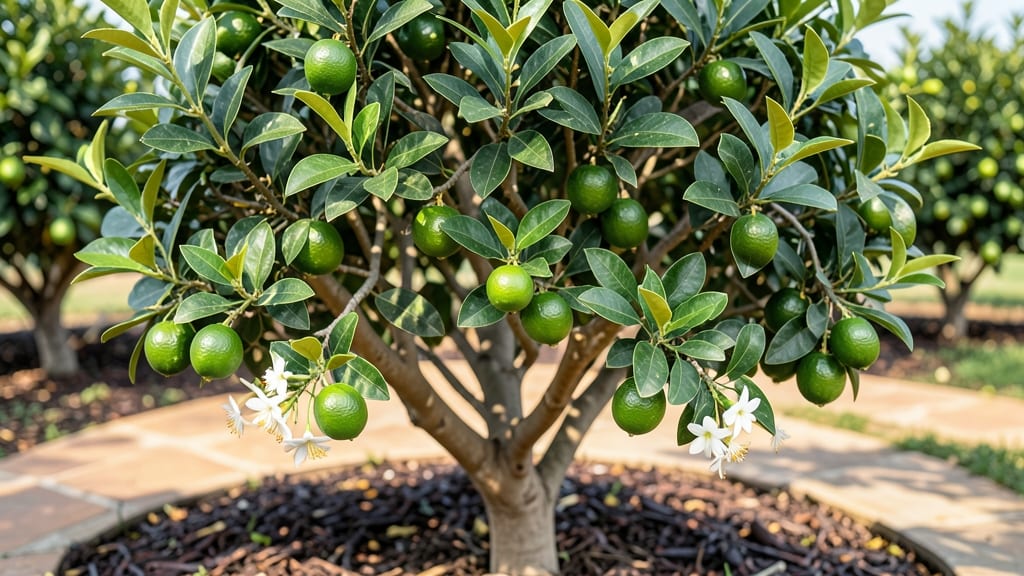
A lime tree can grow how tall does a lime tree grow anywhere from 8 feet to towering 20 feet at maturity, depending on whether you choose a dwarf variety or let it reach its full potential 🍋 — but picking the right size depends on more than just space.
If you're dreaming of fresh limes straight from your backyard, knowing how tall your lime tree will grow is the first step to success — because a 30-foot giant isn’t always practical, while a dwarf variety might not yield enough fruit for your needs.
Standard lime trees like the Bearss or Tahiti can climb toward the sky, while dwarf varieties like ‘Meyer Improved’ stay compact enough for containers or small yards. The difference isn’t just height, though — it’s also about fruit production, pruning needs, and even how much sunlight your tree can handle.
Below, I’ll break down the height differences between dwarf and standard lime trees, how growing conditions affect size, and spacing tips to keep your tree happy — no matter which variety you choose.


Standard lime tree heights: how big can they really get?
If you're planning to grow a lime tree in your backyard, understanding its mature height is crucial for space planning. Standard lime varieties like the Bearss lime and Tahiti lime can reach impressive heights—often between 15 to 20 feet—when given ideal growing conditions.
However, their growth isn't just about genetics; climate, soil quality, and pruning habits play a huge role in how tall they'll become.
For example, a Bearss lime tree planted in USDA Zone 9 or 10 with well-draining soil and full sun exposure can easily hit 20 feet tall within 10-15 years. In cooler climates like Zone 8, growth may slow, keeping the tree closer to 12-15 feet.
My neighbor in San Diego has a Tahiti lime tree that towers over his garage—nearly 25 feet—thanks to years of minimal pruning and rich, sandy soil.
Here’s a quick reference for how tall common lime varieties can grow under optimal conditions:
| Variety | Mature Height (ft) | Growth Rate | Climate Notes |
|---|---|---|---|
| Bearss Lime | 15-20 ft | Moderate (1-2 ft/year) | Thrives in warm climates (Zones 9-11) |
| Tahiti Lime | 12-18 ft | Slow to moderate (1 ft/year) | Cold-hardy to Zone 8 with protection |
| Key Lime | 10-15 ft | Fast (2-3 ft/year) | Needs tropical conditions (Zones 10-11) |
| Persian Lime | 15-25 ft | Variable (1-3 ft/year) | Loves heat and humidity |
The Key lime is the smallest of the standard varieties, often staying under 15 feet even in ideal conditions. I planted one in a large container in my courtyard, and while it didn’t reach its full height, it still produced dozens of limes per season.
If you’re in a smaller yard, this variety is a great compromise between size and productivity.
Soil quality dramatically affects height. Lime trees prefer well-draining, slightly acidic soil (pH 6.0-7.0). Heavy clay or waterlogged soil can stunt growth, keeping trees under 10 feet even after a decade.
I once saw a 12-year-old Bearss lime in Houston that was only 8 feet tall because the soil was too dense. Amending the soil with compost and sand can make a huge difference in growth potential.
Pruning is another key factor. If you prune regularly to shape the tree or remove dead branches, you can keep a standard lime tree 20-30% shorter than its natural height.
My friend in Arizona prunes his Persian lime annually to maintain it at 12 feet, even though it could easily grow to 20 feet. Just avoid heavy pruning in late winter, as this can stress the tree and slow growth.
Climate also plays a role. In cooler climates (Zones 7-8), lime trees may grow more slowly, staying under 12 feet unless you use greenhouse protection or plant them in containers**> that can be moved indoors during winter.
I’ve seen Tahiti lime trees in Southern California that reach 18 feet in just 8 years, while identical trees in Tennessee might only hit 10 feet in the same time.
If you’re wondering how to fit a lime tree into your space, consider its canopy spread. Standard varieties can grow 10-15 feet wide, so you’ll need at least 20 feet of clearance in all directions for a full-sized tree.
For smaller spaces, dwarf varieties (like the Meyer Improved lime) are a game-changer—they stay under 8 feet tall and produce fruit just as reliably.
In my own backyard, I planted a Bearss lime tree near my patio, giving it plenty of space to grow. After 5 years, it’s now 8 feet tall and already bearing fruit. With proper care, I expect it to reach 15 feet in another 5-7 years. The key is patience and planning—lime trees are worth the wait for those fresh,
Dwarf lime tree options: compact heights for small spaces
If you love the tangy zest of limes but lack the yard space for a towering standard lime tree, dwarf varieties are your perfect solution. These compact citrus trees grow just 8-12 feet tall at maturity, making them ideal for patios, balconies, or even large containers.
The trade-off? They produce slightly fewer fruits than their full-sized counterparts—but the convenience and beauty make it worth it.
For example, the 'Meyer Improved' lime tree is a popular choice among gardeners with limited space. It matures around 6-8 feet tall and thrives in containers, while still delivering sweet, flavorful limes.
Another standout is the 'Little Lime' variety, which stays under 6 feet tall and is perfect for small urban gardens or even indoor growing near sunny windows.
| Variety | Mature Height | Yield (limes/year) | Best For |
|---|---|---|---|
| 'Meyer Improved' | 6-8 ft | 50-100 | Containers, patios, small yards |
| 'Little Lime' | 4-6 ft | 20-50 | Urban gardens, balconies |
| 'Dwarf Bearss' | 8-10 ft | 75-125 | Ground planting in small spaces |
| 'Tahiti Dwarf' | 6-8 ft | 40-80 | Containers, indoor-outdoor growing |
One key advantage of dwarf lime trees is their adaptability. Unlike standard varieties that require deep, well-draining soil and ample space, these compact trees tolerate container growing beautifully. Just ensure your pot has drainage holes and is at least 15-20 gallons in size for mature trees.
They also require less aggressive pruning to maintain shape, saving you time and effort.
However, don’t expect the same fruit abundance as a full-sized tree. While a standard lime tree can produce 200-300 limes annually, dwarf varieties typically yield 20-125 limes per year, depending on the variety and care.
If you're growing for personal use, this is usually plenty—but if you're aiming for commercial harvests, you may need multiple dwarf trees or a standard variety.
When choosing a dwarf lime tree, consider your climate zone. Most dwarf varieties thrive in USDA Zones 8-11, where they can enjoy year-round warmth. In colder regions, grow them in containers and overwinter them indoors near a sunny window.
With proper care—including regular watering, monthly feeding during growing season, and winter protection—your dwarf lime tree can thrive for decades and keep producing sweet, juicy limes.
For container growers, remember that root-bound trees produce fewer fruits. Repot every 2-3 years in spring to refresh the soil and encourage new growth. A 5-gallon container works for young trees, while mature dwarf lime trees need 15-25 gallons of space.
With the right variety and care, you’ll enjoy homegrown limes without sacrificing your garden’s layout!