
How To
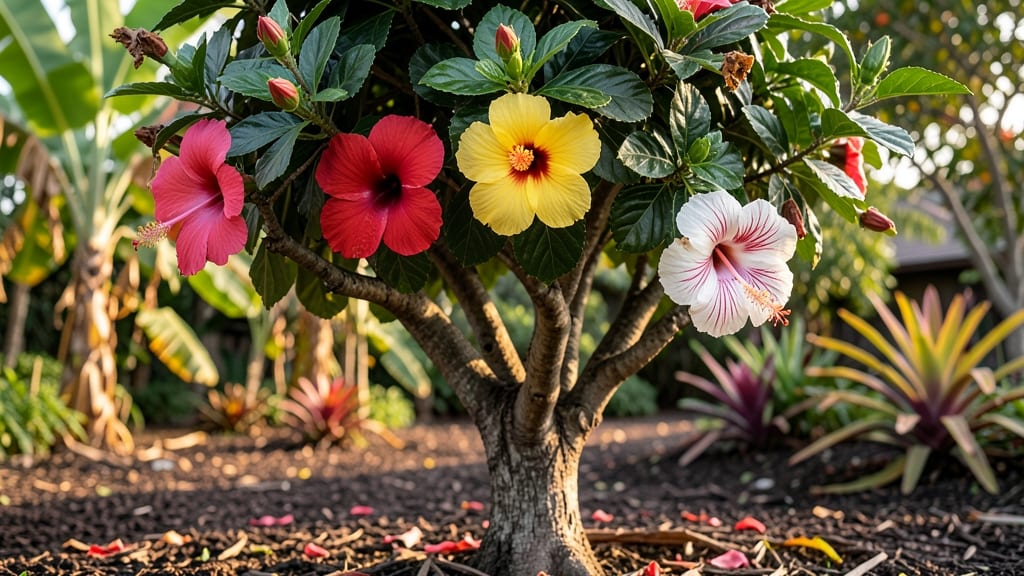
A hibiscus tree grows how tall does a hibiscus tree grow anywhere from 6 feet to over 20 feet, depending on the variety and how you care for it.
If you're dreaming of vibrant tropical blooms but wondering whether a hibiscus tree will dwarf your backyard, the answer depends entirely on the variety—and your climate. Some hibiscus varieties stay compact enough for patio pots, while others tower like small trees, creating a stunning focal point in your garden.
For example, tropical hibiscus like Hibiscus rosa-sinensis can reach 10 to 15 feet tall in warm climates, while hardy hibiscus such as Hibiscus syriacus (also called rose of Sharon) typically max out around 10 to 12 feet in cooler zones like 6a.
Dwarf varieties, though, might only hit 3 to 5 feet, making them perfect for smaller spaces.
Below, I’ll break down the height ranges by variety, how your local climate affects growth, and 5 simple tips to keep your hibiscus at your ideal height—whether that’s a tall backyard statement or a manageable container plant.


Hibiscus tree height by variety: from compact shrubs to towering giants
Choosing the right hibiscus variety is the first step to creating your dream garden—whether you want a tropical focal point or a container-friendly shrub. Hibiscus trees vary dramatically in height, from dwarf varieties under 3 feet to towering giants over 20 feet.
The key is matching your space constraints with the right climate zone and growth habits.
Tropical hibiscus (Hibiscus rosa-sinensis) typically reach 10-15 feet tall in warm climates, while hardy hibiscus (Hibiscus syriacus) often stay between 6-12 feet in cooler regions. Dwarf varieties like 'Lima' or 'Piebald' max out at 3-5 feet, making them perfect for patio pots or small gardens.
Your climate zone plays a huge role—tropical hibiscus thrive in USDA zones 9-11, while hardy hibiscus can survive zones 5-9 with winter protection. Even within the same species, pruning habits and soil conditions can shift a plant’s mature height by 30% or more.
Let’s break down the most popular varieties and their expected heights.
| Variety | Type | Mature Height | Growth Rate | Best For |
|---|---|---|---|---|
| Tropical Hibiscus (H. rosa-sinensis) | Tropical | 10–15 ft | Fast (3–5 ft/year) | Large gardens, containers (dwarf varieties) |
| Hardy Hibiscus (H. syriacus) | Perennial | 6–12 ft | Moderate (2–3 ft/year) | Cold climates, privacy screens |
| Dwarf Tropical ('Lima', 'Piebald') | Tropical | 3–5 ft | Slow (1–2 ft/year) | Patio pots, small spaces |
| Swamp Hibiscus (H. moscheutos) | Perennial | 8–12 ft | Fast (4–6 ft/year) | Wet soils, pond edges |
| Rose of Sharon ('Diana', 'Blue Chiffon') | Hardy | 8–10 ft | Moderate (2–3 ft/year) | Foundation planting, borders |
If you’re working with limited space, dwarf tropical hibiscus like 'Lima' or 'Piebald' are game-changers—they stay under 5 feet tall and thrive in 15-gallon containers. These varieties are also heat-tolerant, making them ideal for urban patios or balconies in hot climates.
For privacy screens or backyard focal points, hardy hibiscus like 'Diana' or 'Blue Chiffon' (Rose of Sharon) grow 8-10 feet tall and produce stunning blooms from summer to fall. Their low-maintenance nature makes them perfect for first-time gardeners in USDA zones 5-9.
Swamp hibiscus (H. moscheutos) is another standout for wetland gardens or pond edges, reaching 8-12 feet with bold, dinner-plate flowers. This variety loves moist, acidic soil and thrives in USDA zones 4-9, making it a low-fuss giant for larger properties.
Pro tip: If you’re unsure about a variety’s final height, check the growth rate—fast growers like tropical hibiscus can add 3-5 feet per year, while slower varieties like dwarf types may only grow 1-2 feet annually.
This helps you predict pruning needs and space requirements years in advance.
Remember,
How climate affects hibiscus growth: zones, seasons, and pruning tips
Your hibiscus tree's height isn't just about genetics—it's a climate dance between warmth, frost, and humidity. In USDA zones 9-11, tropical hibiscus varieties like Hibiscus rosa-sinensis can reach 10-15 feet tall, while hardy varieties like Hibiscus syriacus thrive in zones 5-10, topping out at 10-12 feet.
The difference? Frost tolerance and seasonal growth spurts.
Humidity plays a hidden role too—high humidity in zones 9-11 fuels rapid vertical growth, while drier climates (zones 5-8) slow height increases but produce hardier stems. Even in ideal zones, winter dormancy in hardy varieties can shrink growth by 30-50% compared to tropical cousins.
🌺
| Climate Factor | Effect on Growth | Height Impact | Zone Range |
|---|---|---|---|
| Temperature | Warmer climates (75°F+) promote faster vertical growth | +2-4 ft/year (tropical) | USDA 9-11 |
| Humidity | High humidity (60%+) increases leafy growth over flowers | +1-2 ft canopy spread | USDA 9-11 |
| Frost | Hardy varieties (zones 5-10) enter dormancy, stunting growth | -30-50% winter growth | USDA 5-10 |
| Seasonal Pruning | Late winter pruning (zones 5-8) controls height by 20-30% | -1-3 ft max height | USDA 5-10 |
| Sunlight | Full sun (6+ hrs) increases height by 15-25% vs. partial shade | +1-2 ft/year | All zones |
In USDA zones 9-11, tropical hibiscus grow aggressively during spring and summer, adding 2-4 feet per year if unpruned. The monsoon season in these zones can push growth to 15 feet in 3 years, but requires regular pruning to maintain shape.
Meanwhile, hardy varieties in zones 5-8 grow 1-2 feet per year, with most height gained between May and September.
Pruning timing matters more than you think. In zones 9-11, prune after spring blooms (March-April) to avoid cutting off next year's flowers. In zones 5-8, prune in late winter (February) before new growth begins.
This seasonal pruning can reduce mature height by 20-30% while encouraging bushier, flower-heavy growth.
Don't forget that container-grown hibiscus in zones 9-11 will stay 30-50% shorter than in-ground plants due to root restriction. If you're growing in pots, prune aggressively every 6-8 weeks to prevent leggy growth. For in-ground plants, light pruning every 2-3 months keeps height manageable while maximizing blooms.
🌿