
Watering
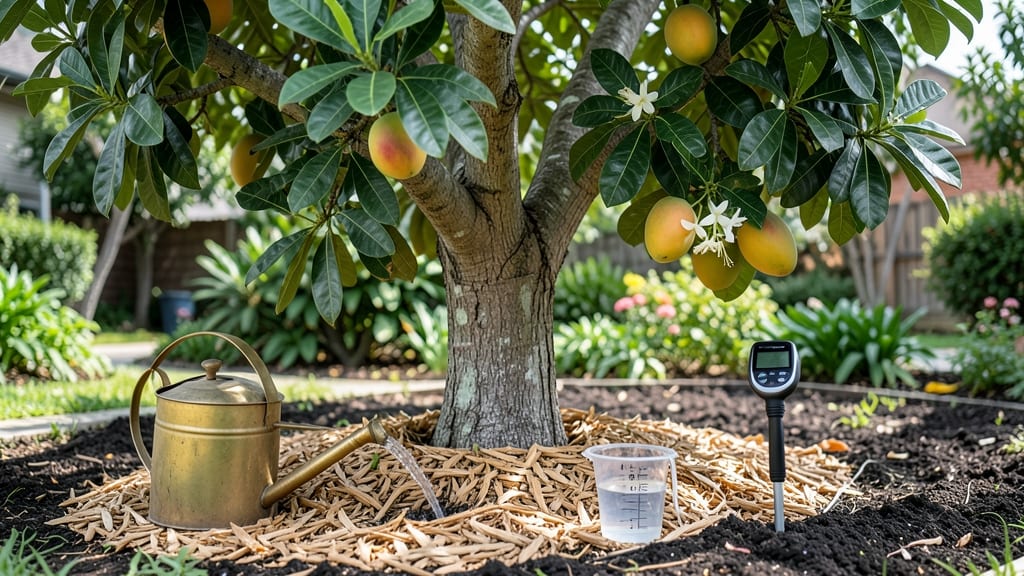
A mango tree needs deep, consistent watering—about 15-50 gallons per session, depending on its age and climate—because its roots crave moisture but despise soggy soil.
Struggling to keep your 🥭 mango tree lush and productive? Watering mistakes—whether overdoing it or neglecting hydration—can stunt growth, reduce fruit yield, or even kill your tree. The key is balancing soil saturation with aeration, especially in General (Tropical/Subtropical Regions) where heat accelerates evaporation.
Young trees need frequent, shallow checks, while mature ones thrive on deep watering 2-3 times a week during peak summer heat. The goal? Encourage roots to dive deep for stability and sweetness.
I’ll break down how often to water by season, how to spot over- or underwatering, and the simple tricks that keep your tree’s roots happy year-round.
Ready to master the watering routine that turns your mango tree from thirsty to thriving? Let’s dive into the science—and the shortcuts—that work for home gardeners, no green thumb required.
Mango tree watering requirements by growth stage: seedling to mature fruit-bearing tree
Mango trees thrive with the right watering approach, but their needs change dramatically from seedling to mature fruit-bearing tree. As a tropical plant, mangoes demand consistent moisture, but overwatering can suffocate roots while underwatering stresses the tree.
The key lies in understanding root development and adjusting water volume by growth stage—whether you're nurturing a tiny sapling or a towering fruit producer.
For container-grown mangoes, watering frequency doubles compared to in-ground trees because pots dry out faster. A 5-gallon container may need water every 2-3 days in summer, while a mature in-ground tree can stretch watering to every 5-7 days.
Always check soil moisture 2 inches deep—this tells you whether to water again or wait.
Young mango trees develop shallow but dense roots in their first 2 years, making them highly sensitive to drought. Mature trees, however, grow deep taproots that access water from 3-5 feet underground.
This shift means your watering strategy must evolve from frequent shallow waterings to deep, infrequent soakings as your tree matures.
Let’s break down the exact watering needs for each stage, including soil moisture targets, frequency, and depth—plus how to adjust for containers versus in-ground planting.
Seedlings require the most frequent watering because their root systems are still establishing. Aim to keep the top 2 inches of soil moist but never waterlogged—soggy soil invites root rot.
Use a moisture meter or stick your finger in the soil; if it feels dry at 2 inches, it’s time to water. For container seedlings, water every 2-3 days in summer and reduce to every 4-5 days in cooler months.
Juvenile mango trees (ages 2-5) can handle slightly drier conditions as their roots grow deeper. Shift to watering every 3-5 days with a deep soak that penetrates 3-4 inches.
In-ground trees benefit from drip irrigation or soaker hoses, while container trees need larger pots (minimum 15 gallons) to accommodate root growth. Always water in the early morning to prevent fungal diseases from overnight moisture.
Mature mango trees (5+ years) develop taproots that reach 3-5 feet deep, reducing their need for frequent watering. Water every 5-7 days during dry spells, delivering 30-50 gallons per tree to saturate the root zone.
In-ground trees handle this best, but container-grown mature trees require oversized pots (50+ gallons) and daily checks for moisture. Mulch heavily (3-4 inches) to retain soil moisture and regulate temperature.
During flowering and fruiting seasons, increase watering by 20% to support fruit development. Stress from drought can cause blossom drop or poor fruit set. Monitor soil moisture closely—if the top 4 inches feel dry, water immediately.
Avoid wetting leaves during irrigation to prevent fungal infections like anthracnose, which thrives in damp conditions.
One of the biggest mistakes gardeners make is watering based on a schedule rather than soil conditions. Instead, use the "finger test": Insert your finger 2-4 inches deep. If it feels dry, water deeply until moisture reaches the root zone.
For containers, lift the pot—if it’s light, it’s time to water. Adjust your routine based on weather, season, and tree age
Seasonal watering adjustments for mango trees: hot summers, monsoon prep, and winter care
Mango trees thrive in tropical climates, but their water needs shift dramatically with the seasons. In hot summers, they demand frequent deep watering to replace lost moisture, while monsoon seasons require adjustments to prevent waterlogging.
Even in mild winters, hydration is crucial to support the tree's dormant but still-living roots. Mastering these seasonal adjustments ensures your mango tree stays healthy, productive, and resilient year-round.
One of the biggest mistakes I see is treating all seasons the same. For example, overwatering during monsoons can suffocate roots, while underwatering in summer leads to leaf drop and poor fruit development. The key lies in understanding how climate affects soil moisture and root activity.
Let’s break down the ideal watering approach for each season, including how to spot trouble signs early and fix them before they harm your tree.
- 💧 Summer (Dry Heat): Water deeply 2-3 times per week—aim for 30-50 gallons per mature tree. Focus on early morning to reduce evaporation. Signs of thirst: Wilting leaves, dry soil 2" below surface.
- 🌧️ Monsoon (Heavy Rain): Reduce watering to once every 10-14 days unless soil stays soggy. Improve drainage with gravel layers or raised beds. Signs of overwatering: Yellowing leaves, fungal spots, or roots exposed above soil.
- 🌡️ Winter (Mild/Dormant): Water bi-weekly with 10-15 gallons per tree. Focus on root zone hydration. Signs of stress: Premature leaf drop or brittle branches.
- 🌱 Transplant Shock (Any Season): Water daily for 2 weeks post-planting, then taper to seasonal schedule. Mulch heavily to retain moisture.
- ✂️ Pruning Impact: After pruning, increase watering by 30% for 4 weeks to support new growth.
During summer, mango trees are most vulnerable to drought stress. I’ve seen trees recover from wilting within days when given a deep soak, but chronic underwatering weakens the tree’s ability to fight pests and diseases.
Use a soil moisture meter to check moisture levels at 2-3 inches deep—this is the zone where roots actively seek hydration. If the meter reads dry, it’s time to water, even if the topsoil feels moist.
Monsoon seasons are tricky because heavy rains can drown roots if the soil doesn’t drain properly. I recommend amending clay-heavy soils with organic matter like compost or coconut coir to improve aeration. For container-grown mango trees, ensure pots have drainage holes and elevate them slightly to prevent water pooling.
If you notice water pooling around the base for more than 24 hours, it’s a red flag for root rot.
Winter care often gets overlooked, but even in frost-free zones, mango trees benefit from reduced but consistent watering. The goal is to keep the roots hydrated enough to sustain the tree’s metabolic processes without encouraging fungal growth.
I’ve found that drip irrigation systems work best in winter—they deliver water slowly and directly to the root zone, minimizing waste and evaporation. Avoid overhead sprinklers, as they can promote fungal diseases in cool, humid conditions.
To summarize, the secret to seasonal watering success lies in observation and adaptation. Pay attention to your tree’s leaf color, soil moisture, and weather forecasts.
Adjust your watering schedule every 2-3 weeks based on these cues, and your mango tree will reward you with lush foliage and abundant fruit year after year. 🌿