
Pruning
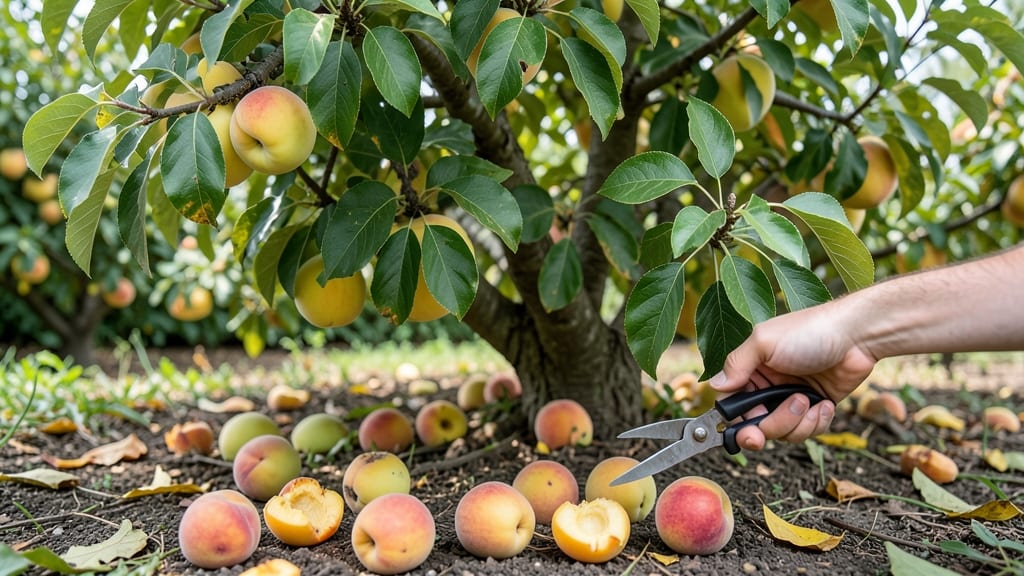
Your peach tree is dropping fruit like it's spring-cleaning—except it's not supposed to happen this much. 🌳 The root cause? Overloaded branches, poor air circulation, or a late frost sneaking in.
I’ve watched my own trees go from heavy with fruit to bare in days, and I’ll show you how to stop it before next season. The fix starts with selective pruning—thinning branches so the tree focuses energy on fewer, bigger peaches.
You’ll also adjust watering and fertilization to match the tree’s natural rhythm. Think of it as helping your tree "edit" its fruit load instead of letting it panic-drop everything. By mid-summer, you’ll see fewer fallen peaches and juicier, more uniform fruit on the branches.
The tree won’t waste energy on too many small peaches, and you’ll avoid the heartbreak of a half-harvested bounty. Works for both young trees and mature ones—just time your pruning right. Let’s turn that fruit drop into a full, flavorful harvest.
Root Causes Of Premature Fruit Loss
Understanding why peaches fall off your tree before ripening is the first step to fixing the problem. These drops often stem from a mix of environmental stress, genetic triggers, and poor orchard management. Let’s break down the key factors behind this frustrating phenomenon.
---
Peach trees are sensitive to sudden changes in temperature, especially during critical growth stages. Extreme heat or cold can disrupt the tree’s hormonal balance, causing fruit to drop prematurely.
- Late Frosts – If frost hits during bloom or early fruit set (typically April–May in most climates), flowers or young fruit can die, leading to heavy shedding.
Peach blossoms are particularly vulnerable to temperatures below 28°F (-2°C). - Heat Stress – During summer heatwaves (above 90°F/32°C), peaches may drop due to water stress or poor pollination (bees are less active in extreme heat). - Rain And Humidity – Excessive rain can wash away pollen, reduce fruit set, or promote fungal diseases (like brown rot), which weaken fruit attachment.
Pro Tip: 🌡️ Monitor your local frost-free date and consider frost protection methods (like row covers or wind machines) if your region is prone to late frosts.
---
Peach trees need a balanced diet of nitrogen (N), phosphorus (P), potassium (K), and micronutrients like boron and zinc to support fruit development. Imbalances can lead to poor fruit retention.
- Nitrogen Deficiency – While nitrogen fuels leaf growth, too little can stunt fruit development, while too much (especially late in the season) can cause excessive vegetative growth at the expense of fruit retention. - Potassium Shortage – Potassium (K) strengthens cell walls and helps fruit stay attached.
A deficiency (common in sandy soils) often results in premature drop, especially in young fruit. - Boron Deficiency – Boron is critical for cell wall development in peaches. Without enough, fruit may abort early or drop while still small.
Symptoms include cracked or hollow fruit. - Calcium Issues – Low calcium can lead to blossom end rot in peaches, causing fruit to drop or develop dark, sunken spots.
Pro Tip: 💡 Conduct a soil test every 2–3 years and amend with balanced fertilizer (like 10-10-10) or boron supplements if needed. Avoid over-fertilizing with nitrogen late in the season.
---
Peaches are self-pollinating but rely heavily on bees for optimal fruit set. If pollination doesn’t happen correctly, the tree aborts weak or unpollinated fruit, leading to drops.
- Lack Of Bee Activity – If bees are scarce (due to pesticide use, extreme weather, or lack of early blooms), many flowers won’t be pollinated, causing blank clusters (no fruit forming) or early drops. - Incompatible Pollinators – Some peach varieties require cross-pollination (e.g., 'Elberta' needs a different variety nearby).
Planting two compatible varieties can improve fruit retention. - Poor Weather During Bloom – Rain, wind, or cold during flowering can wash away pollen or prevent bees from visiting, reducing fruit set.
Pro Tip: 🐝 Plant bee-friendly flowers near your peach tree (like clover or lavender) and avoid broad-spectrum pesticides during bloom. If needed, hand-pollinate with a small brush if bees are absent.
---
Peach trees have a limited capacity to support fruit. When they’re overloaded, they shed excess fruit to conserve energy—a survival mechanism.
- Too Many Fruit – If the tree sets more fruit than it can support, it drops weaker or smaller fruit to keep the healthiest ones.
This is common after a heavy bloom year. - Root Stress – Drought, poor drainage, or compacted soil restrict water and nutrient uptake, forcing the tree to abort fruit to survive. - Disease Or Pest Damage – Brown rot, bacterial spot, or aphid infestations weaken fruit, causing premature drop.
Even root-knot nematodes (microscopic pests) can stress the tree systemically.
Pro Tip: ✂️ Thin fruit early (when peaches are 1–1.5 inches wide) to reduce stress. Also, mulch well and water deeply during dry spells to prevent root stress.
--- Some peach varieties are more prone to fruit drop due to their genetics. For example:
- June-Dropping Varieties – Certain cultivars (like 'Redhaven' or 'Elberta') are known for heavy June drops, where they shed 50–70% of their fruit in early summer as they shift resources to the remaining fruit. - Sensitive To Heat – Some modern hybrids (like flat peaches) may drop more easily in hot climates due to thinner skins or weaker attachment points. - Poor Fruit Retention – If you’ve noticed consistent drops year after year, your variety may simply be prone to shedding.
Pro Tip: 🔍 If your tree always drops heavily, consider switching to a more stable variety like 'Contender' or 'Relenta' (known for better retention).
Fixing Excessive Fruit Drop
Now that you understand why your peach tree is shedding fruit, it’s time to take action! The good news is that most causes of premature fruit drop can be managed—or even prevented—with a few targeted strategies.
Below, we’ll break down practical, step-by-step solutions tailored to the root cause, plus proactive tips to keep your tree healthy and productive.
---
If your tree is overloaded with fruit, it’s struggling to support them all. Thinning branches and fruit is the fastest way to redirect energy to the remaining peaches.
How to Fix It: 🔥 Step 1: Assess the Load – Gently shake a few branches over a tarp. If fruit rains down like confetti, it’s time to thin. 🍳 Step 2: Hand-Thin Fruit – Wear gloves and remove 30-50% of the smallest, least mature peaches by hand. Focus on clusters near branch tips, as these are often the weakest. 👨🍳 Step 3: Prune Overcrowded Branches – Use clean, sharp pruners to trim back suckers, water sprouts, and crossing branches that compete for nutrients. Aim for an open-center shape to improve airflow. 🥘 Step 4: Fertilize Strategically – After pruning, apply a balanced fertilizer (10-10-10) to replenish nutrients. Avoid high-nitrogen fertilizers, which encourage leafy growth over fruit.
💡 Pro Tip: Prune on a dry, cloudy day to reduce stress on the tree. If you’re unsure which branches to cut, snap a photo and ask a local extension office for guidance!
---
Extreme heat, cold snaps, or drought can trigger fruit drop. Stabilizing the tree’s environment is key to keeping peaches on the branch where they belong.
How to Fix It: 🌡️ Step 1: Mulch Deeply – Spread 3-4 inches of organic mulch (wood chips or straw) around the base (but not touching the trunk) to retain moisture and regulate soil temperature. 💧 Step 2: Water Deeply (But Not Too Much) – During droughts, water slowly and deeply (1-2 inches per week) in the early morning to prevent fungal issues. Avoid overhead sprinklers, which can stress the tree. ☀️ Step 3: Provide Shade Cloth (If Needed) – If your tree is in a hot, sunny microclimate, drape 30-50% shade cloth over it during peak heat (10 AM–4 PM) to prevent sunburn and stress. ❄️ Step 4: Protect from Late Frosts – If frost is forecasted, cover young fruit with frost blankets or row covers at night.
🎯 Pro Tip: Peach trees hate wet feet! Ensure your tree has proper drainage—if water pools around the base, amend the soil with compost or perlite to improve aeration.
---
If insects (like peach twig borers or aphids) or diseases (brown rot, leaf curl) are to blame, targeted treatments can save your crop.
How to Fix It: 🔪 Step 1: Identify the Problem – Look for: - Holes in branches (twig borers) - Sticky residue or curling leaves (aphids, mites) - Black spots or mold (brown rot) 💊 Step 2: Apply Organic or Chemical Controls - For insects: Spray with neem oil (early season) or horticultural oil (for borers). Repeat every 7-10 days. - For fungal diseases: Use copper fungicide (preventative) or baking soda spray (1 tbsp baking soda + 1 quart water + a drop of soap). 🌿 Step 3: Remove Infested Fruit/Branches – Bag and dispose of dropped fruit to prevent reinfection. Prune and burn or compost heavily diseased branches.
✨ Pro Tip: Prevention is easier than cure! Spray neem oil in early spring (before buds swell) to deter pests before they arrive.
---
If your tree lacks key nutrients (like boron, zinc, or calcium), it may drop fruit prematurely. A soil test is your best first step.
How to Fix It: 📊 Step 1: Test Your Soil – Send a sample to a local extension office for a nutrient analysis. Most peach trees need: - pH 6.0–7.0 (adjust with lime if too acidic) - Balanced NPK (10-10-10 or 5-10-10) - Micronutrients: Boron (for fruit set), zinc (for leaf health) 🍎 Step 2: Amend the Soil – Mix in: - Compost or well-rotted manure (for organic matter) - Epsom salt (for magnesium) if leaves are yellowing - Borax (1 tsp per gallon of water, sprayed on leaves) if fruit is small and misshapen 🌱 Step 3: Use Foliar Sprays – For quick results, spray seaweed extract or fish emulsion (diluted) on leaves every 2 weeks during fruiting.
💡 Pro Tip: Over-fertilizing can burn roots! Always water thoroughly after applying amendments to help them absorb.
--- To keep fruit drop at bay year-round: ✅ Prune annually in late winter/early spring (before buds swell). ✅ Monitor for pests weekly during growing season. ✅ Mulch and water consistently—don’t let the tree stress. ✅ Thin fruit early (when peaches are marble-sized) for larger, healthier harvests. ✅ Rotate fertilizers to avoid nutrient imbalances.
--- Final Thought: A little preventative care now can mean bigger, juicier peaches next season—and fewer surprises on the ground! 🍑✨
Frequently asked questions
Is it normal for peach trees to drop fruit in June?
Yes, this is called the "June Drop" and is a natural process for many peach varieties like 'Redhaven' or 'Elberta'. Trees shed 50-70% of their fruit to focus energy on developing fewer, larger peaches. This happens when fruit reaches 1-1.5 inches wide—don't panic if you see heavy shedding during this time.
How can I tell if my tree is dropping fruit because of pests or disease?
Look for these warning signs: Holes in branches (twig borers), sticky residue on leaves (aphids), or black spots/mold on fruit (brown rot). If you see these, treat immediately with neem oil or copper fungicide. Healthy trees should have firm fruit with no unusual markings.
When is the best time to thin peaches to prevent excessive drop?
Thin when peaches are marble-sized (about 1 inch wide)—this is typically 4-6 weeks after bloom. Remove 30-50% of the smallest, weakest fruit, focusing on clusters near branch tips. This gives remaining peaches room to grow larger and reduces stress on the tree.
Will over-fertilizing my peach tree cause more fruit drop?
Too much nitrogen late in the season encourages leafy growth at the expense of fruit retention. Use a balanced fertilizer (10-10-10) early in the season, then switch to low-nitrogen, high-potassium options (5-10-10) as fruit develops. Always water thoroughly after fertilizing.
Can I save dropped peaches from my tree?
Use them immediately for peach jam, pies, or smoothies—they won't ripen further once picked. For storage, place whole dropped peaches in a single layer on a paper towel in the fridge for 3-5 days max. Avoid washing until ready to use to prevent spoilage.