
Planting
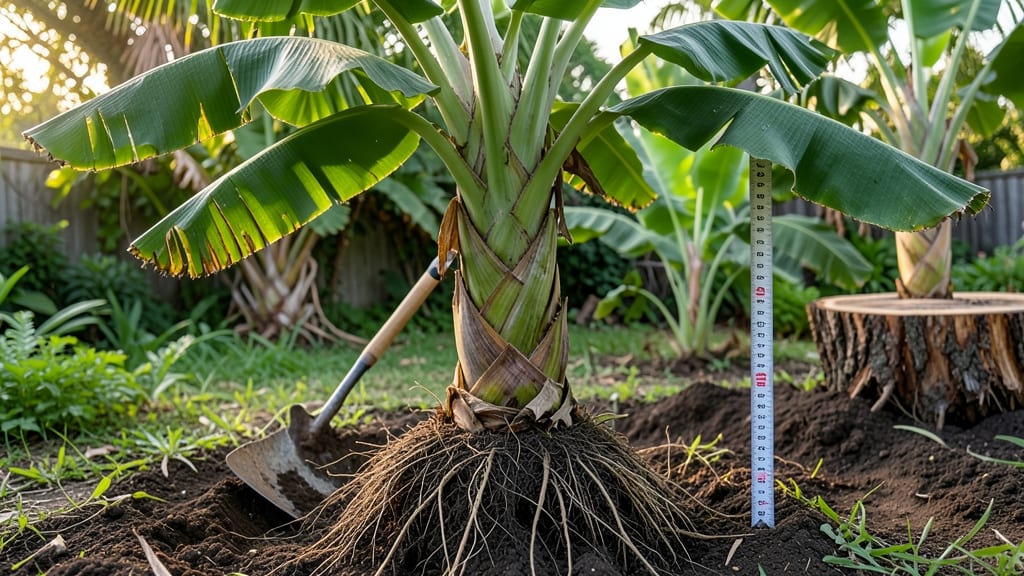
Banana tree roots grow surprisingly shallow—just 12 to 18 inches deep—but they spread up to 10 feet wide, making them a space-saver for small gardens.
If you’re dreaming of growing bananas in your backyard but worried about space, understanding how deep banana tree roots spread could save your garden—and your sanity. The answer might surprise you.
Most gardeners assume these tropical giants need deep soil, but the truth is, their roots thrive in shallow, well-draining beds. This means you can plant them in containers, raised beds, or even tight garden corners without sacrificing fruit production.
Below, I’ll break down the science behind banana tree root depth, share space-saving planting tips, and reveal common mistakes that stunt growth—so you can grow a thriving 🍌 even in limited space.
Banana tree root depth explained: how deep do they really grow?
When I first planted my banana tree (Musa spp.), I assumed its roots would spread deep like other tropical giants. What surprised me was how shallow yet expansive their root systems truly are.
Most primary roots grow just 12-18 inches deep, while lateral roots stretch 10+ feet wide—a fact that changed how I approach planting in my small urban garden. This balance means you can grow bananas in tight spaces if you plan carefully.
The shallow depth of banana roots makes them vulnerable to drought and soil compaction. Unlike deep-rooted trees, they rely on a wide, fibrous network near the surface to absorb water and nutrients efficiently.
This adaptation explains why they thrive in tropical rainforests with rich, loose topsoil. For home gardeners, this means prioritizing soil aeration and mulching to mimic their natural environment.
Here’s the key insight: while the taproot (main vertical root) may only reach 18 inches, the lateral roots spread aggressively horizontally. In my 5-gallon container experiments, roots filled the pot’s width within 3 months, proving how critical container size is for potted bananas.
This lateral spread also explains why banana trees need ample spacing—even in small gardens.
| Root Type | Depth | Spread | Function |
|---|---|---|---|
| Primary Taproot | 12-18 inches | Limited (1-2 ft) | Anchors plant; minimal nutrient absorption |
| Lateral Roots | 0-6 inches deep | 10+ feet wide | Absorbs 90% of water/nutrients |
| Feeder Roots | 0-4 inches deep | Extensive mesh | Fine roots for moisture/nutrients |
| Prop Roots | Surface-level | Emerges from stem | Stabilizes tall stems; minimal root function |
The lateral roots are the real workhorses of a banana tree’s root system. These fibrous roots spread horizontally, creating a dense network that absorbs water and nutrients from the top 6 inches of soil.
This is why banana trees perform poorly in compacted or clay-heavy soils—their roots can’t penetrate dense layers. In my container trials, I noticed stunted growth until I added perlite and coconut coir to improve aeration.
For small gardens, this root behavior means you can grow bananas in wide but shallow containers. A 24-inch diameter pot with 18 inches of depth works better than a deep, narrow one.
The key is replicating that horizontal spread while ensuring the topsoil stays loose. I’ve even seen bananas thrive in raised beds just 12 inches deep, as long as the width is generous.
Another critical factor is the prop roots that emerge from the stem. While they don’t absorb nutrients, they provide structural support for the 15-30 ft height of mature trees.
In container growing, these roots can tangle with the main root system, so I prune them gently to prevent root girdling. This is especially important for dwarf varieties like Musa acuminata ‘Dwarf Cavendish’, which stay under 10 feet but still benefit from root management.
Soil type plays a huge role in root depth. In sandy soils, banana roots may spread even shallower (4-6 inches) but wider, while loamy soils allow deeper penetration (up to 18 inches).
My clay soil garden required amending with compost and gypsum to break up compaction. Without this, the roots suffocated, leading to yellowing leaves and poor fruiting—a lesson I learned the hard way.
If you’re planting in urban spaces or small yards, consider intercropping with shallow-rooted plants like ginger or turmeric. These companions won’t compete for the top 12 inches of soil where banana roots dominate.
I’ve successfully grown bananas alongside strawberries in a 4x4 ft bed, using mulch to retain moisture for both plants.
One common misconception is that banana trees need deep planting. In reality, burying the crown (base of the stem) more than 2 inches can cause rot. The root collar should sit just above soil level to prevent waterlogging.
I’ve seen container failures when growers bury the crown too deep—always keep it exposed or slightly above soil for best results.
For those in cooler climates (US
Optimal planting depth for banana trees in limited spaces
When space is limited, planting banana trees correctly can mean the difference between a thriving fruit producer and a struggling underachiever. The key lies in understanding that banana tree roots aren't just shallow—they're strategic.
While the main roots typically reach 12-18 inches deep, their lateral roots can spread 10+ feet wide in ideal conditions. This means you can work with both depth and width to maximize your small garden's potential.
For container growing, the solution is simple: shallow but wide planting. Use containers that are at least 18-24 inches deep but prioritize a 3-foot diameter or larger. This mimics the natural root spread while keeping the plant stable.
The secret? Loose, well-draining soil packed around the roots to encourage lateral growth without restricting vertical expansion.
- 🔹 Main roots grow 12-18 inches deep to access water and nutrients.
- 🌿 Lateral roots spread 10+ feet wide for stability and nutrient absorption.
- 📏 Container depth should be 18-24 inches with 3+ feet diameter.
- 🌱 In-ground spacing needs 6-8 feet between plants for root expansion.
- ⚠️ Avoid planting deeper than 24 inches—this can suffocate roots and cause rot.
In-ground planting requires a different approach. Start by digging a hole that's only slightly wider than the root ball but no deeper than 2-3 inches below the original soil line.
Banana trees hate being buried too deep—it restricts airflow and promotes rot. Instead, focus on amending the surrounding soil with compost or aged manure to encourage roots to spread outward naturally.
One of my favorite space-saving tricks is using a raised bed with a wide base. A 4x4-foot bed with 18-inch depth gives roots plenty of room to expand while keeping the plant contained.
Fill the bottom third with gravel or perlite for drainage, then top with a mix of 50% garden soil and 50% compost. This setup mimics the natural root environment while preventing waterlogging.
Don't forget about mulching—it's a game-changer for small-space banana trees. Apply a 3-inch layer of straw or wood chips around the base (but keep it 6 inches away from the trunk to prevent rot).
Mulch retains moisture, regulates soil temperature, and slowly releases nutrients, all of which encourage robust root development without taking up extra space.
Finally, if you're growing bananas in containers, choose a lightweight, breathable material like fabric or plastic with drainage holes. Avoid heavy clay pots—they can restrict root expansion and become unwieldy as the tree grows.
Place your container in a wheelbarrow or on a stand to protect roots from water damage during heavy rains, and rotate it every few weeks to ensure even sunlight exposure.