
Pruning
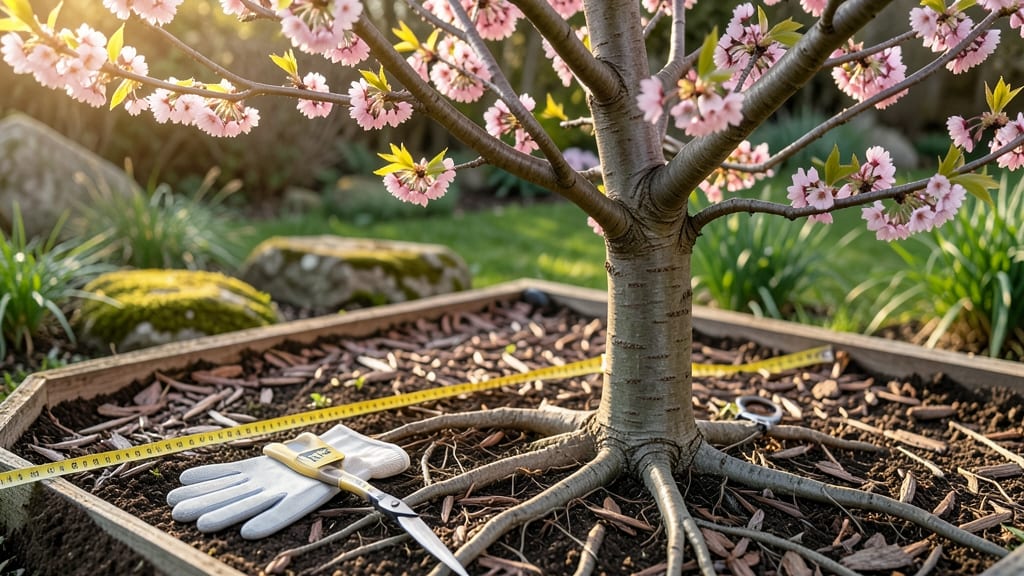
Flowering cherry tree roots spread aggressively, reaching 12–18 inches deep while extending outward 2–3 times the tree's canopy width. This aggressive growth can outcompete nearby plants and damage foundations if planted too close to structures.
Understanding how flowering cherry tree roots behave is key to preventing landscape conflicts.
These trees develop a strong taproot system that anchors them deeply while sending out lateral roots that spread far beyond the visible canopy. 🌳 The roots actively compete for water and nutrients, which is why you'll often see nearby plants struggling or dying if they're too close.
Seasonal growth patterns also play a role—roots expand most aggressively in spring and early summer when the tree is actively flowering and producing new growth. This makes early planning essential if you want to maintain a healthy garden ecosystem around your cherry tree.
The aggressive nature of these roots isn't just about space—it's also about soil chemistry. Flowering cherry trees prefer well-draining soil with a slightly acidic pH (around 6.0-6.5), and their roots will actively modify the soil chemistry in their vicinity to create this ideal environment.
This can create "root zones" where other plants struggle to establish themselves. The good news? With proper planning, you can create a thriving landscape that accommodates both your cherry tree and other plants.
💡 In This Article
- How Flowering Cherry Tree Roots Grow and Compete
- Best Planting Spaces and Root Barrier Solutions
How flowering cherry tree roots grow and compete
Flowering cherry trees develop a two-part root system that explains their aggressive spread. The primary taproot plunges vertically down to 12–18 inches, anchoring the tree while accessing deep soil moisture. This vertical root can extend even deeper in well-drained soils, reaching 3–4 feet in ideal conditions.
What makes these trees particularly competitive is their extensive network of lateral roots, which spread horizontally 2–3 times the tree's canopy width—often 20–30 feet for mature specimens.
The roots' competitive advantage comes from their ability to modify soil chemistry. Cherry trees release organic acids that lower the soil pH in their vicinity, creating an acidic microenvironment (pH 5.5–6.5) that suppresses many competing plants.
This chemical warfare is most intense in the upper 6–12 inches of soil where fine feeder roots concentrate. You'll often notice nearby plants yellowing or stunting because their root systems can't compete for nutrients in this modified zone. The roots also produce allelopathic compounds that inhibit seed germination nearby.
Seasonal growth patterns amplify this competition. Roots grow most aggressively during spring and early summer when the tree is flowering and leafing out, demanding maximum water and nutrients. In autumn, root growth slows but continues to expand outward, especially if the tree receives consistent irrigation.
This explains why newly planted cherry trees can quickly dominate their surroundings—within 2–3 years, their root system may already cover an area larger than their visible canopy.
Soil texture plays a crucial role in how far roots spread. In sandy soils, roots grow deeper but spread more widely to find moisture, while clay soils restrict vertical growth but encourage horizontal expansion.
The roots' search for water creates pressure on nearby plant roots, often forcing them to grow around the cherry's root zone rather than through it. This physical displacement is why you might see grass or ground covers struggling in circular patterns around mature cherry trees.
Here's what happens when roots encounter obstacles: they'll either grow around them (like sidewalks) or push against them (like foundations).
The lateral roots can exert up to 15,000 pounds of pressure per square foot when growing against hard surfaces, which is why cracks often appear in driveways or foundations near these trees.
The roots also seek out water sources, which is why they'll grow toward irrigation lines or plumbing—sometimes even breaking through concrete if given enough time.
What most gardeners don't realize is that these roots are also highly sensitive to soil compaction. When soil is compacted (like from foot traffic or heavy equipment), the lateral roots will grow even more aggressively horizontally to find less resistant pathways.
This creates the classic "root-bound" appearance where roots emerge at the soil surface in search of better growing conditions. The solution? Aerating the soil around the tree's drip line can actually reduce this aggressive spread by giving roots more vertical growth opportunities.