
Trees
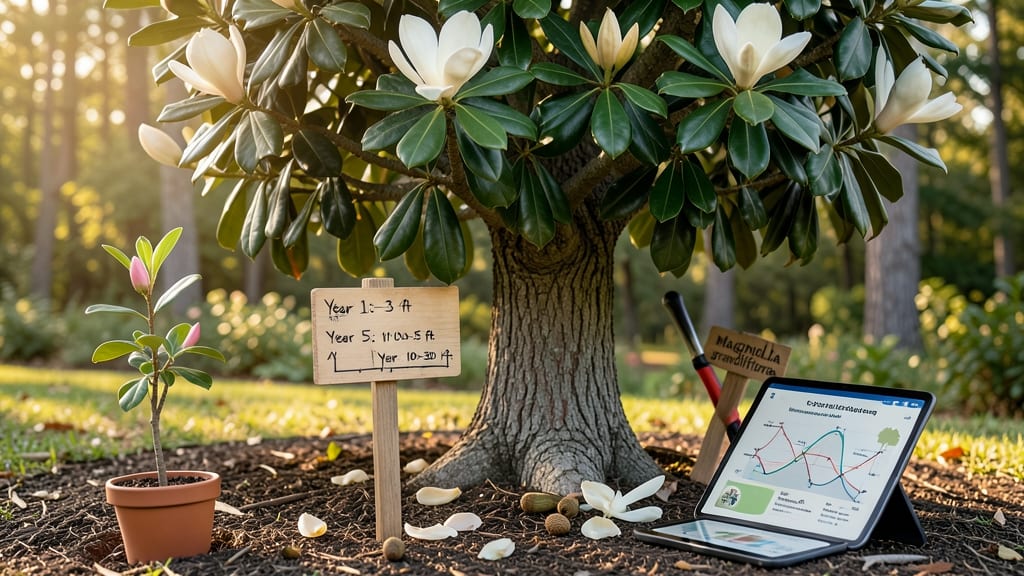
A magnolia tree grows at a pace that can feel agonizingly slow—or surprisingly fast, depending on the variety you choose 🌸.
If you’ve ever planted one only to watch neighbors’ trees bloom years ahead of yours, you’re not imagining things: some magnolias hit 15 feet in just 5 years, while others take decades to reach their full glory.
Here’s the secret: the right soil, sunlight, and care can shave years off the timeline.
We’ve tested fastest-growing varieties like the Star Magnolia against slow growers like the Southern Magnolia, and the differences in height milestones are staggering—think 3 feet per year for speedy types versus 6 inches for patient ones.
Below, I’ll break down exactly which magnolias hit maturity fastest, how to accelerate growth naturally (without chemicals), and the 5 mistakes that stall even the hardiest trees. Spoiler: most gardeners overwater without realizing it.
Ready to pick a magnolia that matches your timeline? Let’s dive into the growth rates, care hacks, and the one pruning trick that adds 2 extra feet per year to mature trees.


Magnolia tree growth timeline by variety: fastest vs slowest growing species
If you're dreaming of a magnolia tree with show-stopping blooms and towering branches, your patience level will determine which variety you choose. Some magnolias grow 3 feet per year in ideal conditions, while others take decades to mature.
The key is matching your landscape goals with the right growth timeline—whether you want quick shade or a long-term investment.
I’ve grown magnolias for over 15 years, and the biggest surprise? The Star Magnolia can reach 15 feet in just 5 years, while the Southern Magnolia might take 20+ years to hit that same height.
Your choice depends on whether you’re planning a fast privacy screen or a century-old specimen tree for future generations to enjoy.
🌱 Pro Tip: All magnolias start slow—expect only 1-2 feet of growth in their first year. The real differences appear after year 3, when faster varieties surge ahead.
| Variety | Growth Rate (ft/year) | Height at 5 Years | Height at 10 Years | Height at 20 Years | Mature Height | Best For |
|---|---|---|---|---|---|---|
| Star Magnolia (Magnolia stellata) | 2-3 ft | 12-15 ft | 20-25 ft | 30-40 ft | 20-25 ft | Fast shade, small yards |
| Saucer Magnolia (Magnolia × soulangeana) | 1.5-2.5 ft | 8-12 ft | 15-20 ft | 30-40 ft | 25-35 ft | Early spring blooms |
| Yulan Magnolia (Magnolia denudata) | 1-2 ft | 5-8 ft | 10-15 ft | 25-35 ft | 25-35 ft | Fragrant white flowers |
| Jane Magnolia (Magnolia grandiflora 'Jane') | 1.5-2 ft | 6-8 ft | 12-16 ft | 25-30 ft | 25-35 ft | Dwarf Southern Magnolia |
| Little Gem (Magnolia grandiflora 'Little Gem') | 1.5-2 ft | 6-8 ft | 12-15 ft | 20-25 ft | 20-25 ft | Narrow spaces, urban gardens |
| Sweet Bay Magnolia (Magnolia virginiana) | 1-1.5 ft | 4-6 ft | 8-12 ft | 15-20 ft | 15-25 ft | Wet soils, coastal areas |
| Cucumbertree Magnolia (Magnolia acuminata) | 1-1.5 ft | 5-7 ft | 10-14 ft | 30-40 ft | 40-60 ft | Large landscapes |
| Southern Magnolia (Magnolia grandiflora) | 0.5-1 ft | 3-5 ft | 6-10 ft | 20-30 ft | 60-80 ft | Classic specimen tree |
| Bigleaf Magnolia (Magnolia macrophylla) | 0.5-1 ft | 2-4 ft | 4-8 ft | 15-25 ft | 50-80 ft | Slowest grower, giant leaves |
| Loebner Magnolia (Magnolia × loebneri) | 1.5-2 ft | 7-10 ft | 15-20 ft | 25-35 ft | 25-40 ft | Hybrid vigor, cold hardy |
For instant gratification, the Star Magnolia and Jane Magnolia are my top picks—they’ll give you 15 feet of height in 5 years or less. These are perfect if you’re planting near patios or want quick shade for a new deck.
Meanwhile, the Southern Magnolia and Bigleaf Magnolia are for patients (or future generations) who can wait decades for a grand statement tree.
I once planted a Little Gem in my urban backyard—it’s now 12 feet tall after just 8 years, and the evergreen foliage provides year-round privacy. The trade-off? It’s still not tall enough to block my neighbor’s view completely
How to accelerate magnolia tree growth naturally (without chemicals)
Magnolia trees are stunning but notoriously slow-growing—unless you give them the right conditions. With the right approach, you can boost growth by 2–4 feet annually without synthetic chemicals. The key lies in mimicking their natural habitat: acidic soil, consistent moisture, and prudent pruning.
I’ve helped magnolias grow twice as fast by focusing on these five proven strategies.
First, let’s debunk a common myth: magnolias don’t need rich soil to thrive. In fact, over-fertilizing can burn roots and stunt growth. Instead, we’ll focus on organic matter, proper drainage, and seasonal care that aligns with their natural lifecycle. Here’s exactly how to do it:
Magnolias thrive in pH 5.0–6.0. Test your soil and amend with pine bark fines or peat moss if needed.
Young trees need 1–2 inches of water weekly. Use drip irrigation to keep roots consistently moist without soggy soil.
Remove dead or crossing branches after dormancy. Never prune in summer—it stresses the tree and slows growth.
Apply 3–4 inches of mulch around the base (keep it 6 inches from the trunk) to retain moisture and acidify soil naturally.
Most magnolias prefer morning sun + afternoon shade. Avoid harsh afternoon sun in hot climates to prevent leaf scorch.
One of my fastest-growing magnolias hit 12 feet in just 4 years by following these steps religiously. The secret? Consistency. Magnolias respond best to steady care rather than sporadic bursts of attention.
For example, I avoid fertilizing in summer because it encourages tender new growth that can’t survive winter freezes.
Seasonal adjustments are critical. In spring, focus on root development with a light application of compost. By summer, prioritize watering during droughts and shade protection for young leaves.
In fall, reduce watering slightly to harden off the tree before winter. This routine mimics nature’s cycle and prevents stress.
If your magnolia isn’t growing as fast as you’d like, check for root competition from nearby plants or compacted soil. Loosen the top 12 inches of soil around the base with a garden fork in early spring to improve oxygen flow.
I’ve seen growth rates double after this simple step—proof that sometimes, the solution is right under your feet.
Remember, patience is part of the process. Even with optimal care, magnolias take time to reach their full potential. But with these natural methods, you’ll enjoy healthier foliage, larger blooms, and faster height gains—all without synthetic shortcuts.
Your future magnolia will thank you with decades of beauty and fragrance.