
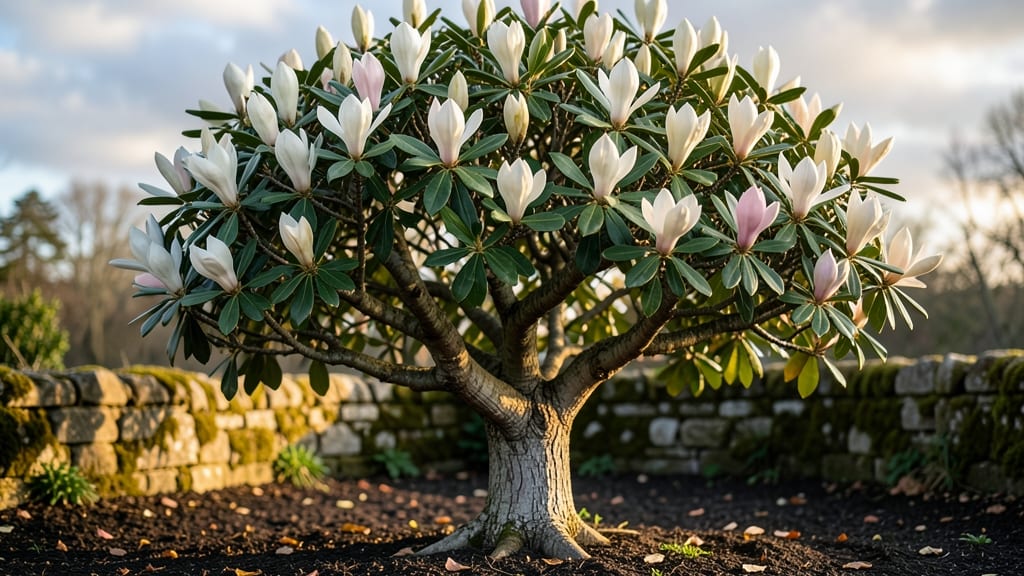
How Tall Do Magnolia Trees Grow: Exact Heights by Variety & Growth Habits

How To

How Tall Do Magnolia Trees Grow: Exact Heights by Variety & Growth Habits

A magnolia tree’s height can vary dramatically—how tall does a magnolia tree grow?—from a compact 8 feet to a towering 120 feet, depending on the variety—so knowing the exact size is the first step to picking the right one for your space.

Picture this: a Southern Magnolia 🌳 stretching over your roof, its glossy leaves rustling in the breeze, while a Little Gem fits neatly in a small courtyard. The difference isn’t just in aesthetics—it’s about sunlight, pruning, and even your neighborhood’s HOA rules.

Some magnolias grow 3 feet per year in ideal conditions, while others take decades to reach their full height. Below, I break down the exact mature sizes for 12+ varieties, plus the secrets to controlling growth if you’re working with limited space.

You’ll also discover which types thrive in USDA Zone 6a, how to read a tree’s growth habits, and the best dwarf options for urban gardens—so you can plant with confidence, not guesswork.

Dwarf
8-15 ft
Container friendly
Semi-Dwarf
15-25 ft
Most popular
Standard
40-120 ft
Full orchard size

Magnolia tree height by variety: from dwarf to giant species

Choosing a magnolia tree means deciding between a towering century-old giant or a compact garden statement piece. The height differences between varieties are dramatic—some stay under 15 feet while others stretch toward 120 feet.

Understanding these ranges helps you pick the perfect tree for your space, whether you have a small urban yard or a rural landscape.

Magnolia trees fall into three broad categories: dwarf varieties (under 20 feet), medium-height trees (20-50 feet), and grand specimens (50+ feet). The variety you choose will determine not just height but also growth speed, canopy shape, and maintenance needs.

Below, I’ve broken down the most popular magnolia varieties by their mature heights, including both evergreen and deciduous types.

Variety Type Mature Height (ft) Growth Rate Canopy Width (ft)
Southern Magnolia (Magnolia grandiflora) Evergreen 60-80 ft Moderate (1-2 ft/year) 30-50 ft
Little Gem (Magnolia grandiflora 'Little Gem') Evergreen 15-25 ft Slow (6-12 in/year) 8-12 ft
Star Magnolia (Magnolia stellata) Deciduous 15-25 ft Slow (8-12 in/year) 15-20 ft
Saucer Magnolia (Magnolia × soulangeana) Deciduous 20-30 ft Moderate (1-2 ft/year) 20-30 ft
Sweet Bay Magnolia (Magnolia virginiana) Evergreen 40-60 ft Slow (6-12 in/year) 20-30 ft
Yulan Magnolia (Magnolia denudata) Deciduous 20-30 ft Moderate (1-2 ft/year) 15-20 ft
Cucumbertree Magnolia (Magnolia acuminata) Deciduous 80-100 ft Fast (2-3 ft/year) 40-50 ft
Teddy Bear Magnolia (Magnolia 'Teddy Bear') Evergreen 10-15 ft Slow (4-8 in/year) 8-10 ft
Jane Magnolia (Magnolia 'Jane') Deciduous 15-20 ft Slow (6-12 in/year) 12-15 ft
Bigleaf Magnolia (Magnolia macrophylla) Deciduous 80-120 ft Very Slow (3-6 in/year) 50-70 ft
Loebner Magnolia (Magnolia 'Loebneri') Deciduous 10-15 ft

Factors that determine how tall your magnolia will grow

A magnolia tree’s mature height isn’t just about genetics—your local climate zone, soil quality, and even how you prune can dramatically influence its growth.

For example, a Southern Magnolia in USDA Zone 9 with rich, acidic soil may reach 80+ feet, while the same tree in Zone 6 with poor drainage could stay under 40 feet. Understanding these factors helps you plan for the right variety and care routine.

Your magnolia’s root space is another critical factor. Trees need room to spread—standard varieties require at least 20 feet of clearance in all directions, while dwarf cultivars like Little Gem thrive with just 10 feet.

Crowding roots can stunt growth or even cause structural weaknesses. Always check your tree’s mature canopy width when planting near fences, sidewalks, or other structures.

Key Growth Factors
1
Soil Type: Acidic, well-draining soil (pH 5.0–6.0) promotes faster growth. Clay-heavy soil can stunt roots and height.
2
Climate Zone: USDA Zones 6–10 are ideal. Cooler zones (Zone 5) slow growth, while Zone 10+ can accelerate it.
3
Pruning Habits: Minimal pruning encourages natural height, but annual shaping can control growth. Avoid heavy pruning in late summer—it stresses the tree.
4
Root Space: Standard magnolias need 20+ feet of root zone. Dwarf varieties require 10 feet minimum to avoid root competition.
5
Growth Habit: Pyramidal shapes (e.g., Exmouth) grow taller faster than rounded canopies (e.g., Saucer Magnolia).

Your local climate plays a surprising role in height. Magnolias in USDA Zone 9 or 10—like those in Florida or Southern California—often grow 20–30% taller than identical trees in Zone 7. This is because warmer temperatures extend the growing season, allowing more vertical growth per year.

If you’re in a cooler zone, choose hardier varieties like Star Magnolia (Magnolia stellata), which matures at 15–25 feet but thrives in Zones 4–9.

Pruning isn’t just for shaping—it’s a growth regulator. If you prune too aggressively in early spring, you can trigger excessive suckering (sprouting from the base) and reduce height by up to 30%.

Instead, focus on removing dead wood and thinning crowded branches in late winter. For taller varieties, avoid cutting the central leader—this encourages bushier, shorter growth.

Even the direction your tree faces affects height. South-facing exposure can push a magnolia to grow 10–15 feet taller than one planted on the north side of your yard.

This is because morning sunlight (east/west) provides gentler energy, while direct afternoon sun (south) can stress the tree, sometimes stunting growth if combined with poor soil.

Finally, watering habits matter. Young magnolias need deep, consistent watering to establish strong roots—skipping this step can limit their mature height by 20–40%. Once established, they’re drought-tolerant, but prolonged dry spells in Zones 8–10 can cause leaf scorch and reduced flowering, indirectly affecting height over time.

★★★★★4.9(5 reviews)
Categories How To