
Planting
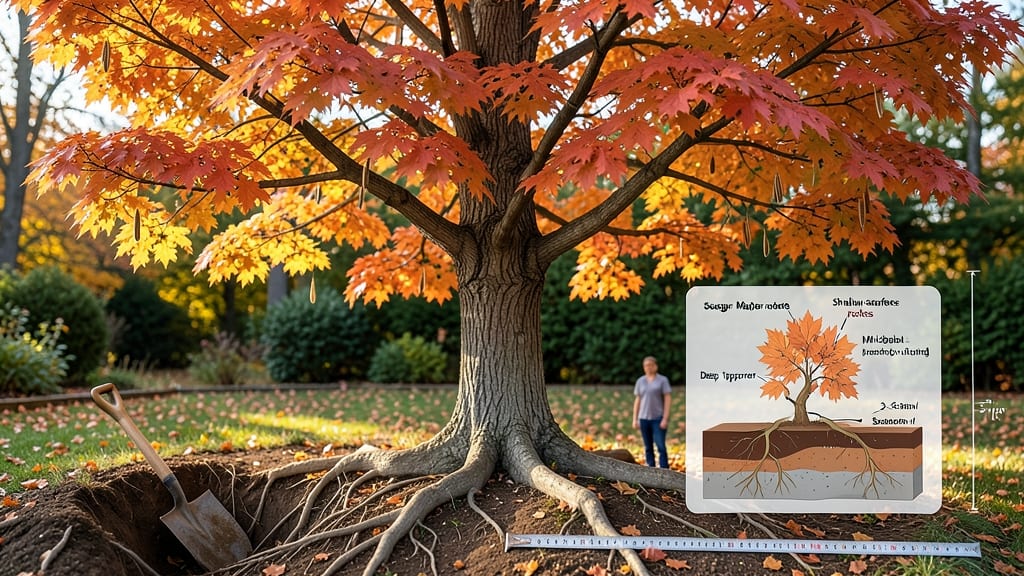
Maple tree roots grow how deep are maple tree roots deeper and wider than most gardeners expect, often extending 3 to 5 feet below ground and spreading 2 to 3 times the width of the tree’s canopy 🌳 — a fact that can make or break your landscaping plans.
If you’ve ever wondered why your new maple seems to dominate the yard—or why its roots might be creeping toward your foundation—you’re not alone. These trees are aggressive growers, and their root systems don’t play by the rules of smaller plants.
Understanding how deep maple tree roots go helps you avoid costly mistakes, from cracked driveways to stunted growth. Whether you’re planting a sapling or dealing with an established tree, knowing the root depth patterns and spread is key to keeping both your tree and your property happy.
In this guide, I’ll break down what influences root growth, how to plant maples without damaging roots or structures, and the best spacing tips to give your tree room to thrive—without turning your yard into a root warzone.
Maple tree root depth: how deep do they grow compared to other trees?
When planning your landscape, knowing maple tree root depth is essential—especially if you're planting near structures or other trees. Maple roots can grow surprisingly deep, often reaching 3 to 5 feet for mature trees, but this varies by species and growing conditions.
Unlike shallow-rooted trees like willows, maples develop strong taproots early, which anchor them firmly in the soil.
Understanding these patterns helps you avoid common issues like foundation damage or competition with neighboring plants. For example, a sugar maple might send roots deeper than a silver maple, which tends to be more aggressive with lateral roots. Let’s break down the specifics so you can plant with confidence.
🌱
| Maple Species | Root Depth (Mature Tree) | Lateral Spread | Key Factors |
|---|---|---|---|
| Sugar Maple (Acer saccharum) | 3–5 feet | 2–3x canopy width | Deep taproot, slower lateral growth |
| Silver Maple (Acer saccharinum) | 2–4 feet | 3–5x canopy width | Fast-growing, aggressive lateral roots |
| Red Maple (Acer rubrum) | 3–5 feet | 2–4x canopy width | Moderate depth, adaptable to wet soils |
| Comparison: Oak Trees | 4–6 feet | 1–2x canopy width | Deeper taproots, less lateral spread |
| Comparison: Willow Trees | 1–3 feet | 5–7x canopy width | Shallow, wide-spreading roots |
As you can see, sugar maples and red maples tend to develop deeper roots compared to silver maples, which prioritize lateral expansion. This difference is crucial when choosing a species for your yard.
For instance, if you’re planting near a foundation or sidewalk, a sugar maple might be a safer bet due to its more vertical root growth.
The soil type plays a huge role in root depth. In clay-heavy soils, maple roots may grow wider but shallower, while sandy soils encourage deeper penetration. Climate also matters—maples in colder regions like USDA Zone 4 often develop deeper roots to access moisture during frost.
🌿
Young maple trees (under 5 years old) have much shallower roots, typically 1–2 feet deep, which is why they’re more vulnerable to windthrow or drought stress. As they mature, their root systems deepen significantly, but the process takes time.
For example, a 10-year-old sugar maple might only reach 2–3 feet deep, while a 50-year-old tree could extend 5+ feet below the surface.
Another critical factor is competition. When maples grow near other trees, their roots may spread wider to access nutrients, reducing depth. This is why proper spacing (at least 30–50 feet from other large trees) is key to encouraging healthy root development.
If you’re planting near a driveway or patio, consider root barriers or dwarf varieties like ‘Autumn Blaze’ to minimize conflicts.
🪴
To monitor root health, watch for signs like lifted sidewalks, cracked foundations, or yellowing leaves, which may indicate root stress. If you suspect root issues, gently dig around the drip line (the edge of the tree’s canopy) to inspect for girdling roots or root rot.
Pruning aggressive lateral roots can help redirect growth downward, especially for silver maples.
For gardeners in urban areas, understanding these patterns is non-negotiable. A mature maple’s roots can lift concrete driveways or clog sewer lines if not managed properly. Always plant maples at least 15–20 feet from structures, and consider mulching to protect shallow roots from temperature fluctuations.
💧
Maple tree root spread: how far can they extend and what it means for your yard
When you plant a maple tree, its roots don’t just grow downward—they spread horizontally with surprising aggressiveness. A mature maple’s lateral roots can extend 2 to 3 times wider than its canopy, creating a massive underground network.
This means a 50-foot-tall maple might have roots sprawling 100 to 150 feet in all directions, encroaching on sidewalks, driveways, and even foundations if not planned carefully.
This aggressive spread explains why maple trees often crack concrete, lift pavement, or disrupt underground utilities. The roots seek moisture and nutrients, and they’ll follow the path of least resistance—often right beneath your hardscaping.
Understanding this spread helps you avoid costly repairs and design your landscape with intentional spacing from structures.
⚠️ callout warning
A mature maple’s roots can spread 2–3x wider than its canopy, often causing sidewalk heaving, foundation stress, or sewer line damage. Plant at least 30–50 feet from structures to minimize conflicts.
💡 Pro Tip: Use root barriers or deep soil aeration if planting near driveways.
The most aggressive spreaders include silver maples, known for their fast growth and sprawling roots, while sugar maples and red maples are slightly less invasive but still require ample space. Even dwarf varieties can outgrow their intended boundaries over time, especially in nutrient-rich soils.
This is why many cities restrict planting maples near streets or sidewalks unless specific root-pruning techniques are used.
Real-world examples show the impact: A 20-foot-tall maple with a 15-foot canopy can have roots extending 30 feet outward, lifting a concrete driveway over time. In one documented case, a silver maple’s roots damaged a home’s foundation after just 10 years, costing thousands in repairs.
These scenarios highlight why proper spacing and soil preparation are non-negotiable when planting maples near structures.
To mitigate risks, consider planting maples in open lawn areas or away from hardscaping. If you must plant near a driveway or sidewalk, install vertical root barriers (buried plastic or metal sheets) to redirect root growth downward.
Mulching around the base also helps contain roots, but it won’t stop lateral expansion entirely. Always research your specific maple species, as some varieties are slightly less aggressive than others.
If you’re already dealing with root damage, don’t panic—there are solutions. Root pruning (trimming invasive roots) or soil aeration can reduce pressure on structures, though these are labor-intensive. For severe cases, consulting an arborist ensures you address the issue without harming the tree.
With the right precautions, you can enjoy the beauty of maples without the headaches of invasive roots.