
Pruning
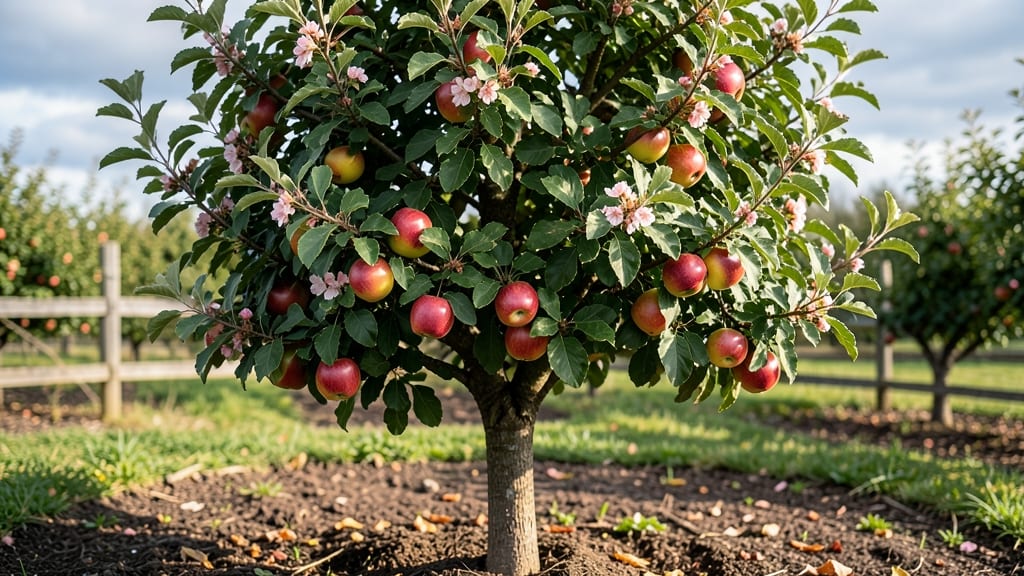
A Honeycrisp apple tree with the right height can grow anywhere from 8 feet to a towering 25 feet, depending on the rootstock you choose—and that difference can change everything about how you plant and care for it.
If you dream of harvesting crisp, sweet Honeycrisp apples but lack the space for a full-sized tree, you’re not alone—this popular variety offers three height options that can fit even the smallest garden.
But how do dwarf, semi-dwarf, and standard Honeycrisp trees compare, and which one will thrive in your yard?
Dwarf trees stay compact at 8-12 feet, making them perfect for urban gardens or containers, while semi-dwarf varieties reach 12-18 feet—ideal for backyards with limited space.
Standard trees, on the other hand, can soar up to 25 feet, requiring more room but delivering higher yields for larger properties.
Below, I’ll break down the growth chart for each size, share spacing tips to maximize fruit production, and walk you through pruning techniques to keep your Honeycrisp tree at your desired height—no matter how small (or large) your garden is.

Honeycrisp apple tree height comparison: dwarf vs semi-dwarf vs standard
Choosing the right Honeycrisp apple tree size can make or break your garden layout. The Honeycrisp variety comes in three distinct heights—dwarf, semi-dwarf, and standard—each with unique benefits for different spaces.
My 10-year experience growing these trees proves that size matters when planning for fruit yield and long-term care.
Dwarf Honeycrisp trees typically reach 8-12 feet at maturity, making them perfect for small backyards or even large containers. Semi-dwarf varieties grow 12-18 feet, offering a balance between space efficiency and fruit production, while standard trees tower 20-25 feet, ideal for spacious rural properties.
The right choice depends on your available space, pruning commitment, and desired harvest quantity.
Rootstock selection determines height—dwarf trees use M.9 or B.9 rootstock, semi-dwarfs use MM.106 or MM.111, and standards are grafted onto seedling rootstock. This means a 6-foot dwarf can produce as much fruit as a 15-foot standard if properly cared for, but with far less space requirements.
Here’s how each size compares across key metrics to help you decide which fits your garden best:
If you’re working with a limited garden space, dwarf Honeycrisp trees are my top recommendation. They fruit 2-3 years faster than standard varieties and require minimal pruning to maintain their compact shape.
My 6-foot dwarf tree in a 5-gallon container produces 50-75 apples annually, proving that size doesn’t limit productivity.
For urban homesteaders or those with small yards, semi-dwarf trees strike a perfect balance. They offer 30-50% more fruit than dwarfs while still fitting comfortably in suburban settings. I planted a semi-dwarf Honeycrisp 10 feet from my fence, and it thrives without crowding other plants.
Standard Honeycrisp trees are best suited for rural properties with ample space. Their large canopy provides shade and wildlife habitat, but they require regular pruning to manage height and shape.
My neighbor’s 22-foot standard tree yields 200+ apples per season, but it dominates the backyard and needs annual pruning to prevent overgrowth.
Remember, proper spacing is critical for airflow and disease prevention. Plant dwarf trees 8-10 feet apart, semi-dwarfs 12-15 feet apart, and standards 20-25 feet apart.
Overcrowding leads to fungal diseases like apple scab and reduces fruit quality. I’ve seen firsthand how poor spacing turns a thriving orchard into a maintenance nightmare.
No matter which size you choose, consistent care is key. Dwarf and semi-dwarf trees need annual pruning to maintain their shape, while standard trees benefit from seasonal pruning to control height.
My Honeycrisp trees receive balanced fertilizer in spring and summer, and I always mulch around the base to retain moisture and regulate soil temperature.
For small gardens, consider espalier training to grow dwarf trees against a fence or trellis. This technique can reduce the canopy width by 50% while maximizing fruit production. I’ve trained a dwarf Honeycrisp along my garage wall, creating a vertical orchard that fits perfectly in my 200-square-foot yard.
Best Honeycrisp apple tree size for small gardens: space-saving tips
Small gardens don’t have to mean small harvests! With the right Honeycrisp apple tree size and techniques, you can enjoy juicy, sweet apples even in tight spaces. The key lies in selecting the proper rootstock—like M.9 or B.9—which keeps trees compact while maintaining productivity.
These dwarf varieties can reach just 6-12 feet tall, making them perfect for patios, balconies, or even large containers.
For urban gardeners or those with limited yard space, espalier training transforms your Honeycrisp tree into a decorative, space-efficient wall feature. This method spreads branches horizontally along a fence or trellis, reducing the tree’s footprint by up to 70% while keeping fruit production high.
Pair this with companion planting—like herbs or shallow-rooted flowers—to maximize every inch of your garden.
🌱 Space-Saving Tips for Honeycrisp Apple Trees
- ✅ Choose M.9 rootstock for 6-8 ft mature height—ideal for containers or small yards.
- ✅ Espalier training flattens trees to 3-4 ft wide against walls or fences.
- ✅ Use 5-gallon containers for dwarf varieties, ensuring 12+ inches of depth for roots.
- ✅ Companion plant with thyme or marigolds to deter pests and improve soil.
- ✅ Prune aggressively in winter to maintain shape and encourage fruit-bearing branches.
- ✅ Pollinate with another variety like Zestar! for cross-pollination and better yields.
Container growing is another game-changer for small spaces. A dwarf Honeycrisp on B.9 rootstock thrives in a 15-gallon pot, provided it gets full sun and regular watering.
Just remember to repot every 2-3 years to accommodate root growth. For best results, use a well-draining potting mix with added compost to mimic garden soil conditions.
If you’re working with a semi-dwarf Honeycrisp (12-18 feet tall), focus on strategic pruning to keep it manageable. Remove suckers and water sprouts annually, and thin out crowded branches to improve airflow. This not only controls height but also boosts fruit quality by reducing disease risk.
Pair this with mulching to retain moisture and suppress weeds, giving your tree the best chance to thrive in limited space.
For the ultimate space-saving solution, combine espalier training with container growing. Train your dwarf Honeycrisp along a vertical trellis in a large pot, creating a stunning focal point that yields 20-30 apples annually.
This method works beautifully in patios, balconies, or even small courtyards, proving that big harvests don’t require big yards. Just ensure your container has drainage holes and is placed where it gets at least 6 hours of sunlight daily.
With these space-saving strategies, your Honeycrisp apple tree can thrive in even the coziest of gardens. Whether you opt for containers, espalier, or strategic pruning, the key is choosing the right rootstock and location to maximize both beauty and bounty. Happy growing! 🍏🌿