
Container Gardens
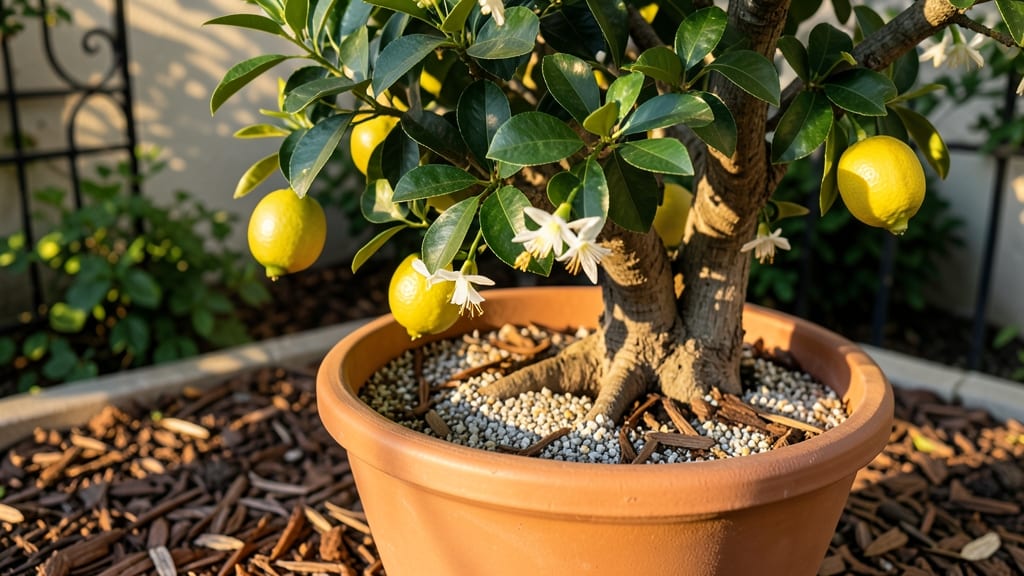
Growing a Meyer lemon tree in a pot means fragrant blossoms and homegrown fruit within 3-4 years—even on a balcony or sunny windowsill. 🌱 I learned the hard way that citrus trees need specific care, but once you nail the basics, they reward you with glossy leaves and sweet lemons year-round.
The secret isn’t complicated: it’s matching their Mediterranean roots to your container setup.
You’ll need a 15-20 gallon pot (at least 18 inches deep) with drainage holes, well-draining citrus soil mix, and a sunny spot getting 6-8 hours of light daily.
Winter care shifts to indoor lighting if you’re below zone 9—my tree thrives near a south-facing window with a grow light supplement. Watering’s the trickiest part: keep soil moist but never soggy, and fertilize monthly with citrus-specific food during growing seasons.
Pruning shapes the tree and prevents overcrowding, while regular pest checks keep aphids and scale at bay. The first year focuses on establishing roots; by year two, you’ll see buds forming.
My tree now produces 20-30 lemons annually, and the scent of blossoms in spring makes every effort worthwhile. The key? Consistency—citrus trees forgive mistakes but reward attention with lush growth.
Container-grown Meyer lemons adapt to patios, garages (with light), or even greenhouses. Just watch for root-bound signs (circling roots) and repot every 2-3 years in spring. With the right setup, you’ll enjoy homegrown lemons for decades—my grandmother’s tree is still going strong after 40 years! Let’s get yours thriving.
📚 In This Guide
- What you need
- Instructions
- Tips and common mistakes
- Wrapping up and next steps
What you need
- ● Pot: A container at least 18-24 inches wide and deep with drainage holes (ceramic, fabric, or plastic). For mature trees, opt for 24-36 inches.
- ● Well-draining potting mix: A blend of 50% citrus-specific soil, 30% perlite or pumice, and 20% compost (avoid garden soil—it compacts!).
- ● Meyer lemon tree: A healthy 1-2 year old sapling (bare-root or potted) from a nursery. Look for thick stems and shiny leaves!
- ● Drainage tray or saucer: To catch excess water and prevent root rot.
- ● Fertilizer: A balanced citrus fertilizer (e.g., 6-6-6 NPK ratio) or organic options like fish emulsion. Apply every 4-6 weeks during growing season.
- ● Watering can with a narrow spout: For precise, deep watering without disturbing the soil.
- ● Pruning shears: Sharp, sterilized shears for trimming dead branches or shaping the tree.
- ○ Support stake (optional but helpful): A 3-4 foot tall bamboo or metal stake to stabilize young trees if needed.
- ● Slow-release fertilizer pellets: Mix into soil at planting for steady nutrition.
- ● Mulch (e.g., pine bark): Helps retain moisture and regulate soil temperature.
- ● Humidity tray: A pebble tray with water to boost humidity in dry climates.
- ● Grow lights: If indoor lighting is dim (LED or fluorescent bulbs with full-spectrum output).
- ● Pollination aid: A soft paintbrush to hand-pollinate flowers if indoors (Meyer lemons are self-pollinating but benefit from a little help!).
- ● Tree collar or protective wrap: For young trees in cold climates (if moving pots outdoors seasonally).
Step-by-Step instructions for growing a Meyer lemon tree in a pot
Here’s how to cultivate a thriving Meyer lemon tree indoors or on your patio—complete with fragrant blossoms and sweet, juicy fruit.
🌱 Step 1: Select the Right Container and Soil Mix
Start with a 5-gallon pot (minimum) with drainage holes—Meyer lemons need room for roots to spread and water to escape. I recommend terra cotta for its breathability, but plastic works too if you’re in a humid climate. Fill the bottom 2 inches with gravel or broken pottery to prevent soil compaction and improve drainage.
Use a well-draining citrus potting mix—never garden soil. Mix 60% premium potting soil with 30% perlite and 10% compost for nutrients. The perlite ensures excess moisture drains away, which is critical because soggy roots lead to root rot. Tap the pot gently after filling to settle the mix without compacting it.
🌿 Step 2: Plant Your Meyer Lemon Tree and Water Properly
Remove the tree from its nursery pot and loosen the roots if they’re circling. Place it in the center of your container, ensuring the root flare (where roots meet the trunk) sits just above the soil line—burying it too deep suffocates the tree. Fill around the roots with your mix, pressing lightly to remove air pockets.
Water deeply until it drains from the bottom, then let the tree sit for 24 hours before watering again. Overwatering at this stage drowns the roots. After a week, check the soil’s moisture by sticking your finger 1 inch deep—if it’s dry, water again. You’ll see new growth within 2-3 weeks if the tree is happy.
☀️ Step 3: Position for Maximum Sunlight and Warmth
Meyer lemons thrive in full sun—place your pot where it gets 6-8 hours of direct sunlight daily. A south-facing window or grow light (12-14 hours/day) works indoors. If leaves yellow or stems stretch toward the light, your tree needs more brightness. Rotate the pot quarter-turn weekly so the tree grows evenly.
Keep temperatures between 65-85°F—below 55°F stunts growth, and drafts (like AC vents) stress the tree. In winter, move it away from cold windows. You’ll notice blooms in spring/summer—these turn into fruit within 6-9 months if pollinated (hand-pollinate with a small brush if indoors).
💧 Step 4: Fertilize and Prune for Healthy Growth
Feed your tree every 4-6 weeks with a balanced citrus fertilizer (10-10-10 or 8-3-9) during spring and summer. Reduce feeding in fall/winter when growth slows. Water when the top 1-2 inches of soil feel dry—overwatering kills more potted citrus than anything else. Use room-temperature water to avoid shocking the roots.
Prune in late winter to shape the tree and remove dead/diseased branches. Cut just above a leaf node at a 45-degree angle to encourage new growth. Thin crowded branches to improve airflow—this prevents fungal issues. You’ll see small lemons forming by late summer if the tree is well-cared-for.
✂️ Step 5: Harvest and Overwinter for Long-Term Success
Harvest lemons when they’re bright yellow and slightly soft to the touch—this usually takes 6-9 months from bloom. Twist gently to avoid damaging the stem. Store unripe fruit in a cool, dark place to ripen naturally. If your tree isn’t fruiting, it may need more sunlight, warmer temps, or better pollination (try shaking blossoms lightly to release pollen).
In winter, reduce watering by half and stop fertilizing. If indoors, increase humidity with a pebble tray or humidifier—dry air causes leaf drop. With consistent care, your Meyer lemon tree will reward you with years of harvests and fragrant blossoms.
Tips & tricks for growing a thriving potted Meyer lemon tree
Between us, growing a Meyer lemon tree in a pot is one of those rewarding projects where patience pays off—literally. Here's what I've learned after watching my own tree go from a sad nursery plant to a fruit-bearing beauty.
Soil Drainage Secret: The 60-30-10 mix of premium potting soil, perlite, and compost is non-negotiable for preventing root rot. I've seen people skip the perlite and end up with soggy soil that suffocates roots. If you're in a humid climate, add an extra 10% coarse sand to improve aeration. The key is that water should drain freely within 10-15 minutes after watering—if it pools at the bottom, you've got drainage issues.
Root Flare Positioning: In Step 2, when you're planting, making sure the root flare sits just above the soil line is more important than you might think. I've seen beginners bury it too deep, which can actually strangle the tree. Think of it like planting a human—you wouldn't bury someone up to their neck! The flare should be visible above the soil surface. If you accidentally bury it too deep, you can carefully remove some soil to expose it.
Lighting Strategy: For indoor growers, the 12-14 hours of grow light is crucial but can be tricky to time. I recommend using a timer for your grow lights to maintain consistency. If you notice your tree stretching toward the light (a condition called etiolation), it's getting too little light. In this case, move the tree closer to the light source or increase the light duration by 1-2 hours. The goal is to mimic natural daylight conditions as closely as possible.
Winter Care: The temperature drop below 55°F in winter is where many potted lemon trees fail. If you're growing indoors near a cold window, consider adding a small space heater or heat mat to maintain consistent warmth. I've also found that placing the pot on a bed of pebbles with water creates a humid microclimate that prevents leaf drop. Just make sure the pot isn't sitting directly in the water—this can lead to root rot.
Pro Tips for Growing Meyer Lemon Tree In A Pot
- Between us, growing a Meyer lemon tree in a pot is one of those rewarding projects where patience pays off—literally.
- Soil Drainage Secret: The 60-30-10 mix of premium potting soil, perlite, and compost is non-negotiable for preventing root rot.
- Root Flare Positioning: In Step 2, when you're planting, making sure the root flare sits just above the soil line is more important than you might think.
Frequently asked questions
Got questions about growing your Meyer lemon tree in a pot? You’re not alone—here are the answers to the most common curiosities!
How big should the pot be for a Meyer lemon tree?
A 5-gallon pot (16–18 inches wide) is ideal for young trees, while mature trees need at least 15–20 gallons (20+ inches wide). Ensure drainage holes are present to prevent root rot. Pro tip: Use a pot 2–3 inches wider than the root ball for stability.
Can I grow a Meyer lemon tree indoors?
Yes! Place it near a south-facing window (6+ hours of sunlight daily) or use a grow light for 12–14 hours. Keep humidity high (mist leaves or use a pebble tray) and maintain 60–75°F temperatures. Watch out: Drafts and sudden temperature drops can stress the tree.
When will my potted Meyer lemon tree produce fruit?
With proper care, expect first fruits in 2–3 years (indoors) or 1–2 years (outdoors in warm climates). Young trees focus on growth first—be patient! Boost blooms: Fertilize with citrus-specific food in spring/summer and ensure full sun.
Why are my lemon tree leaves turning yellow or dropping?
Yellow leaves often signal overwatering, underwatering, or nutrient deficiency. Check soil moisture (top inch dry = water time) and adjust fertilizer (use a balanced citrus blend every 2–3 months). Quick fix: Prune yellowed leaves to redirect energy to healthy growth.
What’s the best alternative if I don’t have a sunny spot?
Try a dwarf Meyer lemon variety (like ‘Improved Meyer’) or opt for low-light citrus like calamondin or kumquat. If you’re committed to Meyer lemons, a sun lamp (full-spectrum LED) can supplement natural light. Remember: Even partial sun is better than none!
How do I prevent pests like aphids or spider mites?
Inspect leaves weekly for tiny webs or sticky residue. Spray with neem oil (mix 1 tsp per quart of water) or insecticidal soap for mild infestations. Prevention tip: Keep your tree clean and well-watered—pests love stressed plants!
Wrapping up and next steps
Growing a Meyer lemon tree in a pot is a rewarding journey that brings fresh, fragrant citrus to your doorstep—no backyard required! With the right sunlight, soil, and care, you’ll enjoy sweet lemons year-round, even in small spaces.
Start small, stay patient, and soon you’ll be harvesting homegrown lemons for zesty dishes, refreshing drinks, or stunning centerpieces.
Ready to turn your sunny windowsill into a citrus oasis? Pick your pot, plant your seedling, and watch your tree thrive! 🌱✨