
Diseases
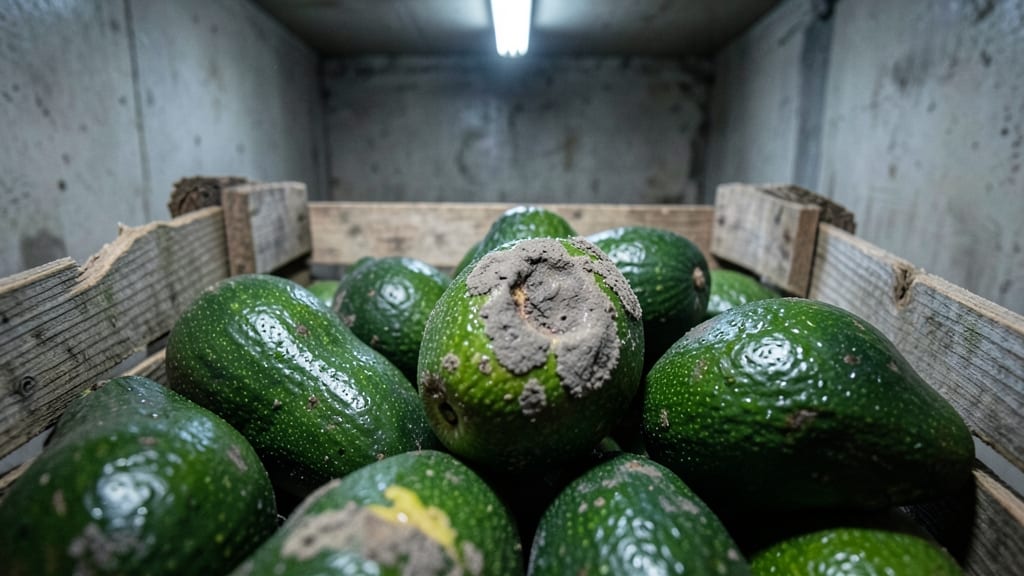
Avocado trees are prized for their fruit, but fungal diseases can devastate yields if left unchecked. This visual guide features 10 common fungal infections—complete with identifying pictures—to help you diagnose issues early and protect your grove before symptoms worsen.
Root Rot in Avocado Trees
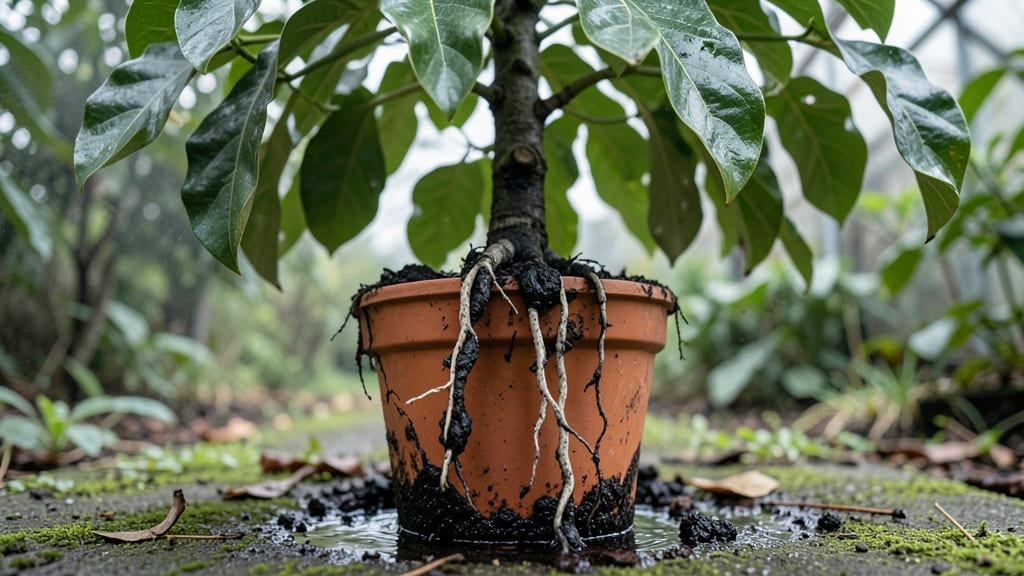
If your container-grown avocado tree is wilting despite regular watering, or you notice a foul odor near the base, root rot may already be setting in. This silent killer thrives in waterlogged soil or poorly draining pots, turning healthy roots into mushy, blackened messes within weeks—often before you spot above-ground symptoms.
Check for dark, slimy roots when repotting or inspecting the soil. Healthy roots should be firm and light tan, while infected ones will crumble at the touch and smell like rotting fruit. Reduce watering immediately and switch to a well-draining mix with perlite or sand. For severe cases, prune affected roots with sterilized tools and apply a fungicide (like copper-based sprays) to prevent spread.
Container gardeners and those in rainy climates are most at risk—this disease moves faster than you think. Catching it early means the difference between saving your tree and losing it entirely. 💪
Phytophthora Crown Rot Symptoms
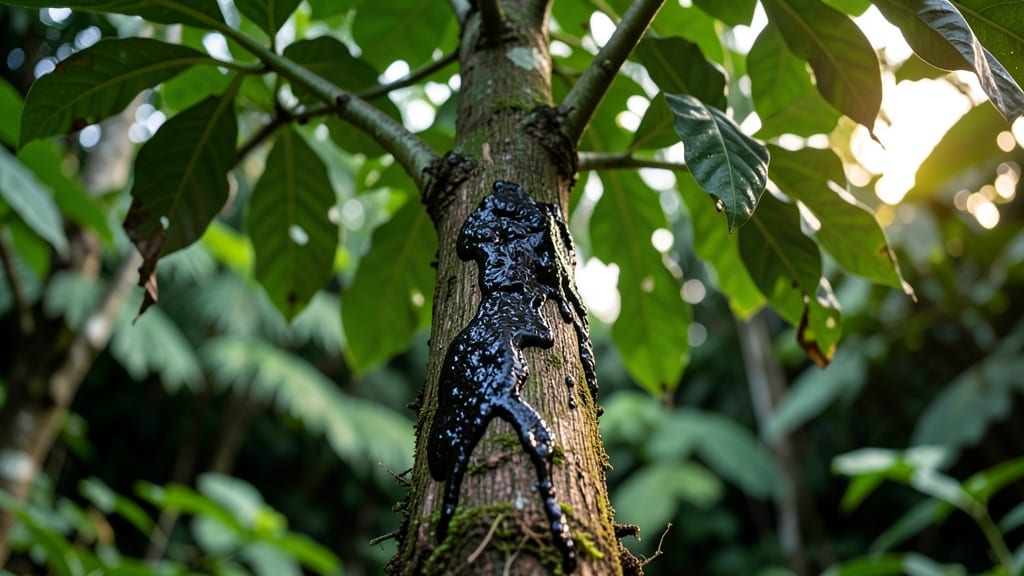
If your young avocado tree in a tropical climate suddenly wilts despite proper watering, Phytophthora crown rot could be the culprit. This aggressive fungal disease thrives in warm, humid conditions, attacking the crown and trunk base where soil meets bark.
Look for dark, water-soaked lesions that ooze sap or gum-like substances, often accompanied by yellowing or wilting leaves even when the soil is moist. Unlike root rot, crown rot symptoms appear above ground, making early detection easier if you inspect the trunk regularly. Remove infected soil within a 3-foot radius and apply copper fungicide to prevent spread.
This disease is especially dangerous for young trees because it disrupts nutrient uptake, stunting growth or killing the tree within weeks. Gardeners in tropical regions should prioritize improving drainage and avoiding overhead irrigation. 🌱
Anthracnose Fruit Spots on Avocados
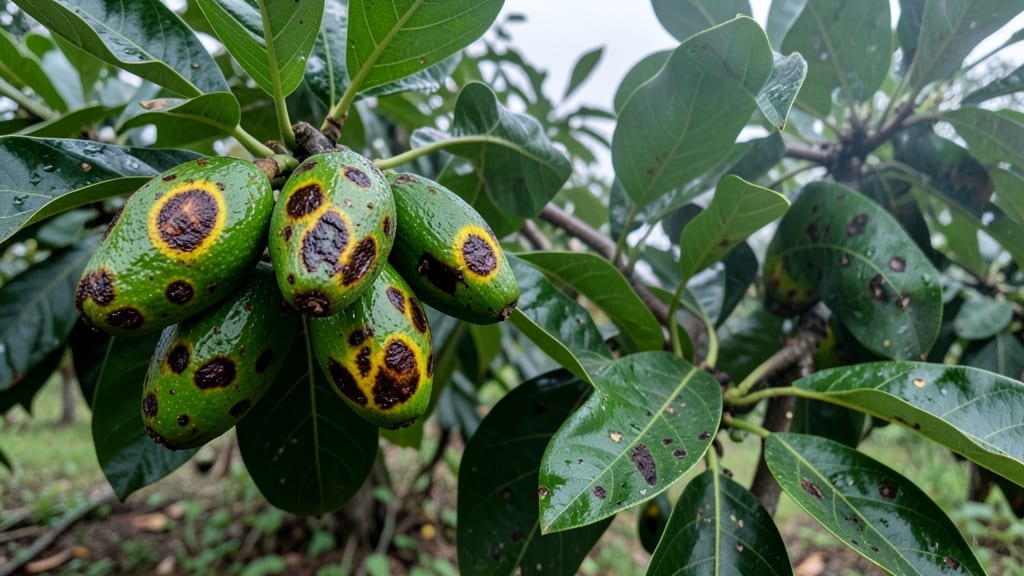
If your avocado harvest looks less than perfect with unsightly blemishes, anthracnose fruit spots could be the culprit. This fungal disease doesn’t just mar leaves—it targets both foliage and fruit, creating sunken, dark brown spots with distinctive yellow halos that scream "market rejection" during harvest season.
Start by inspecting leaves for small, circular brown lesions that expand over time. On fruit, look for irregular, sunken patches that can merge into larger areas. The key to preventing yield loss is early action: prune infected leaves immediately and apply a copper-based fungicide during wet seasons. Avoid overhead irrigation to reduce moisture on leaves and fruit.
This disease is especially problematic for commercial growers, but home gardeners can also face rejection at farmers' markets. Catching it early means you can salvage your crop and maintain those prized avocado sales. 🌱
Powdery Mildew on Avocado Leaves
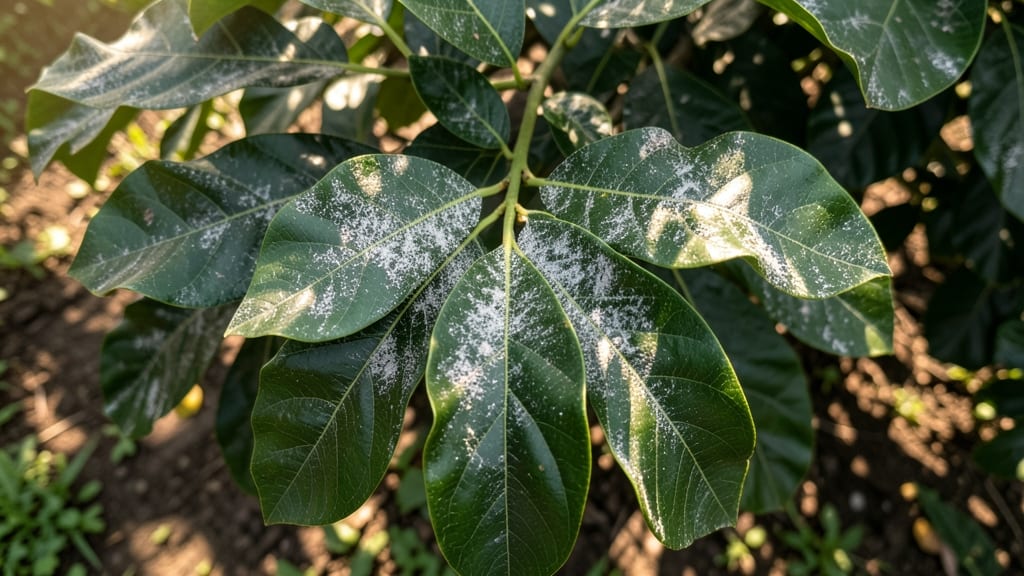
If your avocado tree leaves are developing a white, powdery coating—especially in hot, humid weather—you’re likely dealing with powdery mildew. This fungal infection thrives in conditions with high moisture and poor air circulation, often appearing on the upper leaf surfaces first.
To confirm, gently rub your finger over the white patches—if they leave a powdery residue, it’s powdery mildew. This disease weakens leaves by blocking sunlight, reducing photosynthesis and ultimately lowering fruit quality. Prune affected leaves immediately and improve airflow by spacing plants correctly. For severe cases, apply neem oil or sulfur-based fungicides every 7–10 days until symptoms disappear.
This issue is especially common for home gardeners in tropical or subtropical climates where humidity lingers. Early action prevents the fungus from spreading to younger leaves and fruit, ensuring your tree stays healthy and productive. 🌟
Botrytis Blight on Flower Buds
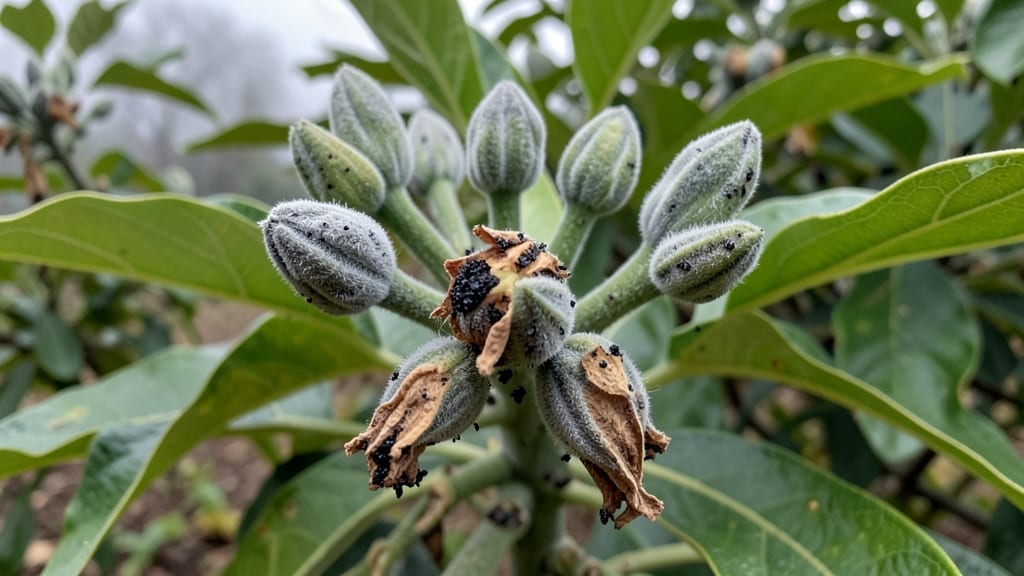
If your avocado tree’s flower buds are wilting before they even have a chance to set fruit, you’re likely dealing with Botrytis blight—a sneaky fungal disease that thrives in the flowering season when humidity spikes. This gray mold, often accompanied by tiny black dots (sclerotia), can turn promising blooms into a lost harvest before you realize what’s happening.
To catch it early, inspect buds for fuzzy, grayish growth and a mushy texture. Prune infected buds immediately and improve airflow by thinning dense clusters. Copper fungicides applied during bloom can prevent spread, but organic gardeners should prioritize preventive sprays like neem oil before symptoms appear. This disease is especially aggressive in wet, shaded conditions.
Avocado growers in humid climates should monitor flowering trees closely—Botrytis blight can wipe out entire fruit sets in just days. Early action here means the difference between a bountiful harvest and empty branches. 🌷
Fusarium Wilt in Avocado Trees
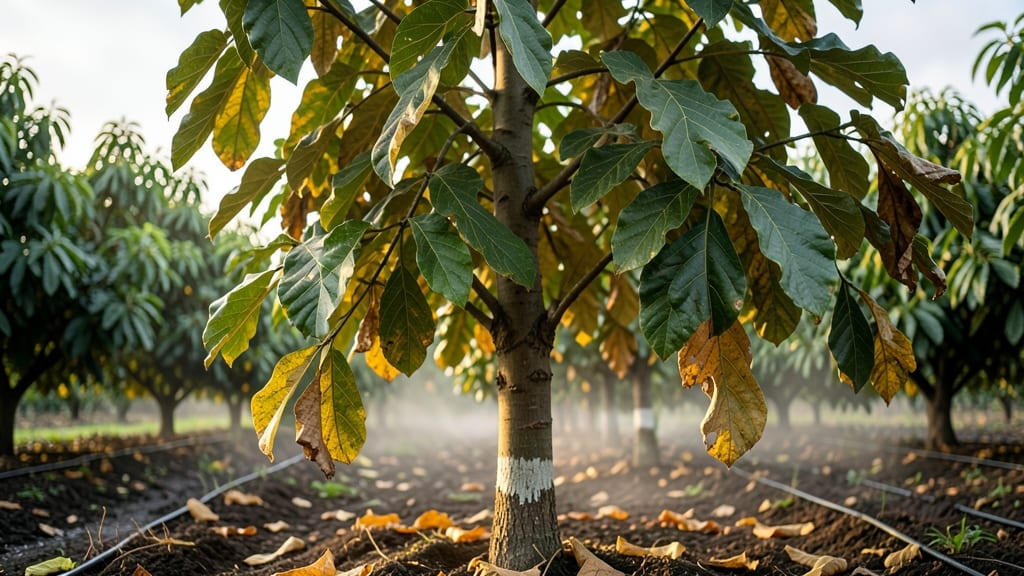
If your avocado tree suddenly wilts despite proper watering and care, Fusarium wilt could be the culprit. This aggressive vascular disease clogs the tree’s water transport system, causing leaves to yellow and drop within weeks—often before you notice the real problem.
The key to spotting it early is cutting open a stem to reveal brown vascular discoloration (healthy stems are white or pale green). Unlike other wilting diseases, Fusarium attacks the tree’s internal plumbing first, so by the time leaves show symptoms, the damage may already be irreversible. Remove infected trees immediately and avoid planting avocados in the same spot for at least 5 years to prevent soil-borne spores from reinfecting.
This disease is particularly devastating for commercial groves and home gardeners in warm climates. If you suspect Fusarium, act fast—once it spreads, there’s no cure. 💡
Alternaria Leaf Spot Disease
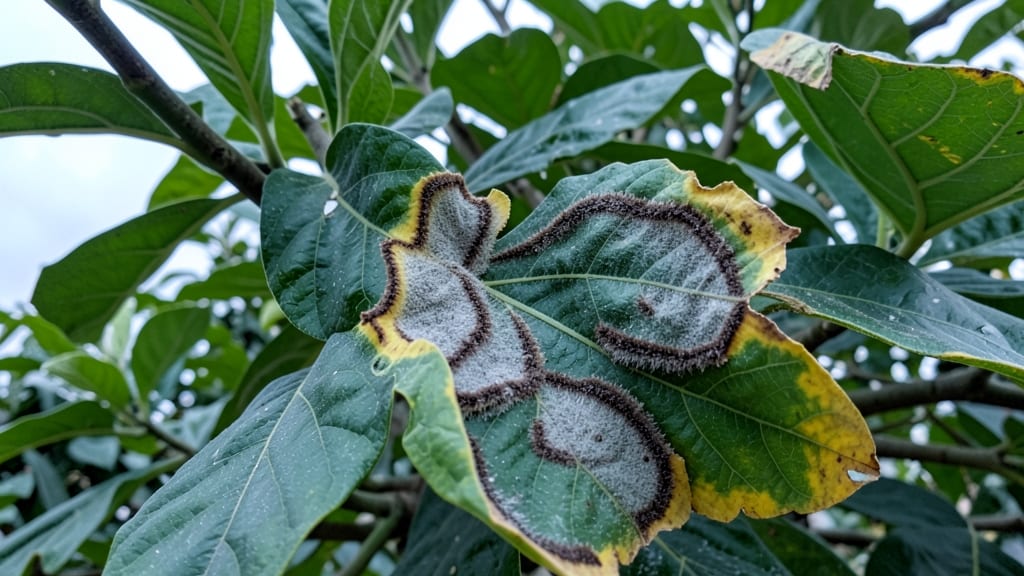
If your avocado tree’s older leaves develop dark brown rings with gray centers, you’re likely dealing with Alternaria leaf spot disease—a fungal menace that thrives in damp, humid conditions. Unlike other leaf spots, this one expands rapidly, turning leaves yellow and dropping them prematurely, which weakens the tree’s ability to produce fruit.
To confirm, inspect the undersides of leaves for tiny black fungal spores. The key to stopping it is improving airflow—prune dense foliage and avoid overhead watering. Apply a copper fungicide (like copper hydroxide) every 2-3 weeks during wet seasons, and remove infected leaves immediately. This disease spreads fastest when humidity stays above 75% for prolonged periods, so monitor weather forecasts and act fast.
Growers in tropical or subtropical climates with frequent rain should prioritize this prevention, as Alternaria can reduce fruit yield by up to 30% if unchecked. Early action keeps your tree thriving. 💚
Cercospora Fruit Spot Symptoms
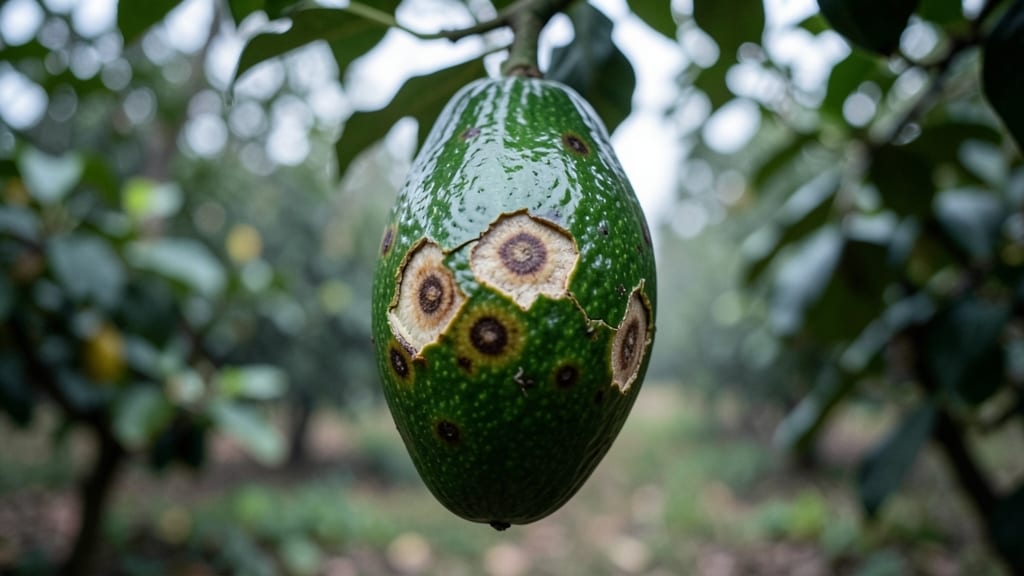
When your avocado fruit starts showing tiny, dark spots that look like they’re wearing rings, you’re likely dealing with Cercospora fruit spot—a fungal disease that thrives as fruit ripens. These spots begin as small, brown lesions but quickly expand into larger, cracked areas that ruin both appearance and quality.
Unlike other fruit diseases, Cercospora spots develop concentric rings around the edges, making them stand out against healthy skin. The cracks that form can let in bacteria, accelerating rot. To prevent spread, remove infected fruit immediately and apply a copper-based fungicide during wet seasons or high-humidity periods.
Home gardeners and commercial growers alike should monitor fruit closely during the late summer to fall harvest window, when conditions are ideal for this disease. Early removal of infected fruit can save your entire crop. 🌻
Armillaria Root Disease Signs
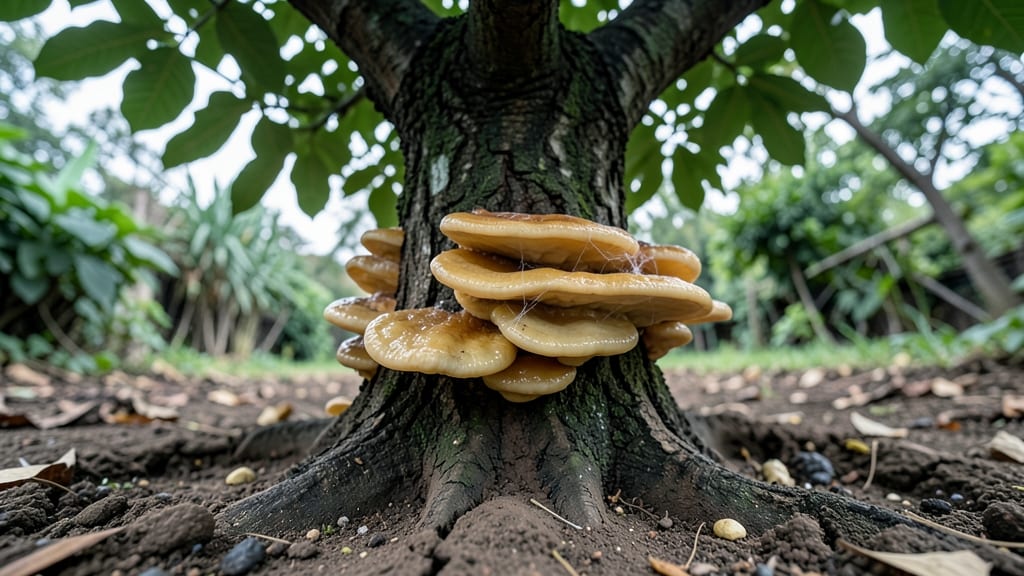
If your mature avocado tree suddenly shows honey-colored fungal shelves growing at its base, you’re likely dealing with Armillaria root disease—one of the most aggressive fungal pathogens for woody plants. Unlike other fungal infections, this one targets the roots first, leaving visible "shelves" that resemble mushroom caps on the trunk or soil line.
Look for blackened, rotted roots spreading outward from the base, which may appear mushy or decayed when gently probed. The disease thrives in poorly drained soil and spreads through infected root grafts, making it especially dangerous in orchards or densely planted groves. Infected trees often decline rapidly, with leaves yellowing or wilting even before the fungal growth becomes obvious.
This disease is particularly devastating because it’s hard to treat once established—prevention through proper drainage and avoiding plant stress is key. If you suspect Armillaria, act fast by removing infected trees and sterilizing the soil to prevent spread to nearby plants. 🌿
Postharvest Fungal Rots in Avocados

After harvesting your avocados, don’t let hidden fungal growth turn your hard-earned fruit into mush. Postharvest fungal rots—like Colletotrichum and Penicillium—thrive in warm, humid storage conditions, causing soft, discolored flesh and mold within days. These rots often start as tiny, water-soaked spots that expand into fuzzy white or greenish growth, making the fruit inedible.
To catch it early, slice a few avocados post-harvest and check for dark, sunken lesions or cottony mold on the flesh. Store fruit at 55–65°F (13–18°C) with 90% humidity and avoid stacking to prevent bruising, which invites fungal entry. For organic growers, copper-based sprays pre-harvest can reduce spores, while commercial growers may use sodium bicarbonate dips to extend shelf life.
This issue hits small-scale growers hardest, where every lost avocado adds up. With proper storage and quick culling of infected fruit, you can salvage your harvest and keep your kitchen—and customers—happy. 🌱