
Trees
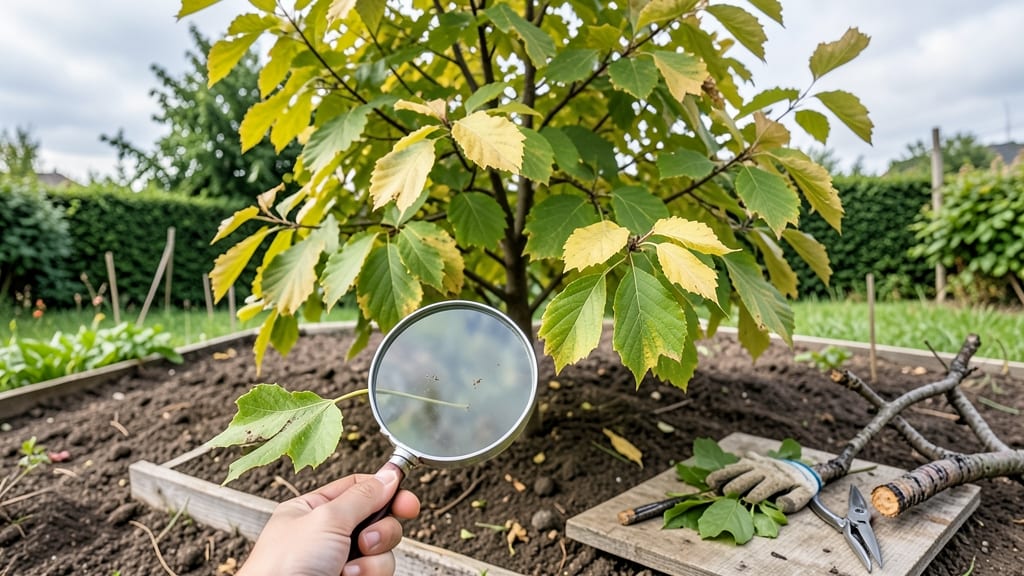
Yellow leaves on elm trees usually indicate stress from overwatering, nutrient shortages, fungal diseases like Dutch elm disease, or natural seasonal changes. Check soil moisture, leaf edges, and bark for infection signs before addressing the root problem.
Elm trees are particularly sensitive to environmental changes, and yellowing leaves often serve as their first warning sign. 🌳 The most common culprits include overwatering—where roots suffocate from poor drainage—or nutrient deficiencies like iron chlorosis, which turns leaves pale yellow between veins.
Fungal infections like Dutch elm disease spread through bark beetles, causing brown streaks along leaf veins before full yellowing occurs. I always recommend starting with a simple soil test to rule out pH imbalances, which can prevent nutrient uptake even when fertilizer is present.
For accurate diagnosis, examine the underside of leaves for powdery mildew or dark spots that indicate fungal spread, and check the bark for cracks or beetle holes. If you spot wilting combined with yellowing, it's often a sign of root rot from overwatering.
The key is acting fast—once Dutch elm disease takes hold, it's nearly impossible to save mature trees, so prevention through proper pruning and beetle-resistant treatments is critical.
💡 In This Article
- Common Elm Tree Diseases Causing Yellowing Leaves
- Diagnosing and Treating Elm Tree Leaf Discoloration
Common elm tree diseases causing yellowing leaves
Elm trees are particularly susceptible to Dutch elm disease, a fungal infection spread by elm bark beetles. The fungus Ophiostoma novo-ulmi clogs the tree's vascular system, disrupting water and nutrient flow. This causes leaves to yellow and wilt, often starting at the top of the tree.
The disease progresses rapidly—within weeks, the entire canopy can turn brown and die. Elm trees are especially vulnerable because their bark provides ideal hiding spots for beetles, and their vascular structure makes them highly susceptible to fungal blockages.
Powdery mildew, another common issue, appears as white, powdery patches on leaves, which eventually turn yellow as the fungus consumes chlorophyll. This fungal infection thrives in humid conditions and spreads quickly in dense foliage. Unlike Dutch elm disease, powdery mildew is less deadly but can weaken the tree over time.
Nutrient deficiencies, such as iron chlorosis, also cause yellowing—iron deficiency turns leaves pale yellow between veins, while nitrogen deficiency results in overall pale yellowing. Magnesium chlorosis causes yellowing between veins but with a distinct purple tint on leaf edges.
The science behind these issues lies in how pathogens disrupt cellular processes. Dutch elm disease blocks xylem vessels, preventing water transport, while powdery mildew reduces photosynthesis by coating leaves. Nutrient deficiencies occur when soil pH or poor drainage prevents root uptake.
Elm trees are particularly vulnerable due to their shallow root systems and dense canopies, which trap moisture and create ideal conditions for fungal growth. 🌿
To diagnose these issues, examine the leaf undersides for fungal spores or powdery residue. Check bark for beetle holes or cracks, and look for wilting combined with yellowing.
Dutch elm disease often shows brown streaks along leaf veins, while nutrient deficiencies have distinct patterns—iron chlorosis affects younger leaves first, while nitrogen deficiency impacts older leaves. Soil testing can confirm pH levels and nutrient availability, helping you determine if the issue is environmental or biological.
Elm trees also experience seasonal yellowing, especially in autumn, when chlorophyll breaks down naturally. However, this occurs uniformly across the canopy and is accompanied by leaf drop. Unlike disease-related yellowing, which starts at the top or in patches, seasonal changes affect the entire tree.
The key difference is timing—disease-related yellowing happens outside of fall, often in spring or summer, and progresses rapidly.
Understanding these distinctions is crucial for treatment. Dutch elm disease requires immediate action, such as removing infected branches or injecting fungicides. Powdery mildew can be managed with fungicidal sprays or organic solutions like neem oil.
Nutrient deficiencies are corrected through soil amendments, such as iron chelates or compost, and adjusting soil pH. Prevention involves proper pruning, beetle-resistant treatments, and maintaining healthy soil conditions.