
Pests and Diseases
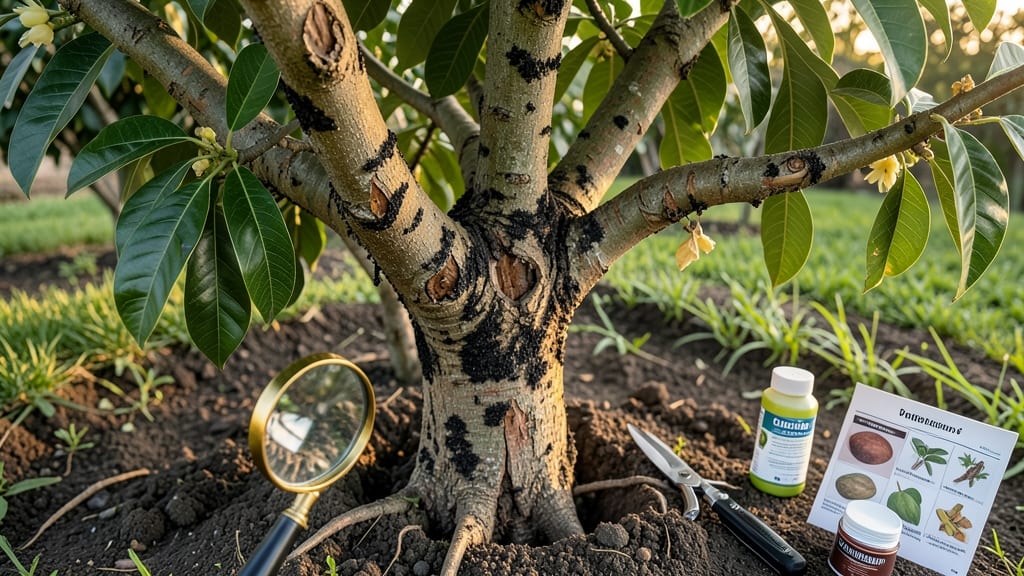
Your mango tree’s bark is whispering warnings before the fruit does—don’t ignore the cracks, oozing sap, or dark streaks. 🌱 Bark disease (like anthracnose or bacterial blight) starts small but spreads fast, turning your tropical treasure into a sad skeleton if you wait too long.
I’ve seen healthy trees turn into brittle husks in months, and the fix begins with spotting these early red flags before they ruin your harvest.
The culprits? Too much rain, poor drainage, or wounds from pruning that let fungi and bacteria sneak in. Your first move is to inspect the trunk and branches—look for sunken lesions, gummy residue, or peeling bark that reveals rot underneath.
These aren’t just cosmetic; they’re the disease’s way of saying, “I’m already inside.” The good news? Catching it early means you can still save your tree with organic treatments like copper fungicide or neem oil sprays.
Within a week of treatment, you’ll see new growth pushing out where the damage was. The bark will firm up, and your tree will start investing energy back into fruit instead of fighting off infection.
Prevent future outbreaks by pruning in dry weather, sealing wounds with horticultural sealant, and keeping the soil well-draining—because a happy tree is a disease-resistant tree.
This works for home gardeners in warm climates (zones 10-11) where mango trees thrive. If you’re in a cooler area with container-grown mangos, the same principles apply—just adjust for your microclimate. Let’s get your tree back to its lush, productive self before the next harvest season.
Root Causes of Bark Damage
Understanding why mango tree bark disease strikes requires peeling back the layers—literally and figuratively. These issues often stem from a mix of environmental stress, microbial invaders, and poor tree health.
Below, we break down the science behind the most common culprits, so you can take targeted action to protect your tree.
Fungi are the #1 cause of bark disease in mango trees, thriving in warm, humid conditions. The two most notorious offenders are:
- **Anthracnose (Colletotrichum gloeosporioides) - How it spreads: Spores land on wounds (like pruning cuts or storm damage) and germinate when moisture lingers.
Rain, overhead irrigation, or high humidity (above 75%) create the perfect breeding ground. - What it does: The fungus penetrates the bark, causing sunken, dark lesions that ooze gum (a tree’s failed attempt to heal).
Severe cases lead to cankers—dead, cracked bark that exposes the vulnerable inner layers. - Actionable fix: Prune in dry weather, sterilize tools with 70% alcohol, and apply copper-based fungicides (like Bordeaux mixture) as a preventive spray.
- Bark Rot (Botryosphaeria spp. or Lasiodiplodia theobromae) - How it spreads: These fungi enter through weakened bark (often from physical damage or drought stress).
They thrive in poorly drained soil or after prolonged wet periods. - What it does: The bark darkens, softens, and sloughs off, exposing the wood underneath.
Infected branches may wilt suddenly or produce abundant gum. - Actionable fix: Improve drainage (raise beds or add organic matter), avoid wounding the tree, and remove infected branches 6+ inches below the lesion** (sterilize tools between cuts!).
💡 Pro Tip: Early detection is key! Scrape a small area of discolored bark—if it smells rotten or reveals moist, brown tissue, it’s likely fungal. Act fast before the disease spreads.
Mango trees have thick, protective bark, but once it’s breached—whether by wind, hail, or human error—pathogens move in like vultures. Common triggers include:
- Mechanical Injury - How it happens: Rough pruning, lawnmower or weed whacker strikes, or even animals rubbing against the trunk can create entry points. - Why it matters: A fresh wound is a buffet for fungi and bacteria.
The tree’s natural gum (resin) may seal minor cuts, but deep or repeated damage weakens defenses. - Actionable fix: Use clean, sharp pruners (sterilized with bleach or alcohol), avoid topping trees, and protect young trunks with tree guards.
- Storm or Hail Damage - How it happens: High winds or hail strip bark or create long tears, exposing the cambium layer (the tree’s growth tissue). - Why it matters: The cambium is the tree’s lifeline—damage here can lead to girdling, where the tree can’t transport nutrients, causing dieback. - Actionable fix: Prune out storm-damaged branches immediately (but only if >30% of the branch is dead).
Apply wound dressing (like Tanglefoot Tree Wound Pruning Sealer) only if the wound is large (>2 inches wide)—small wounds should be left to heal naturally.
Mango trees are tropical powerhouses, but push them too far, and their bark becomes vulnerable to breakdown. Key stressors:
- Prolonged Wetness - How it happens: Overhead irrigation, poor drainage, or frequent rain keeps bark damp for days, encouraging fungal spores to germinate. - Why it matters: Bark needs dry periods to stay healthy.
Constant moisture softens the bark, making it prone to cracking and infection. - Actionable fix: Switch to drip irrigation, improve soil drainage (add perlite or sand), and space trees 15+ feet apart for airflow.
- Extreme Temperatures - How it happens: Frost (below 40°F) or scorching sun can crack bark, while sudden temperature swings (like cold nights + hot days) stress the tree. - Why it matters: Frost cracks (vertical splits in the trunk) are common in young mango trees.
These invite pests and disease into the open wounds. - Actionable fix: Mulch heavily (3–4 inches of organic mulch) to insulate roots, and paint young trunks with white latex paint (reflects sun) in hot climates.
- Nutrient Deficiencies - How it happens: Zinc or potassium deficiencies weaken bark structure, making it thinner and more brittle. - Why it matters: Weak bark heals poorly and is easier for pathogens to colonize. - Actionable fix: Conduct a soil test and amend with balanced fertilizer (look for NPK + micronutrients).
A foliar spray of zinc sulfate can help if deficiency is suspected.
Before bark diseases take hold, pests often pave the way by creating wounds or stressing the tree:
- Bark-Boring Insects (Longhorn Beetles, Shot Hole Borers)
- How they attack: Adults lay eggs in cracks or wounds, and larvae tunnel under the bark, disrupting nutrient flow.
- Signs: Sawdust-like frass, small holes, and oozing sap.
- Actionable fix: Remove and burn infested branches, apply neem oil or kaolin clay as a barrier, and invite predator birds (like woodpeckers) to your garden.
- Scale Insects & Mealybugs
- How they attack: These sap-sucking pests weaken the tree, making it more susceptible to fungal infections.
- Signs: White cottony masses (mealybugs) or brown bumps (scale) on bark.
- Actionable fix: Blast off pests with a strong water spray, then apply horticultural oil (like Neem Oil) to smother them.
🎯 Key Takeaway: Bark disease rarely strikes a healthy, well-cared-for tree. By addressing fungal pressure, physical wounds, environmental stress, and pests, you can fortify your mango tree’s defenses before problems escalate. Prevention is the best cure!
How to Fix Mango Bark Damage
Once you’ve identified the root cause of your mango tree’s bark disease—whether it’s fungal infections, bacterial cankers, or pest-related stress—it’s time to take action. The good news? Many of these issues can be reversed with organic, hands-on solutions that restore your tree’s health without harsh chemicals.
Below, we break down practical fixes tailored to each common cause, plus prevention tips to keep your tree thriving.
🔥 Fix It:
- Prune Infected Areas 🪓
- Use sterilized pruning shears (wipe with rubbing alcohol between cuts) to remove all dark, sunken, or oozing bark.
- Cut 6 inches below the affected spot to ensure the fungus doesn’t spread.
- Pro Tip: Dispose of infected branches in a sealed bag—do not compost them!
- Apply Organic Fungicides 🍄
- Neem oil solution (1 tsp neem oil + 1 quart water + a drop of dish soap as an emulsifier) – Spray every 7–10 days until symptoms disappear.
- Baking soda spray (1 tbsp baking soda + 1 quart water + a few drops of soap) – Great for powdery mildew.
- Copper fungicide (like Copper Soap) – Effective for stubborn bark rot; follow label instructions.
- Improve Airflow & Drainage 🌬️
- Thin out dense foliage around the tree to reduce humidity (fungi love damp conditions).
- Ensure the base of the tree has proper drainage—mulch with wood chips (not fresh wood) to keep moisture away from the bark.
👨🍳 Treat It:
- Clean & Sterilize Wounds 🧼
- Scrape off all infected bark with a sterilized knife, exposing healthy green tissue underneath.
- Apply copper-based pruning paste (like Tanglefoot) to seal the wound and prevent reinfection.
- Use Hydrogen Peroxide Spray 💧
- Mix 1 part 3% hydrogen peroxide + 3 parts water and spray directly on cankers 2–3 times a week.
- Why? It kills bacteria on contact without harming the tree.
- Boost Tree Immunity 💪
- Fertilize with compost tea (rich in beneficial microbes) to strengthen the tree’s defenses.
- Avoid nitrogen-heavy fertilizers—they weaken bark resilience.
🔪 Eliminate the Culprits:
- Handpick & Crush Pests 🕷️
- For scale insects, use a soft brush dipped in soapy water to scrape them off.
- Borers? Insert a wire or screwdriver into entry holes to kill larvae inside.
- Neem Oil or Insecticidal Soap 🍃
- Spray neem oil (1% solution) or insecticidal soap on both sides of leaves and the trunk.
- Repeat every 5–7 days until pests are gone.
- Encourage Natural Predators 🐞
- Plant marigolds or basil near the tree to attract ladybugs and parasitic wasps, which eat pests.
- Beneficial nematodes (like Steinernema carpocapsae) can be applied to soil to target borers.
🎯 Prevent & Reverse Damage:
- Protect from Sunburn ☀️
- Wrap the trunk with tree wrap (available at garden centers) during hot, dry months.
- Avoid pruning in late summer—this stresses the tree and makes it vulnerable.
- Deep Watering & Mulching 💦
- Water deeply 2–3 times a week (not daily shallow watering) to prevent drought stress.
- Apply 3–4 inches of organic mulch (like straw or pine needles) around the base—keep it 6 inches away from the trunk.
- Balance Soil pH 📊
- Test soil pH (ideal for mangoes: 6.0–7.5).
- Amend with lime (to raise pH) or sulfur (to lower pH) if needed.
To keep your mango tree healthy and disease-free, follow these proactive steps: ✅ Inspect monthly – Catch early signs before they spread. ✅ Avoid overhead watering – Water at the base, not the leaves. ✅ Rotate organic treatments – Don’t rely on one solution; mix neem, copper, and compost tea. ✅ Plant companion trees – Guava or citrus nearby can deter some pests. ✅ Sanitize tools – Always clean pruners with rubbing alcohol between uses.
Final Thought: 🌟 With consistent care and organic remedies, most mango bark diseases can be completely reversed. The key is acting fast and preventing recurrence with smart gardening habits. Your tree will reward you with sweeter fruit and stronger growth in no time!
Frequently asked questions
What does early-stage bark disease look like on a mango tree?
Start by checking for small dark spots or peeling bark that reveals moist, brown tissue underneath. You may also notice oozing sap or gummy residue around cracks in the trunk or branches. These are the first signs of fungal infections like anthracnose or bacterial blight. Scrape a tiny area—if it smells rotten, it’s already spreading.
Can I save a mango tree if half its trunk shows signs of bark rot?
It depends on how deep the rot has spread. If the bark is soft, spongy, or peeling away and you can see dark streaks inside the wood, the tree may be too far gone. However, if the damage is only on the outer bark, prune out infected areas, apply copper fungicide, and improve drainage to give it a fighting chance. Severe cases might need professional arborist assessment.
How often should I apply neem oil to prevent bark disease?
For prevention, spray neem oil solution (1 tsp neem oil + 1 quart water + dish soap) every 4–6 weeks during the growing season (spring to fall). If your tree is already showing symptoms, increase to every 7–10 days until the infection clears. Always apply in the early morning or late afternoon to avoid leaf burn from sunlight.
Will pruning my mango tree help prevent bark disease?
Prune during dry weather to minimize wound exposure, and always use sterilized tools (wipe with rubbing alcohol). Remove dead, crossing, or diseased branches—these create entry points for fungi. Seal larger wounds (>2 inches wide) with copper-based pruning paste, but leave small wounds to heal naturally. Proper pruning improves airflow and reduces humidity around the tree.
Can I use household items like vinegar or baking soda to treat bark disease?
Baking soda works great for mild fungal issues—mix 1 tbsp baking soda + 1 quart water + a few drops of soap and spray on affected areas. Vinegar (1 part white vinegar + 3 parts water) can help disinfect tools but isn’t strong enough to treat established infections. For serious cases, stick to copper fungicides or neem oil, which are more effective. Always test solutions on a small area first!