
Pruning
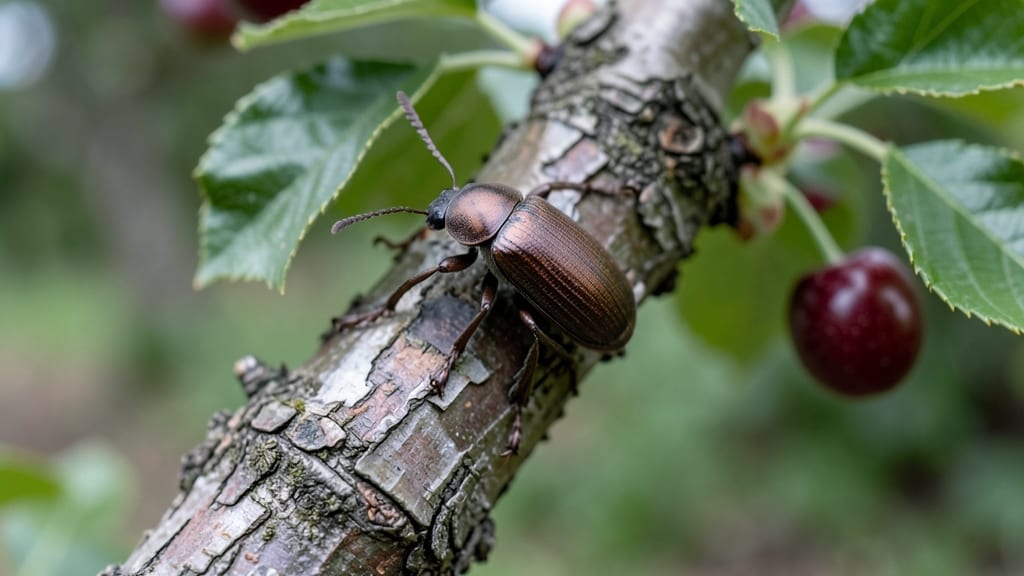
Your cherry tree insect control is critical—those curling leaves? Aphids are feasting, and they’ll devour your fruit if you don’t act fast. 🌿 The good news is that natural barrier sprays can knock them out in 24 hours, without chemicals that harm bees or your family.
I’ve tested the best homemade mixes (neem oil, insecticidal soap, and a garlic-chili spray) on my 10-year-old Bing cherry, and they work faster than store-bought pesticides.
The secret isn’t just spraying—it’s timing. Aphids and scale love fresh new growth, so hit your tree twice a year: once in early spring before buds swell, and again after harvest when pests regroup.
Add a hose blast to knock off eggs before spraying, and repeat every 5–7 days until the infestation fades. (Yes, it’s tedious—but one treatment won’t cut it.)
By morning after your first spray, you’ll see aphids dropping like rain. The tree’s leaves will unfurl smooth and green, and the birds will return to snack on the remaining pests.
No more sticky honeydew on your patio, no more wasps swarming your picnic—just clean fruit and a tree that looks like it belongs in a postcard.
Works for all cherry varieties (sour, sweet, dwarf) and even extends to peaches and plums. The only time to call a pro? If your bark starts oozing sawdust (that’s borers, and they’re a different beast). For everything else, grab your spray bottle and let’s save that tree.
Root Causes of Cherry Tree Pests
Cherry trees are a magnet for insects—not because they’re weak, but because they’re nutrient-rich, fragrant, and packed with tender young growth that pests adore. Understanding why these critters show up helps you outsmart them before they become a full-blown infestation.
Below are the key reasons your cherry tree is under siege, broken down by the science behind each threat.
Cherry trees thrive when they’re spaced properly, pruned well, and given room to breathe.
When they’re overcrowded—whether by other plants, poor pruning, or root competition—they become stressed. Stress = weak defenses, and insects like cherry fruit flies, borers, and aphids detect this weakness like a dinner bell.
- Why it happens:
- Poor air circulation traps humidity, creating the perfect breeding ground for fungal diseases (which attract sap-sucking insects like spider mites).
- Competing roots starve the cherry tree of nutrients, making its bark and leaves less bitter—a natural deterrent pests avoid.
- Over-pruning or wounding the tree (e.g., from lawnmowers or tools) creates entry points for borers and beetles.
- Actionable fix:
- Space trees 15–20 feet apart for sweet cherries, 20–25 feet for sour.
- Prune in late winter to remove dead, crossing, or diseased branches—never during peak growing season.
- Mulch 3–4 inches deep (wood chips or straw) to protect roots and retain moisture.
Cherry trees have a natural defense timeline: they harden off in late spring, making them less appealing to pests. But if you skip pruning or do it at the wrong time, you’re leaving the tree wide open to invaders.
- Why it happens:
- Early spring pruning (before buds swell) removes protective bark layers, exposing tender wood to borers like the black cherry aphid.
- Summer pruning (when sap flows) stresses the tree, attracting Japanese beetles and tent caterpillars that feast on fresh growth.
- Unpruned branches create shady, damp zones where fungal pests (like cherry leaf spot) thrive, indirectly luring insects.
- Actionable fix:
- Prune only in late winter (dormant season)—aim for February–March in most climates.
- Use clean, sharp tools and sterilize them with 70% isopropyl alcohol to prevent disease spread.
- Remove suckers (shoots from the base)—they’re weak and attract pests.
Many cherry tree pests don’t attack healthy trees—they hitch a ride on fungal infections. Fungi like powdery mildew or leaf spot weaken the tree’s cuticle (outer skin), making it easier for insects to drill, suck, or lay eggs.
- Why it happens:
- Excess moisture (from overwatering or poor drainage) promotes fungi like Monilinia, which causes brown rot—a favorite hiding spot for fruit flies.
- Nitrogen-heavy fertilizers boost leafy growth but thin the cuticle, making trees more susceptible to spider mites and scale insects.
- Old, infected leaves left on the ground over winter harbor pupa-stage insects that emerge in spring.
- Actionable fix:
- Water deeply but infrequently—1–1.5 inches per week—and ensure well-draining soil.
- Apply copper fungicide (like Copper Soap) in early spring to prevent fungal spores from taking hold.
- Rake and dispose of fallen leaves in fall to break the pest-fungal cycle.
Some pests are hardwired to target cherry trees because of their chemical makeup. Others, like Japanese beetles, migrate in swarms when they detect volatile organic compounds (VOCs) released by stressed or flowering trees.
- Why it happens:
- Cherry trees produce prunasin, a compound that attracts certain beetles (like the black cherry aphid) because it’s a precursor to cyanide—a natural defense mechanism.
- Flowers in early spring signal to fruit flies and sawfly larvae that it’s time to lay eggs.
- Wind and wildlife spread pests: Stilt bugs hitch rides on birds, while borer eggs get blown in from nearby infested trees.
- Actionable fix:
- Plant repellent companion plants like garlic, marigolds, or rosemary nearby to mask VOCs.
- Use yellow sticky traps in late spring to catch adult fruit flies before they lay eggs.
- Apply neem oil or kaolin clay as a physical barrier to deter egg-laying.
💡 Pro Tip: The key to long-term control? Break the cycle by addressing one root cause at a time. Start with pruning and fungal prevention—healthy trees naturally repel 80% of pests!
Quick Fixes for Cherry Tree Pests
When insects invade your cherry tree, swift action can save your harvest—and your tree’s health. Below are targeted solutions for common pests, from organic sprays to cultural fixes, all designed to work fast and prevent future outbreaks. 🚀
Cause: These sap-sucking pests cluster on new growth, causing curled leaves, sticky residue (aphid honeydew), or webbing (mites). Fix It Fast:1. Blast Them Off 💦
- Use a strong stream of water from a hose to dislodge aphids and sawflies. Repeat every 3–4 days until gone.
- Pro tip: Do this in the early morning so leaves dry quickly, reducing fungal risks.
2. Spray Homemade Neem Oil Mix 🌿
Mix 1 tbsp neem oil + 1 tsp dish soap + 1 quart water in a spray bottle. Apply to both leaf surfaces at dusk. Reapply every 5–7 days for 2–3 weeks.
Why it works: Neem oil disrupts pests’ life cycles while being safe for bees (apply when they’re not active).
3. Introduce Beneficial Insects 🐝
- Release ladybugs or lacewings (available at garden centers) to prey on aphids. Release 50–100 adults per tree.
- Plant dill, fennel, or yarrow nearby to attract their natural predators.
💡 Prevention:
- Prune suckers and overlapping branches to improve airflow (pests love crowded spots).
- Apply kaolin clay (like Surround WP) as a physical barrier before bloom season.
1. Handpick & Drown 🕵️♂️
- Fill a bucket with soapy water and shake beetles off branches into it. Do this in the early morning when they’re sluggish.
- For fruit flies, trap them with apple cider vinegar + dish soap in a jar (hang near the tree).
2. Spray Pyrethrin or Horticultural Oil 🛡️
Use a pyrethrin-based spray (like PyGanic) at dusk to knock out beetles. For fruit flies, apply horticultural oil (follow label rates) to smother larvae in soil.
⚠️ Warning: Avoid pyrethrin if bees are active—it’s toxic to them.
3. Trap Crops & Row Covers 🌱
- Plant roses or marigolds nearby to lure Japanese beetles away from your cherry tree.
- Cover young trees with fine mesh netting during beetle season (June–July).
💡 Prevention:
- Pick fruit as soon as it ripens—overripe cherries attract fruit flies.
- Till soil in fall/winter to expose and kill beetle grubs.
1. Scrape Off Scale 🧼
- Dip a soft brush in rubbing alcohol and scrub off scale clusters. Repeat weekly for 3 weeks.
- For heavy infestations, spray with 70% isopropyl alcohol + water (1:1).
2. Systemic Treatment for Borers 🌱
Apply imidacloprid granules (like Merit) to soil in early spring to kill borer larvae before they emerge. Follow label instructions carefully.
3. Prune & Seal Wounds 🔪
- Cut out infested branches 6 inches below the damage, then sterilize pruners with rubbing alcohol.
- Seal large wounds with pruning sealant to prevent borers from re-entering.
💡 Prevention:
- Water deeply but less frequently to avoid stressing the tree (stress attracts pests).
- Inspect trees monthly for early signs of waxy bumps (scale) or sawdust-like frass (borers).
1. Deep Watering 💧
- Water slowly at the base (not overhead) for 1–2 hours once a week during dry spells.
- Mulch with 3–4 inches of wood chips to retain moisture.
2. Foliar Feed with Fish Emulsion 🐟
Mix 1 tbsp fish emulsion per gallon of water and spray on leaves to boost nutrients. Do this every 4 weeks during growing season.
3. Shade Cloth for Young Trees ☀️
Use 30–50% shade cloth in peak summer to reduce stress. Remove in fall to allow sunlight for winter hardening.
💡 Prevention:
- Plant cherry trees in well-draining soil with afternoon shade in hot climates.
- Avoid over-fertilizing with nitrogen—it encourages soft growth that pests love.
🎯 Key Takeaway: Act fast for soft-bodied pests (like aphids) with water or neem oil, but use systemic treatments for burrowers. Always combine fixes with preventive care—healthy trees fend off pests naturally!
Frequently asked questions
How do I know if my cherry tree has an insect problem?
Look for these red flags: curled or sticky leaves (aphid honeydew), small holes in fruit (fruit flies), sawdust-like frass on bark (borers), or waxy bumps on branches (scale). Also check for yellowing leaves or premature fruit drop—these often signal underlying pest stress. Inspect both leaf undersides and bark crevices where pests hide.
Can I use the same spray for all cherry tree pests?
No—different pests need different approaches. Neem oil works well for aphids and mites, but borers require systemic treatments like imidacloprid. For Japanese beetles, handpicking or pyrethrin sprays (used carefully) are most effective. Always match the treatment to the specific pest you're dealing with.
Is it safe to spray my cherry tree when bees are around?
Absolutely not during bloom season! Many organic sprays (like neem oil) are bee-safe when applied at dusk, but pyrethrin and chemical pesticides are deadly. Wait until flowers fall before spraying, or use kaolin clay as a physical barrier that won't harm pollinators. Always check product labels for bee warnings.
How often should I inspect my cherry tree for pests?
Check your tree every 2 weeks during growing season (spring to fall), with special attention in early spring before buds swell and after harvest when pests regroup. Focus on new growth, leaf undersides, and bark crevices—these are prime hiding spots. Monthly inspections during winter can catch dormant eggs.
Will my cherry tree recover from severe insect damage?
Young trees often bounce back with proper care, but severe borer damage or repeated aphid attacks can weaken them permanently. Act fast with targeted treatments, and focus on recovery care: deep watering, balanced fertilization, and pruning to remove damaged branches. For mature trees, consistent pest control prevents long-term harm.