
Container Gardens
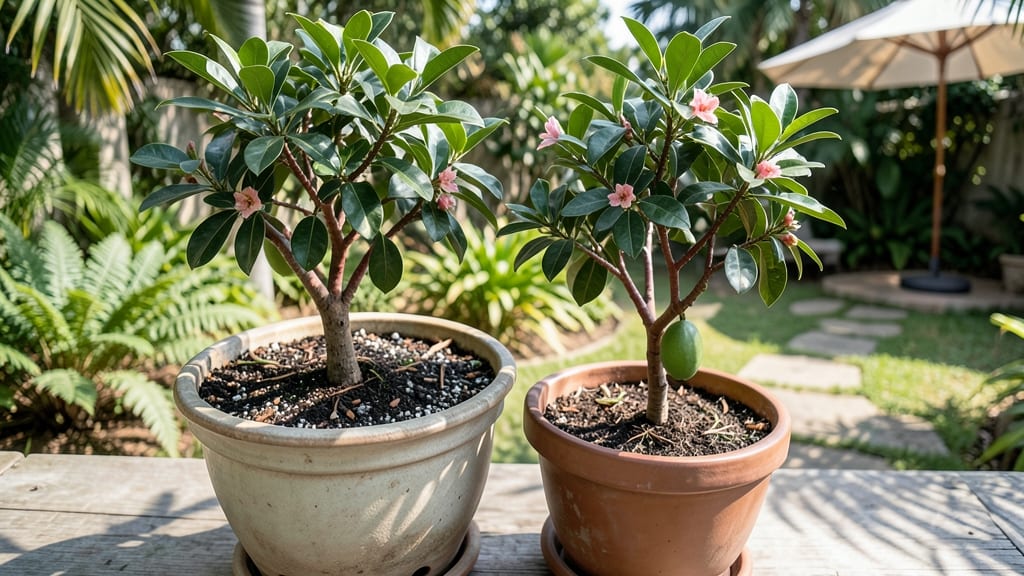
Growing a mango tree in a pot is absolutely possible with the right dwarf or grafted varieties, though it requires careful attention to container size (at least a 20-gallon pot for mature trees), excellent drainage, and repotting every 2-3 years to avoid root-bound stress. Use well-draining tropical potting mixes and keep the tree in full sun year-round for best results.
Container-grown mango trees need space to thrive, but their tropical nature makes them surprisingly adaptable to pots. 🌱 The key is selecting compact varieties like 'Cogshall' or 'Julie,' which naturally stay smaller while still producing fruit.
Unlike their outdoor counterparts, potted mangoes require larger pots (20+ gallons) to accommodate their root systems and prevent overcrowding. I've found that adding a 3-inch layer of gravel at the bottom improves drainage while keeping roots healthy.
Regular pruning of both roots and branches helps maintain balance, especially when you notice roots circling the pot's interior.
What many growers overlook is the importance of seasonal adjustments—mango trees in pots need extra protection during winter months, even in warm climates. Moving them to sheltered areas or using frost cloths can make all the difference.
The trade-off? While potted mangoes may never reach the size of their in-ground siblings, they can still produce delicious fruit with proper care and patience.
💡 In This Article
- Best Mango Tree Varieties for Container Growing
- Container Size and Root-Bound Solutions for Potted Mango Trees
Container size and root-bound solutions for potted mango trees
Mango trees grow aggressively in the ground, but their root systems adapt surprisingly well to containers—when given the right space. A 20-gallon pot is the absolute minimum for a mature tree, but I recommend 30-50 gallons for varieties like 'Keitt' or 'Cogshall' to prevent root congestion.
The rule of thumb is: the wider the pot's diameter, the better the root spread.
Roots need room to expand horizontally, not just vertically, which is why shallow but wide containers (like half whiskey barrels) often work better than tall, narrow ones. 🌿 Without adequate space, roots will circle the pot's interior, creating a dense mass that strangles itself and starves the tree of nutrients.
Proper drainage is non-negotiable—mango roots rot quickly in soggy conditions. Start with a pot that has drainage holes and add a 3-4 inch layer of coarse gravel or perlite at the bottom to create an air pocket.
The potting mix itself should be a blend of 60% tropical mix, 20% perlite, and 20% compost to mimic the well-draining, nutrient-rich soil of their native habitats.
I've seen growers use fabric root barriers inside the pot to encourage outward root growth, which can double the effective root zone when placed against the container walls.
Root-bound stress shows up in several ways: yellowing leaves, stunted growth, or roots growing out of drainage holes. If you notice these signs, it's time to repot—ideally in spring before new growth begins. When repotting, gently loosen the root ball and trim any circling roots with sterilized pruners.
This isn't just about giving the tree more space; it's about resetting the root system to prevent girdling, which can kill the tree within 1-2 years if left unchecked. After repotting, hold off on heavy watering for 5-7 days to allow roots to establish in their new environment.
Pruning isn't just about the branches—root pruning is equally critical. Every time you repot, inspect the roots and remove 20-30% of the oldest, most congested roots. This might seem counterintuitive, but it stimulates new root growth and improves the tree's ability to absorb water and nutrients.
For varieties like 'Julie,' which are more cold-hardy, you can also prune roots in late winter to encourage earlier spring growth. The key is balance: too much pruning shocks the tree, while too little leads to that suffocating root-bound cycle.
One advanced technique I've seen work wonders is the "pot-in-pot" method. Place your mango tree's current pot inside a larger decorative outer pot with a 2-3 inch gap filled with moist sphagnum moss.
This creates a buffer zone that mimics the natural soil environment while allowing you to easily lift and move the tree. It also gives roots a temporary escape route when they hit the container walls. The downside?
You'll need to monitor the moss's moisture level carefully—it should stay damp but never waterlogged.
Remember: container-grown mangoes will never grow as large as their in-ground counterparts, but with the right pot size and root management, they can live for decades and still produce fruit.
The trade-off is patience—it typically takes 3-5 years for a potted mango to bear its first fruit, but once established, they can reward you with 20-30 pounds of mangos annually in a 30-gallon pot. That's a sweet return on your container gardening investment! 🍈