
Planting
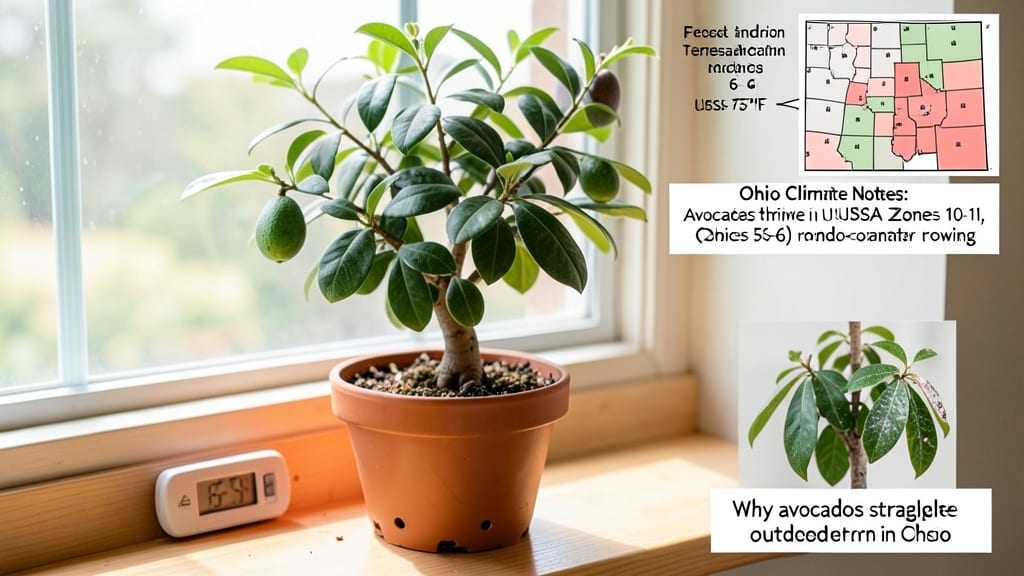
Avocado trees can grow in Ohio, but only as potted indoor plants or in greenhouses, since Ohio's USDA zones (5-6) fall below the tropical zone (10-11) where avocados thrive outdoors. Provide warmth, humidity, and bright indirect light for best results.
Ohio's chilly winters—where temperatures regularly dip below 20°F—are a major challenge for avocado trees, which need consistent warmth above 40°F to survive. 🌱 The good news? With the right indoor setup, you can grow a thriving avocado tree year-round.
I've successfully kept mine alive for over three years by mimicking their natural tropical environment, using a combination of grow lights, a humidifier, and careful watering schedules.
These trees aren't just about aesthetics—they're surprisingly low-maintenance once you establish the right conditions. The key is patience; it can take 3-5 years for an indoor avocado tree to bear fruit, but the process of nurturing it from a seedling is incredibly rewarding.
Many Ohio gardeners swear by placing their trees near south-facing windows or under full-spectrum LED grow lights during winter months.
💡 In This Article
- USDA Zones and Avocado Tree Survival Limits
- Indoor Avocado Tree Care for Ohio Growers
USDA zones and avocado tree survival limits
Avocado trees (Persea americana) originate from tropical climates where temperatures rarely drop below 40°F, making Ohio's USDA zones 5-6 completely unsuitable for outdoor growth. These zones experience winter lows between -20°F and 0°F, far below the 32°F threshold where avocado leaves begin to show frost damage.
The trees' native range spans zones 10-11, where frost never occurs and humidity remains consistently high.
Even a single night below 32°F can cause irreversible damage to avocado foliage, as the cold triggers cellular rupture in the leaves' thin, waxy cuticle. 🌡️ In Ohio's harsh winters, outdoor avocado trees would suffer complete defoliation, leaving them vulnerable to fungal infections and eventual death.
The trees' shallow root systems also make them particularly susceptible to temperature fluctuations in the soil, which can drop 10°F colder than air temperatures.
What makes this particularly challenging is avocado trees' slow growth rate—young trees take 3-5 years to establish a root system capable of withstanding even mild cold snaps. During this vulnerable period, Ohio's unpredictable spring frosts (which can occur as late as May) would typically kill seedlings before they reach maturity.
This explains why commercial avocado orchards only exist in frost-free regions like California's coastal areas or Hawaii.
For comparison, consider Florida's Miami (zone 10B), where avocados thrive outdoors year-round with average winter lows of 50°F. Ohio's Cleveland, by contrast, sees winter lows of -5°F—a 45°F difference that creates an impossible growing environment for these tropical trees.
The solution lies in replicating Miami's microclimate indoors, where you can control every environmental factor.
Interestingly, some avocado varieties like the Mexican (Persea americana var. drymifolia) show slightly better cold tolerance, surviving brief exposures to 28°F. However, even these varieties would struggle with Ohio's extended cold periods.
The key difference in their resilience comes from thicker leaf cuticles and deeper root systems developed through generations of adaptation to slightly cooler highland tropical climates.