
Companion Plants
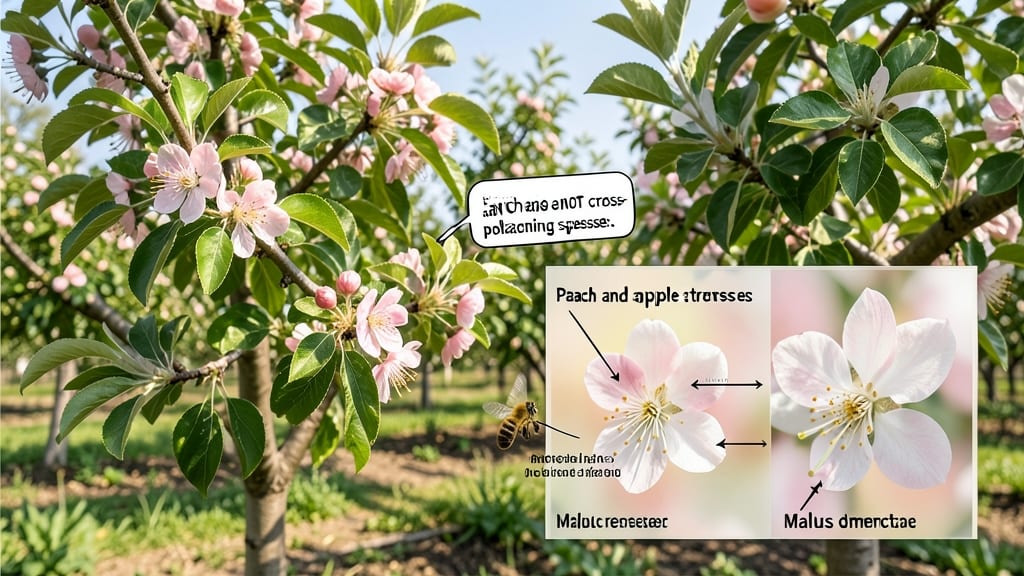
Peach trees cannot pollinate apple trees because they belong to different genera—Prunus persica (peach) and Malus (apple)—meaning their flowers lack compatible reproductive structures for successful cross-pollination. Even if bees transfer pollen, no fruit will develop.
This limitation comes down to their botanical families—peaches thrive in the Prunus genus while apples belong to Malus. 🌳 Their flower structures don't align, so even if pollen moves between them, fertilization can't occur.
Think of it like trying to plug a round peg into a square hole: the biological pieces just don't fit together. What's fascinating is that both trees actually belong to the same broader family (Rosaceae), yet their reproductive systems evolved enough to create this barrier.
For gardeners hoping to maximize fruit production, understanding these distinctions is key. While peach trees can successfully pollinate other Prunus varieties like nectarines or plums, apple trees need compatible partners within their own genus—often crabapple varieties—to set fruit properly.
The lesson here? Planting a peach tree alongside an apple tree won't help either one bear more fruit, but choosing the right companion plants absolutely will.
💡 In This Article
- Botanical Differences Between Peach and Apple Trees
- Best Pollination Pairings for Peach and Apple Trees
Botanical differences between peach and apple trees
The fundamental reason peach trees can't pollinate apple trees lies in their genetic classification. Peaches fall under the Prunus persica genus while apples belong to Malus, creating a biological divide that's wider than just taxonomy.
Their flower structures are fundamentally mismatched—peach blossoms have 6-8 stamens with pollen that's designed to fertilize only other Prunus species, while apple flowers feature 20+ stamens arranged to receive pollen from compatible Malus varieties. 🌸 This anatomical mismatch means even if bees transfer pollen, the reproductive cells won't recognize each other.
Let's examine the flower anatomy more closely. Peach flowers contain pistils with specific chemical signals that only respond to pollen from Prunus trees, while apple pistils have evolved to accept only Malus pollen.
The pollen grains themselves carry different proteins on their surfaces—like biological handshakes—that must match for fertilization to occur. This is why you'll often see peaches successfully pollinating nectarines or plums (both Prunus), but never apples.
The reproductive barrier is so strong that even artificial pollination attempts in labs fail to produce viable seeds.
Interestingly, both trees belong to the same broader family (Rosaceae), which includes other fruit trees like cherries and pears. However, their evolutionary paths diverged enough to create these pollination barriers.
Peach trees are actually self-pollinating to some degree (about 20-30% of their fruit comes from their own pollen), while most apple varieties require cross-pollination from another Malus tree to set fruit properly. This self-sufficiency in peaches explains why they can thrive alone, while apples often need their compatible companions.
The timing of flowering also plays a role in natural pollination failures. While both trees bloom in spring, peach blossoms typically open 7-10 days earlier than most apple varieties. By the time apple flowers are fully receptive, peach pollen production has often declined significantly.
This temporal mismatch further reduces any chance of successful cross-pollination between the two species. 🌿 Even in orchards where both trees grow nearby, you'll rarely see any fruit development from these incompatible pairings.
What's particularly fascinating is how these reproductive barriers work at the cellular level. When peach pollen lands on an apple stigma, the pollen tube grows but fails to penetrate the ovule properly because the cellular signals don't match.
The apple's ovule essentially rejects the foreign pollen, preventing fertilization. This rejection mechanism is so precise that even closely related species within the same genus (like different apple varieties) can sometimes cross-pollinate, while these inter-genus attempts always fail.
For gardeners, this means you can't count on peach trees to help your apple trees bear fruit. The biological systems are simply too different. However, understanding these distinctions helps explain why some fruit trees thrive in isolation while others need specific companions.
The lesson here is that successful pollination depends on both genetic compatibility and proper timing—two factors that don't align between peaches and apples. 🌱