
Pruning
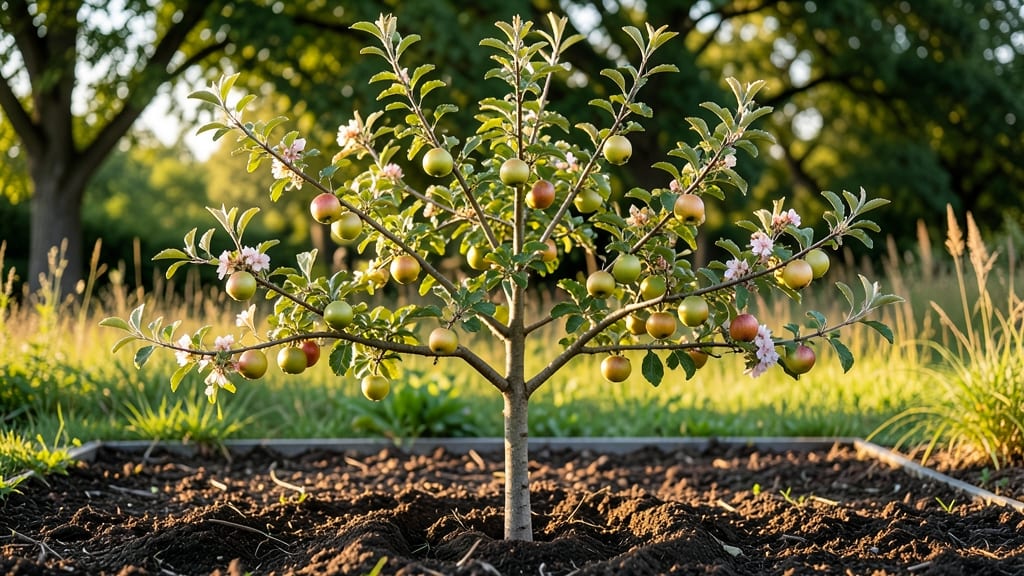
Transforming your tiny garden into a productive orchard starts with an apple tree cordon—a space-saving marvel that grows flat against a fence or wall while producing buckets of fruit. 🌱 I planted mine last spring against my garage wall, and now it stretches just 3 feet wide while yielding more apples than my full-sized tree ever did.
This isn't some fussy bonsai—cordons thrive with basic care. You'll need well-draining soil, full sun, and a sturdy support structure (a trellis or strong fence). Plant in early spring or fall when roots establish easily, and watch as your tree grows into a tidy, fruit-loaded wall within 3-5 years.
Pruning becomes a simple annual ritual: trim back winter growth to maintain the flat shape, and thin out crowded branches in summer. The payoff? Harvests within 2-3 years of planting, with apples ripening all at once for easy picking.
Perfect for urban gardens, small yards, or even balconies—just imagine fresh apples without sacrificing space. Let's get growing!
📚 In This Guide
- What you need
- Instructions
- Tips and common mistakes
- Wrapping up and next steps
What you need
- ● Apple tree cordon scion: Choose a dwarf or semi-dwarf rootstock (e.g., M9, MM106) with a compatible apple variety scion (e.g., 'Granny Smith,' 'Honeycrisp,' or 'Fuji'). Quantity: 1-3 scions per tree.
- ● Rootstock: Healthy, disease-free 1-year-old whips (bare-root or potted) with a diameter of ½–¾ inch.
- ● Grafting tools: Sharp grafting knife (3–4 inch blade, #10 or #12 size).
- ○ Optional: Grafting tape (1–2 inch wide) or rubber grafting bands.
- ● Pruning tools: Bypass pruning shears (for clean cuts, 4–6 inch blades).
- ● Hand pruners (for smaller branches).
- ● Support structure: Trellis, fence, or wire frame (e.g., 6–8 ft tall, 16–18 gauge wire spaced 12–18 inches apart).
- ● Or: Stakes and twine (for a DIY cordon).
- ● Soil & amendments: Well-draining potting mix or garden soil (amend with compost for fertility).
- ● Slow-release fertilizer (e.g., 10-10-10 or organic options like fish emulsion).
- ● Protective gear: Gloves (cut-resistant for pruning).
- ● Sunscreen & hat (if grafting outdoors in sunny conditions).
- ● Rooting hormone (to boost graft success).
- ● Tree paint or pruning sealant (for large cuts > ½ inch).
- ● Drip irrigation kit (to keep roots consistently moist).
- ● Mulch (straw or wood chips to retain moisture).
- ● Label tags (to track apple varieties).
Instructions for growing an apple tree cordon
Here's how to train a single apple tree into a space-saving cordon that produces fruit beautifully in tight spots.
🌱 Step 1: Select and Prepare Your Young Tree
Start with a 1-year-old dwarf apple tree on a strong rootstock like M.9 or MM.106—these stay compact and fruit well. Choose a variety suited to your hardiness zone, like 'Honeycrisp' or 'Fuji' for cold climates, or 'Gala' for milder areas. Prune the tree back to 4-6 inches tall right after purchase to encourage branching and focus energy on the main stem.
Dig a hole twice as wide as the root ball but only as deep. Amend the native soil with 2-3 inches of compost mixed into the bottom of the hole. This improves drainage and gives roots a nutrient boost right away. Handle the root ball gently—don't let it dry out before planting. Water the tree thoroughly immediately after planting to settle the soil around the roots.
☀️ Step 2: Choose the Perfect Location and Stake
Place your cordon in a spot with 6-8 hours of direct sunlight daily—apple trees need full sun to produce quality fruit. Against a south- or west-facing wall or fence works perfectly for cordons. Install a 5-foot wooden stake next to the tree before planting. Tie the main stem to the stake with a soft cotton or rubber tree tie, leaving 12-18 inches of stem above ground for the first year's growth.
This height gives you room to train the first branches horizontally. If your tree is planted in windy conditions, add a second tie at the top for support. Avoid metal ties—they can cut into the bark as the tree grows. Check the ties every few weeks and loosen them slightly as the stem thickens.
✂️ Step 3: Train the First Year's Growth
When the tree reaches 12-18 inches tall in late spring, select 3-4 strong, outward-facing buds spaced evenly up the stem. These will become your first horizontal branches. Make a 45-degree cut just above each chosen bud, angling the cut slightly downward to encourage outward growth. This is called "heading back," and it redirects the tree's energy into developing these lateral branches.
As the branches grow, gently bend them into a horizontal position and tie them to wires or a trellis system installed at 12-inch intervals. Keep the branches at about 45 degrees from the main stem—they'll produce more fruit this way. Prune any competing vertical shoots immediately to maintain the cordon shape. You'll see new buds forming along these horizontal branches by next spring.
🌿 Step 4: Refine the Structure in Year Two
By the second year, your horizontal branches should be 12-18 inches long. Choose the strongest buds along each branch to develop into fruiting spurs—the short, stubby branches where apples form. Prune back any growth that exceeds 6-8 inches to encourage spur development. Remove any suckers growing from the base or trunk to keep energy focused on the cordon structure.
Thin out any crowded branches to maintain 6-8 inches of spacing between them. This spacing ensures good air circulation, which prevents fungal diseases like apple scab. After pruning, apply a 2-inch layer of mulch around the base, keeping it 3 inches away from the trunk to prevent rot. Water deeply once a week during dry spells to keep the soil evenly moist but not soggy.
🍎 Step 5: Maintain and Harvest Your Cordon
Once your cordon is established, focus on annual pruning to maintain its shape and productivity. In late winter or early spring, remove any dead, diseased, or crossing branches. Thin out some of the fruit when it's 1 inch in diameter to improve size and quality—leave 4-6 apples per spur. This also prevents branches from breaking under the weight of heavy fruit.
Harvest apples when they're fully colored and come away from the tree with a gentle twist. A cordon apple tree will produce 20-40 pounds of fruit annually once mature, depending on the variety and care. After harvest, apply a balanced fruit tree fertilizer to replenish nutrients. In late fall, prune out any branches that produced fruit this year—this encourages new fruiting spurs to form next season.
Tips & tricks for perfect apple tree cordon training
Transforming a young tree into a productive cordon takes patience, but these insights will help you avoid common mistakes and maximize your harvest.
Pruning Precision: When you're making that 45-degree cut in Step 3 to encourage horizontal branches, aim for clean cuts just above the bud. Use sharp pruning shears and make the cut at a slight downward angle—this directs water runoff away from the bud. I learned this the hard way after seeing water pool on cuts and cause rot. Also, always cut just outside the bud to prevent damaging it.
Location Logic: That 6-8 hours of direct sunlight requirement isn't just about fruit quality—it's about survival. South- or west-facing walls capture afternoon sun, which is especially important in cooler climates. If your only option is north-facing, consider installing grow lights for supplemental lighting during the critical fruiting months. The difference in yield between full sun and partial shade can be dramatic.
Trellis Technique: For the 12-inch intervals mentioned in Step 3, I recommend using flexible garden wire rather than rigid trellis systems. The wire allows you to adjust branch angles as they grow, which is crucial when training young, flexible branches. Install the wire at the same height each time to maintain consistency in your cordon's structure. This flexibility also helps prevent branch breakage when fruit loads get heavy.
Watering Wisdom: The instructions mention watering deeply once a week, but timing matters just as much. Water in the morning so the foliage has time to dry before evening—a wet canopy overnight invites fungal problems. Also, focus water at the base rather than overhead to minimize disease risk. Mulch helps retain moisture, but check soil moisture before watering—dwarf trees need less water than their full-sized counterparts.
Pro Tips for Apple Tree Cordon
- Transforming a young tree into a productive cordon takes patience, but these insights will help you avoid common mistakes and maximize your harvest.
- Pruning Precision: When you're making that 45-degree cut in Step 3 to encourage horizontal branches, aim for clean cuts just above the bud.
- Location Logic: That 6-8 hours of direct sunlight requirement isn't just about fruit quality—it's about survival.
Frequently asked questions
Got questions about growing an apple tree cordon? You’re not alone! Here are answers to the most common queries to help you cultivate a thriving, space-efficient orchard in your garden.
What’s the best time of year to plant an apple tree cordon?
Plant your cordon in early spring or late fall when the soil is workable but not frozen. This gives roots time to establish before extreme weather. Avoid planting in summer heat or winter frost—both stress young trees. If you’re in a mild climate, late winter (just before buds swell) is ideal!
How long does it take for an apple tree cordon to bear fruit?
With proper care, your cordon can produce fruit in 2–4 years. Dwarf varieties often fruit faster (2–3 years), while standard cordons may take slightly longer. Patience pays off—ensure you prune correctly and fertilize annually to encourage early fruiting. Pro tip: Pollinate with a compatible cordon variety (e.g., ‘Granny Smith’ + ‘Gala’) for better yields!
How often should I prune an apple tree cordon, and what’s the best method?
Prune once a year in late winter or early spring (before buds break) to shape and encourage fruiting spurs. Use clean, sharp shears to cut back 1/3 of last year’s growth and remove dead or crossing branches. For cordons, maintain a horizontal or slightly angled structure—never let branches grow vertically. Warning: Avoid over-pruning, which can stress the tree.
Can I grow an apple tree cordon in a container, or does it need ground planting?
Yes! Cordons thrive in large containers (15+ gallons) with drainage holes, making them perfect for patios or small spaces. Use a well-draining potting mix and repot every 2–3 years. Ground planting is ideal long-term, but containers work well for 3–5 years with proper care. Just ensure the pot stays moist and gets 6+ hours of sunlight daily.
What pests or diseases should I watch for in my apple tree cordon?
Common issues include aphids, codling moths, and apple scab. Prevent pests with neem oil or insecticidal soap and monitor for holes in fruit (sign of codling moths). For diseases, prune for airflow and apply fungicide in spring if your area is prone to scab. Quick fix: Spray water on leaves to deter aphids—it disrupts their sticky trails!
Do apple tree cordons need a pollinator, or can they self-pollinate?
Most cordons are self-fertile, but yields improve with cross-pollination from a compatible variety (e.g., ‘Honeycrisp’ + ‘Fuji’). If space is tight, plant two cordons of different varieties within 50 feet for better fruit set. Check your apple’s pollination group (Group 1–7) to pair varieties effectively!
Wrapping up and next steps
Growing an apple tree cordon is a rewarding way to enjoy fresh, homegrown fruit without sacrificing garden space! With the right techniques—like proper pruning, training, and care—you’ll have a compact, productive orchard that’s perfect for small yards or urban gardens. 🌱
Ready to get started? Pick your favorite apple variety, gather your tools, and begin training your cordon this season. Whether you’re a beginner or a seasoned gardener, this space-saving method makes it easier than ever to grow delicious apples right at home!