
Pruning
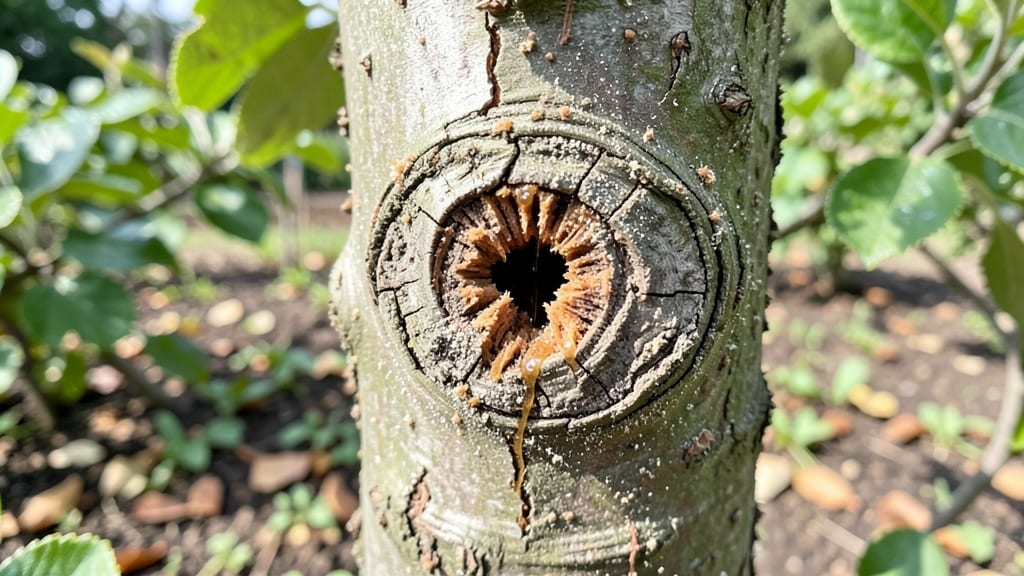
Apple tree borer damage turns your fruit tree into a slow-motion disaster—sawdust piles under branches, oozing sap, and branches that suddenly die. 🌳 I’ve seen healthy trees decline in months if these wood-boring pests go unchecked, but the good news?
You can spot the warning signs early and stop them before they wreck your harvest. The damage starts small: tiny holes in the bark, frass (that sawdust-like debris), and wilting leaves on one side of the tree.
By the time you notice oozing sap or cracks in the trunk, the borers are already tunneling deep. The key is catching it before the tree’s vascular system gets blocked—prune infected branches immediately and seal wounds with pruning paint.
With the right treatment—organic options like neem oil or systemic insecticides for bad cases—you can save your tree. A healthy tree fights off borers better, so focus on watering deeply, mulching properly, and keeping the bark free of cracks where eggs lay.
Prevention is easier than cleanup once the damage spreads. This works for all apple varieties, from dwarf to standard trees. Let’s get your tree back to thriving—before next season’s harvest is at risk.
Root Causes of Apple Tree Decline
Apple trees may seem sturdy, but they’re vulnerable to silent invaders—tiny wood-boring beetles that turn vibrant orchards into hollowed-out husks. Understanding why these pests strike is the first step in protecting your fruit-bearing giants.
Below, we break down the science-backed reasons behind apple tree borer damage, from environmental triggers to tree health red flags.
Stressed trees are like open invitations to borers. When apple trees face environmental or physiological stress, their natural defenses—like resin production and bark toughness—diminish, making them easier targets. Here’s how it happens:
- Drought or Overwatering: Borers thrive when trees are dehydrated or waterlogged. Drought stress reduces sap flow, while excess moisture softens bark, both creating ideal entry points for larvae. 💡 Pro Tip: Monitor soil moisture with a moisture meter; aim for consistency—never soggy or bone-dry.
- Nutrient Deficiencies: Lack of key nutrients (like nitrogen, potassium, or calcium) stunts growth and weakens cell walls. Borers detect these vulnerabilities through volatile organic compounds (VOCs) emitted by compromised trees. 📊 Test your soil annually to address imbalances.
- Physical Injury: Pruning wounds, storm damage, or even rodent gnawing create entry points. Borers lay eggs in fresh cuts, where larvae burrow into the cambium layer—the tree’s lifeline for nutrient transport. ⏰ Act fast: Seal pruning cuts with pruning sealant within 24 hours.
Borers don’t strike randomly—they follow a precise biological schedule tied to tree physiology. Understanding their life stages helps explain when damage peaks:
| Stage | Timing | Why It Matters |
|---|---|---|
| 🥚 Egg Laying | Late spring to early summer | Adult females deposit eggs in bark crevices or fresh wounds. Warmth (70–85°F) triggers hatching in 7–10 days. |
| 🐛 Larval Burrowing | Summer to early fall | Larvae tunnel under the bark, disrupting sap flow. Their frass (wood shavings) clogs vessels, causing wilting. |
| 🌱 Pupation | Fall | Larvae overwinter in cocoons, emerging as adults the following spring to repeat the cycle. |
Key Insight: Damage often appears after larvae have already infiltrated the tree. By the time you see sawdust-like frass or oozing sap, the tree may be months into an infestation. ✨ Preventative action: Monitor trees in late spring for egg masses or new boreholes.
Borers exploit disorganized orchards where debris and old wood accumulate. Here’s how clutter becomes a breeding ground:
- Dead Wood & Stumps: Borers overwinter in fallen branches or stumps, emerging to attack nearby healthy trees. 🔥 Remove all woody debris within 50 feet of your orchard—burn or chip it.
- Weeds & Ground Cover: Dense vegetation harbors borer predators (like birds and parasitic wasps), but it also traps moisture, creating ideal conditions for larval survival. 🌡️ Solution: Use mulch away from the trunk to retain moisture without smothering the base.
- Lack of Pruning: Overgrown trees with thick canopies trap humidity, slowing sap flow and inviting borers. Thin branches to improve airflow and sunlight penetration.
Remember: Borers don’t discriminate—they target any stressed or neglected tree, whether it’s a backyard specimen or a commercial orchard. Regular maintenance disrupts their life cycle.
Quick Fixes for Apple Tree Borer
If your apple tree is under siege by borers, acting fast is key to saving its health. These pests tunnel into the bark, disrupting nutrient flow and weakening the tree. Below, we’ve mapped out practical solutions based on the severity of the damage, from early signs to advanced cases.
Follow these steps to restore your tree’s strength and prevent future infestations.
If you’ve spotted sawdust-like frass, small holes, or oozing sap but the tree still looks mostly healthy, act now to contain the borers before they multiply.
🍳 Prune and Clean Infested Branches
- Identify the damaged branches – Look for D-shaped exit holes, wilting leaves, or cracks in the bark.
- Cut 6–12 inches beyond the damage – Borers can spread, so remove extra length to ensure you’ve gotten the whole infestation.
- Dispose of branches properly – Do not compost them! Burn or bag them tightly to prevent reinfestation.
- Sterilize your tools – Wipe pruners with rubbing alcohol or a 10% bleach solution between cuts.
👨🍳 Apply Borer-Specific Treatments
- Systemic insecticide (best for early stages):
- Use imidacloprid or dinotefuran (e.g., Merit or Safari).
- How to apply: Mix with water and drench the soil around the root zone (follow label instructions).
- When to treat: Late spring to early summer (when borers are most active).
- Borer spray (for visible infestations):
- Permethrin-based sprays (e.g., Ortho Fruit Tree Spray) can kill adult borers on contact.
- Best time: Evening (to avoid harming bees) and after pruning.
🌡️ Boost Tree Health to Fight Back
- Water deeply but infrequently – Borers target stressed trees. 1–2 inches of water per week keeps roots strong.
- Fertilize with balanced nutrients – Use a slow-release, organic fertilizer (e.g., 10-10-10) in early spring.
- Mulch properly – Apply 2–4 inches of wood chips (keep away from the trunk) to retain moisture and reduce stress.
If the tree is severely weakened (large exit holes, oozing sap, dieback, or borers visible under bark), you’ll need aggressive treatment to save it.
⏰ Step 1: Remove the Infestation Manually
- Scrape away loose bark – Use a putty knife or screwdriver to expose borer tunnels.
- Kill larvae with insecticide – - Drill small holes (¼-inch) into the tunnels and inject permethrin or bifenthrin. - Alternative: Apply borax or diatomaceous earth directly into the holes (follow safety guidelines).
- Seal the wounds – Cover with tree wound dressing or pruning sealant to prevent secondary infections.
🛠️ Step 2: Systemic Treatment + Soil Drench
- Soil drench with systemic insecticide:
- Fipronil (e.g., Captain Jack’s) or chlorantraniliprole (e.g., Scotts Tree & Shrub Disease Control).
- How: Mix with water and pour around the root zone (repeat every 4–6 weeks).
- Beneficial nematodes (optional but effective):
- When to apply: Late spring or early fall (follow package instructions).
🌳 Long-Term Recovery Plan
- Reduce stress factors –
- Avoid overwatering (soggy soil attracts pests).
Once your tree is healthy, proactive care is the best defense. Here’s how to keep borers out for good:
| Prevention Method | How to Do It | Best Time |
|---|---|---|
| 🌿 Healthy Soil | Test soil pH (aim for 6.0–7.0) and amend with compost or mycorrhizal fungi. | Fall or early spring |
| 🍎 Proper Pruning | Remove dead, diseased, or weak branches annually. | Late winter (dormant season) |
| 🐛 Trap Trees | Plant a sacrificial apple tree (e.g., crabapple) away from your orchard. | Plant in early spring |
| 🕵️ Regular Inspections | Check for frass, holes, or sap every 2–4 weeks during growing season. | Spring to fall |
| 🛡️ Physical Barriers | Wrap trunk with tree tape or foil to block egg-laying adults. | Early spring (before adults emerge) |
- 🔥 Time your sprays right – Borers are most vulnerable when they emerge in late spring.
Repeat treatments every 3–4 weeks. - 🌡️ Avoid over-fertilizing with nitrogen – Too much fast-release N stresses trees, making them borer magnets. - 🎯 Use pheromone traps – Apple tree borer traps (e.g., Great Lakes IPM) can monitor and reduce adult populations. - 🍎 Choose resistant varieties – Some apple cultivars (e.g., Liberty, Akane) are less attractive to borers.
By following these targeted solutions, you’ll stop borers in their tracks and restore your apple tree’s vigor. Act fast for early signs, and stay vigilant to keep your tree thriving for years to come! 🍏🌳
Frequently asked questions
What does apple tree borer damage look like at first?
Start by checking for tiny D-shaped holes in the bark (about 1/8-inch wide) where adult beetles emerged. Look for sawdust-like frass (wood shavings) piled near these holes or at the base of branches. Early signs also include oozing sap or cracks in the bark, especially on branches that suddenly wilt or die back.
Can I save an apple tree if borers are already tunneling inside?
Yes, but act fast! Scrape away loose bark to expose tunnels, then inject permethrin insecticide or use borax directly into the holes. For severe cases, apply a systemic insecticide like imidacloprid to the soil. Prune 6-12 inches beyond visible damage and seal wounds with pruning sealant. Monitor monthly for new activity.
Are there organic ways to treat apple tree borer damage?
Try these natural methods: Apply neem oil (mix 2 tbsp per gallon of water) to bark and branches in late spring when adults emerge. Use beneficial nematodes (like Heterorhabditis bacteriophora) to target larvae in the soil. For existing tunnels, drill small holes and inject borax solution (1 tbsp borax per cup of water). Always follow up with proper pruning and tree health care.
How often should I check my apple tree for borer damage?
Inspect your tree every 2-4 weeks during the growing season (spring to fall). Focus on new holes, frass piles, or unusual sap. After pruning or storms, check immediately for fresh wounds where borers might lay eggs. In late spring, when adults emerge, do a thorough inspection of the trunk and branches.
Will removing one infested branch stop the borers from spreading?
Not completely—borers can spread through the tree's vascular system. Always cut 6-12 inches beyond visible damage and sterilize your tools between cuts. For severe cases, treat the entire tree with a systemic insecticide or soil drench. Remove all infested wood from your property (don't compost!) to prevent reinfestation.