
Pruning
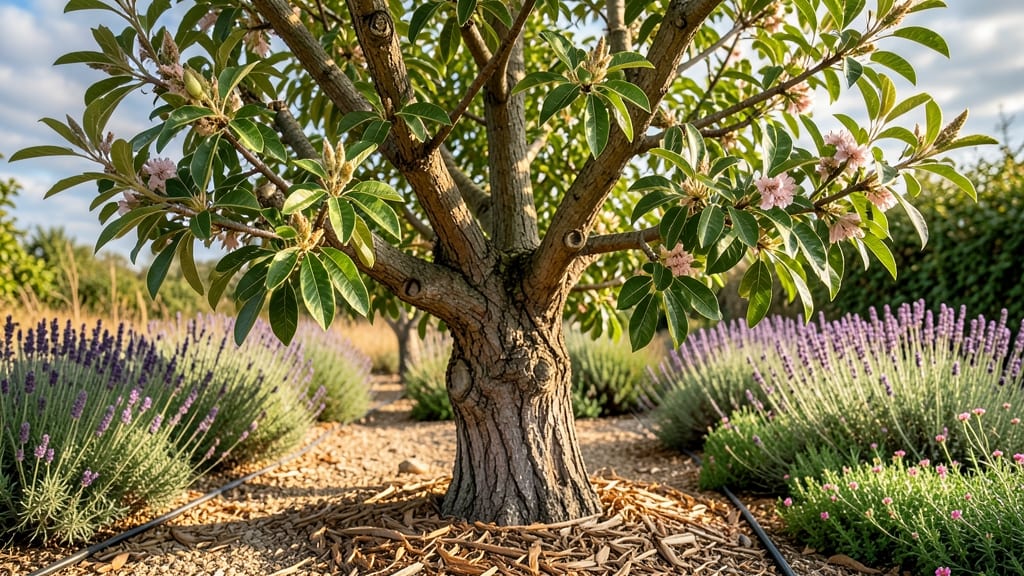
Creating the ideal almond tree environment means providing full sun exposure, well-draining soil rich in organic matter, and a Mediterranean-style climate with warm, dry summers and cool, moist winters. These conditions ensure optimal growth, flowering, and nut production.
Almond trees are picky about their surroundings—they need at least 6-8 hours of direct sunlight daily to develop properly, which is why they flourish in open, sunny orchards. 🌞 The Mediterranean climate they crave isn't just about warmth; it's about the balance of seasonal shifts that trigger blooming and nut maturation.
For example, those cool winter months provide the critical chilling hours (300-600 hours below 45°F) that break dormancy, while hot summers help the nuts dry out on the tree naturally.
When it comes to soil, think "drainage first." Heavy clay or waterlogged conditions will suffocate roots, while sandy loam with 6.0-7.5 pH gives them the nutrients they need.
I've seen almond trees struggle in humid areas because excess moisture encourages fungal diseases—so if you're in a wetter climate, you'll need to mimic that dry Mediterranean feel with proper irrigation and airflow.
💡 In This Article
- Optimal Climate Conditions for Almond Tree Growth
- Soil and Sunlight Requirements for Healthy Almond Trees
Optimal climate conditions for almond tree growth
Almond trees rely on a precise temperature dance to thrive. They need 300-600 chilling hours—that's the cumulative time when temperatures stay between 32-45°F—to break winter dormancy and trigger spring blooming.
Without these cold snaps, buds may fail to open properly, leading to poor pollination and reduced yields. 🌡️ What's fascinating is how this chilling requirement varies slightly by cultivar: Nonpareil needs closer to 600 hours, while Carmel requires only 300 hours, making location critical for growers.
The summer heat is equally vital, as almonds need 100-120 days above 86°F for proper nut development. This heat period ensures the kernels fill out correctly and the shells harden.
Too little heat results in small, underdeveloped nuts, while excessive humidity (above 60% relative humidity) creates the perfect environment for fungal diseases like brown rot, which can devastate crops.
The Mediterranean climate's dry summers naturally prevent this—think of how almond trees in California thrive with 10-15 inches of annual rainfall concentrated in winter months.
Seasonal rainfall plays a subtle but crucial role. Those winter rains recharge the soil moisture while keeping humidity in check—too much rain in summer would be disastrous.
The trees' deep root systems (reaching 6-10 feet) access moisture stored from winter rains, while summer drought conditions actually help the nuts dry on the tree, reducing cracking.
This is why irrigation systems in commercial orchards are timed precisely: 1-2 inches of water every 2-3 weeks during dry spells mimics natural conditions perfectly.
Frost presents another challenge. While almond trees can tolerate brief cold snaps, late spring frosts (28°F or lower) after blooming can kill flowers and young fruit, wiping out that year's harvest.
This is why many commercial orchards use frost protection methods like wind machines or sprinkler systems—water releases latent heat as it freezes, creating a temporary insulating layer around the trees.
The timing of these events is everything: blooming typically occurs when daytime highs reach 60°F consistently, making early spring temperature fluctuations particularly risky.
What most growers don't realize is how wind patterns affect tree health. Almond trees prefer moderate air movement—enough to reduce humidity around the foliage but not so strong it causes physical damage.
Coastal areas often provide this ideal balance naturally, while inland regions may need strategic planting on south-facing slopes to maximize sun exposure and airflow.
The combination of these climate factors explains why California's Central Valley produces 80% of the world's almonds—it perfectly replicates the Mediterranean conditions these trees evolved to love.