
Watering
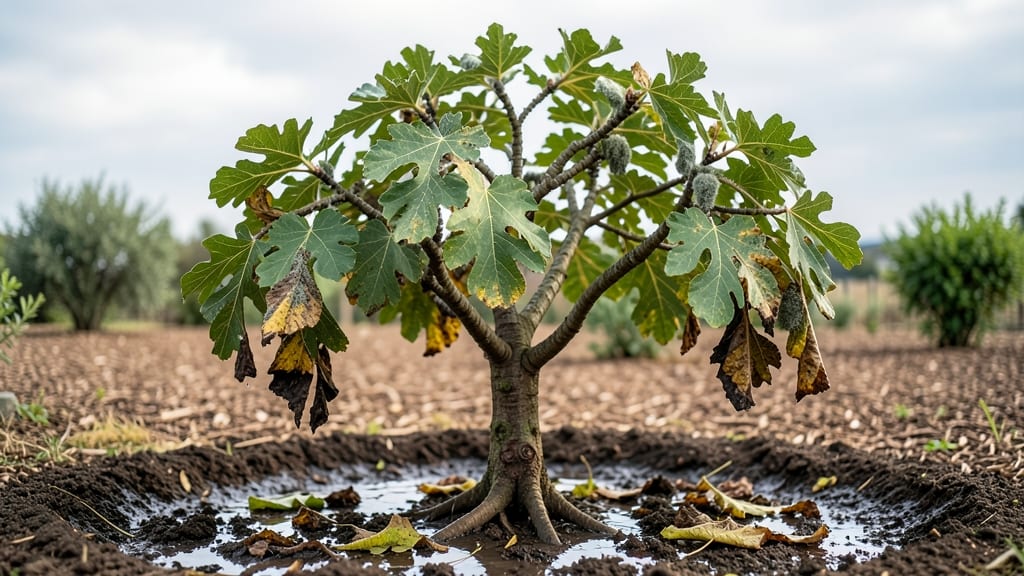
What does an overwatered fig tree look like? Those once-vibrant leaves turn a sad, yellowish-green, while the branches droop like they're exhausted from carrying too much weight. The soil might smell sour or feel squishy—like a damp sponge—when you dig in, and the roots could be turning mushy brown instead of their healthy white or tan. Here's the thing—fig trees hate soggy feet. They're Mediterranean plants at heart, used to dry summers and rocky soil that drains fast. When we overwater, we're essentially suffocating their roots, cutting off the oxygen they need to stay strong. That's why you'll see those telltale signs: leaves that curl at the edges, new growth that looks weak and pale, and maybe even blackened spots where fungus has moved in. The good news? Fixing it starts with letting the soil dry out completely before watering again. Grab a trowel, check those roots, and give them some breathing room. Within a couple of weeks, you'll see those branches perk up and the leaves start turning back to their normal rich green. It's all about balance—fig trees want water, but they don't want to swim in it. Now, don't panic if you spot these signs—it's not always too late to save your tree. The key is catching it early and adjusting your watering schedule. Fig trees in containers need watering about once a week, while those in the ground might only need it every 10 days or so, depending on your climate. And always check that drainage—if water pools at the bottom of the pot or sits on the soil surface for more than an hour, that's your first warning sign. Between you and me, I've been there—turned my fig tree into a swamp monster twice before learning the hard way. The first time, I lost a few branches, but the tree bounced back once I got the watering right. Now I make it a habit to stick my finger in the soil before watering. If it's damp more than an inch down, I wait. Simple checks like this save trees—and your sanity—every time.
Root Causes of Overwatering
Overwatering your fig tree isn’t just a gardening mistake—it’s a silent killer that disrupts the plant’s natural balance, suffocating roots and inviting diseases. Let’s break down the real culprits behind this common issue, so you can fix it before it’s too late.
Fig trees thrive in well-draining soil, but when water pools around their roots, it creates a waterlogged environment. This happens because:
- Compacted or clay-heavy soil holds excess moisture, preventing oxygen from reaching roots.
- Lack of gravel or sand in potted figs traps water, mimicking a swampy conditions.
- No slope or drainage holes in containers allow water to sit instead of draining away.
💡 Pro Tip: Test your soil by squeezing a handful—if it stays clumped, it’s too dense. Amend with perlite, coconut coir, or coarse sand to improve airflow.
Fig trees hate soggy feet, yet many gardeners fall into the trap of:
- Watering on a strict schedule (e.g., every 2 days) without checking soil moisture.
- Ignoring seasonal changes—figs need less water in winter and more in peak summer heat.
- Overcompensating after drought by drowning the roots after a dry spell.
✨ Fix It: Stick your finger 1-2 inches into the soil—if it’s damp, wait. Use a moisture meter for precision.
Potted fig trees are high-risk for overwatering because:
- Small pots dry out slowly, trapping moisture longer than garden beds.
- Plastic pots retain more humidity than terracotta, which breathes.
- No saucer drainage (or forgetting to empty it) lets water sit against roots.
🔥 Solution: Choose larger pots with drainage holes and terracotta or fabric grow bags for better airflow. Empty saucers immediately after watering.
Too much fertilizer—especially high in nitrogen—tricks fig trees into growing lush foliage at the expense of root health.
This leads to: - Weak root systems that can’t handle excess water. - Salt buildup in soil, which repels moisture and stresses roots. - Fungal infections (like root rot) thriving in nutrient-rich, waterlogged soil.
🎯 Action Step: Use a balanced, slow-release fertilizer (like 10-10-10) and flush soil with water every few months to prevent salt accumulation.
Even the best watering habits can backfire if your fig tree’s environment is naturally prone to moisture retention:
- High humidity (common in greenhouses or rainy climates) slows evaporation.
- Shady spots reduce transpiration, so water lingers longer in the soil.
- Cold temperatures (below 50°F) make roots metabolize slower, increasing rot risk.
🌡️ Adjust Accordingly: Move potted figs to sunnier, breezier spots in winter. In humid areas, water less frequently but deeply.
Many gardeners wait too long to act because they don’t recognize subtle clues like:
- Yellowing leaves (chlorosis) from oxygen-starved roots.
- Mushy, black roots when gently pulled from soil.
- Wilting despite wet soil—a classic sign of root suffocation.
🚨 Emergency Fix: If you spot these, stop watering immediately, repot in fresh, dry soil, and trim any mushy roots with sterilized scissors.
🔥 Key Takeaway: Overwatering is always preventable—it’s about drainage, timing, and observation. Now that you know the real causes, you can save your fig tree before it’s too late!
Reviving Your Fig Tree Step By Step
Overwatering can feel like a slow-motion disaster for your fig tree, but the good news is that with the right care, you can nurse it back to health—even if it’s looking sad right now.
Below, we’ll break down cause-specific fixes and share prevention tips to keep your tree thriving. Let’s roll up our sleeves and get to work!
If your fig tree’s leaves are turning yellow or brown (especially at the edges) and feel mushy, root rot is likely the culprit. Here’s how to tackle it:
🔥 Step 1: Stop Watering Immediately
- Pause all watering for at least 3–5 days to let the soil dry out. This halts further fungal or bacterial growth in the roots.
- Pro tip: 💡 If the soil feels damp just below the surface, it’s overwatered.
Stick your finger 2–3 inches deep—if it’s wet, wait longer.
🍳 Step 2: Check the Roots
- Gently dig around the base of the tree (use a trowel) to inspect the roots.
Healthy roots are firm and white or tan. Rotten roots will be: - Dark brown or black - Mushy or slimy to the touch - Smelling foul (like decay) - 🔪 Trim the bad roots: Use sterilized pruning shears to cut away any mushy or discolored roots.
Snip cleanly at a 45-degree angle to encourage new growth.
👨🍳 Step 3: Repot or Refresh the Soil
- Option A (Repot): If the root rot is severe, remove the tree from its pot and rinse the roots with water to remove excess soil.
Then, repot it in fresh, well-draining soil (see soil tips below). - Option B (Refresh): If the tree is in the ground, dig out the top 6–8 inches of soil, replace it with a mix of cactus/succulent soil + perlite, and water lightly.
🥘 Step 4: Adjust Watering Habits
- Water deeply but infrequently: Figs hate soggy feet!
Water only when the top 2–3 inches of soil are bone-dry (stick your finger in to test). - Use the “soak-and-dry” method: Water thoroughly until it drains from the bottom, then wait until the soil is dry before watering again. - Pro tip: 🌡️ Morning watering is best—it gives excess moisture time to evaporate during the day.
⏰ Step 5: Boost Recovery with Fungicides (If Needed)
- If root rot is advanced, treat the tree with a fungicide (like copper fungicide or hydrogen peroxide spray) to kill lingering pathogens.
- Avoid chemical fertilizers for now—they can stress the roots further.
Wait until new growth appears before feeding.
Drooping or wilting branches often signal overwatering + nutrient stress. Here’s how to perk them up:
💡 Step 1: Prune Damaged Growth
- Use sterilized pruners to trim:
- Dead or blackened branches (they won’t recover).
- Overly soft or mushy stems (signs of rot spreading).
- Pro tip: ✨ Prune in the early morning when the tree is hydrated—this reduces stress.
🌿 Step 2: Improve Soil Drainage Figs despise wet feet.
If your tree is in a pot: - Add perlite or pumice to the soil mix (aim for 30% drainage material). - Repot if needed into a container with drainage holes (terracotta pots are ideal). - For in-ground trees: Amend the soil with compost + coarse sand to improve aeration.
🍎 Step 3: Fertilize Lightly (But Right)
- Wait until the tree shows new growth before fertilizing.
- Use a balanced, slow-release fertilizer (like 10-10-10) or an organic option (fish emulsion or worm castings).
- Pro tip: 📊 Less is more! Over-fertilizing can burn roots.
Follow package instructions and dilute by half if your tree is stressed.
🌞 Step 4: Optimize Light & Airflow
- Move your fig tree to a spot with 6+ hours of sunlight daily (they’re sun-worshippers!).
- Space plants apart to improve airflow—crowding traps moisture and encourages disease.
- Pro tip: 🎯 Avoid placing pots on saucers unless you empty them immediately after watering.
Once your fig tree is back on track, prevent future overwatering with these habits:
| Problem | Prevention Fix |
|---|---|
| Poor drainage | Use pots with drainage holes + a cache pot (a saucer with pebbles to catch excess water). |
| Inconsistent watering | Stick to a watering schedule (e.g., every 7–10 days in summer, less in winter). |
| Compacted soil | Mix perlite or sand into potting soil to keep it loose. |
| Overpotting | Repot only when roots circle the pot (every 2–3 years for container figs). |
| Ignoring weather | Reduce watering in rain—figs don’t need extra H₂O when nature’s doing the job. |
You’ll know your efforts are paying off when you see: ✅ New green leaves emerging from the center. ✅ Firmer stems (no more squishiness). ✅ Less yellowing and more vibrant foliage. ✅ Root growth when you gently tug the tree—resistance means roots are anchoring well!
Remember: Figs are drought-tolerant once established—underwatering is easier to fix than overwatering. Stay patient, and your tree will bounce back stronger than ever! 🌳💚
Frequently asked questions
Why do my fig tree leaves turn yellow when overwatered?
Yellowing leaves (chlorosis) happen because overwatering cuts off oxygen to the roots. When roots suffocate, they can't absorb nutrients properly, causing leaves to lose their green pigment. Check the soil—if it smells sour or feels squishy, that's your first warning sign. The edges of leaves often curl upward too, as the plant tries to reduce water loss.
Can an overwatered fig tree recover if the roots are mushy?
Yes, but you'll need to act fast! First, stop watering immediately and let the soil dry completely. Gently remove the tree from its pot (or dig around the base if planted in ground) and trim any black, mushy roots with sterilized scissors. Repot in fresh, well-draining soil mix with perlite. With proper care, new white roots will grow within 2-3 weeks.
How often should I water my fig tree to prevent overwatering?
Fig trees prefer the "soak-and-dry" method: water deeply until it drains from the bottom, then wait until the top 2-3 inches of soil are completely dry. In summer, this might be every 7-10 days, while winter watering should be reduced to every 3-4 weeks. Always check with your finger—if it's damp below the surface, wait longer. Morning watering helps excess moisture evaporate during the day.
What's the difference between overwatered and underwatered fig tree leaves?
Overwatered leaves turn yellow and feel mushy, while underwatered leaves appear crispy at the edges and curl downward. The key difference: overwatered leaves often have black spots or fungus growth, and the soil stays wet for days. Underwatered trees may drop leaves completely but keep their green color until very dry. Check the soil moisture to tell them apart!
Can I save my fig tree if it's completely wilted from overwatering?
Even severely wilted figs can recover if you act quickly! First, move the tree to a bright, sunny spot (they're sun lovers) and stop all watering for 5-7 days. Prune any blackened branches and repot in fresh, well-draining soil. If the roots are still firm (not mushy), new growth should appear within 2 weeks. The key is catching it before the roots turn completely black. Patience is crucial—don't water again until you see signs of recovery!