
Plants
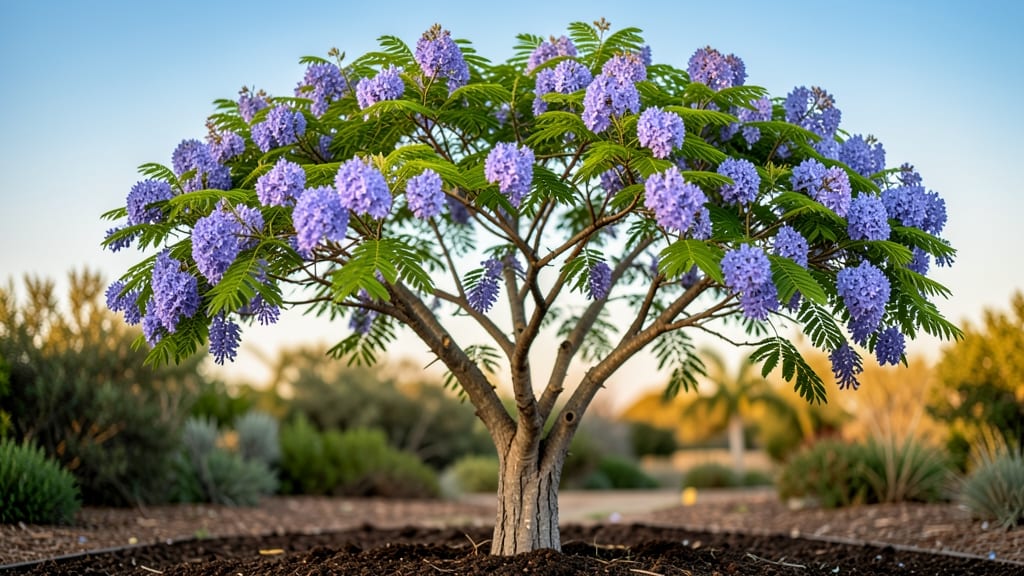
A jacaranda tree looks like a breathtaking springtime vision with its fragrant, lavender-blue clusters of trumpet-shaped blooms that spill dramatically from the branches, accompanied by delicate, fern-like leaves and textured grayish-brown bark. This tropical beauty creates a stunning canopy that transforms any landscape.
A jacaranda tree's most iconic feature is its dramatic floral display, which appears in late spring and lasts for about six weeks. 🌸 The flowers grow in dense, drooping clusters that can reach up to a foot long, creating a waterfall effect when viewed from below.
While the flowers are the star, the tree's compound leaves—with 5-9 leaflets arranged alternately—add to its lush appearance. The bark, which is smooth and slightly ridged, develops a beautiful texture as the tree matures, often developing a silvery-gray hue that contrasts beautifully with the vibrant flowers.
What truly sets the jacaranda apart is its seasonal transformation. In winter and early spring, the tree appears more subdued with its green foliage, but as the blooming season approaches, the entire tree bursts into color.
This makes it a fantastic choice for gardeners who want a tree that offers both year-round interest and a spectacular seasonal show. The combination of its unique flowers, foliage, and bark creates a visual spectacle that's hard to match in ornamental trees.
💡 In This Article
- Jacaranda Tree Flower, Leaf, and Bark Characteristics Explained
- How to Identify a Jacaranda Tree in Landscapes and Gardens
Jacaranda tree flower, leaf, and bark characteristics explained
The jacaranda's flowers are its most breathtaking feature, with each bloom measuring about 1 inch (2.5 cm) long and shaped like a delicate trumpet. These flowers grow in dense, drooping clusters called racemes that can stretch up to 12 inches (30 cm) long, creating that signature waterfall effect.
The color ranges from pale lavender to deep violet, with some varieties even producing white flowers.
This floral display isn't just visually stunning—it's also highly fragrant, emitting a sweet, honey-like scent that attracts pollinators like bees and butterflies. 🌸 The flowers bloom in late spring, typically between March and May in the Northern Hemisphere, and last for about 6 weeks, making them a seasonal highlight.
The tree's foliage consists of pinnate leaves (compound leaves with multiple leaflets) that are arranged alternately along the branches. Each leaf contains 5-9 oval-shaped leaflets, each measuring about 1-2 inches (2.5-5 cm) long, with a smooth, slightly waxy texture.
The leaflets have a feathery appearance and a bright green color that contrasts beautifully with the flowers. Interestingly, the jacaranda is a semi-deciduous tree, meaning it sheds some of its leaves in dry seasons but retains others, ensuring year-round greenery in many climates.
This trait helps it thrive in both tropical and subtropical regions.
The bark of a mature jacaranda is another standout feature, characterized by its smooth, grayish-brown texture with subtle vertical ridges that develop as the tree ages. Young trees have smoother bark, but over time, it develops a slightly rougher, more textured appearance.
This bark isn't just visually appealing—it also plays a role in the tree's resilience, providing protection against pests and environmental stressors.
The contrast between the tree's vibrant flowers, lush foliage, and earthy bark creates a harmonious balance that makes it a favorite in landscaping. 🌿 The combination of these features ensures the jacaranda remains visually striking throughout the year, not just during its blooming season.
One of the most fascinating aspects of the jacaranda's appearance is how its features adapt to its environment.
For example, the tree's deep root system allows it to thrive in well-drained soils, while its compact growth habit (typically reaching 30-50 feet (9-15 meters) tall) makes it suitable for both urban and natural settings.
The flowers' trumpet shape is also an evolutionary adaptation—it's designed to attract specific pollinators while protecting the tree's reproductive structures. This blend of aesthetic appeal and functional design is what makes the jacaranda such a remarkable tree. 🌟
When comparing the jacaranda to other ornamental trees, its unique combination of flower shape, leaf structure, and bark texture sets it apart. For instance, while the royal poinciana (flamboyant tree) also has vibrant flowers, its blooms are more fan-shaped and bright orange-red, lacking the jacaranda's delicate lavender hue.
Similarly, the leaf structures differ—poinciana leaves are bipinnate (feather-like with smaller leaflets), whereas jacaranda leaves are pinnate (larger, simpler leaflets). These distinctions make the jacaranda easily recognizable to those familiar with ornamental trees. 🌺
Understanding these characteristics also helps gardeners and landscapers make informed decisions. For example, if you're looking for a tree that offers both shade and seasonal color, the jacaranda is an excellent choice.
Its moderate growth rate (about 1-2 feet (30-60 cm) per year) means it won't outgrow its space quickly, making it ideal for residential areas. Additionally, its ability to tolerate drought and heat once established makes it a low-maintenance option for many climates. 💫