
Pruning
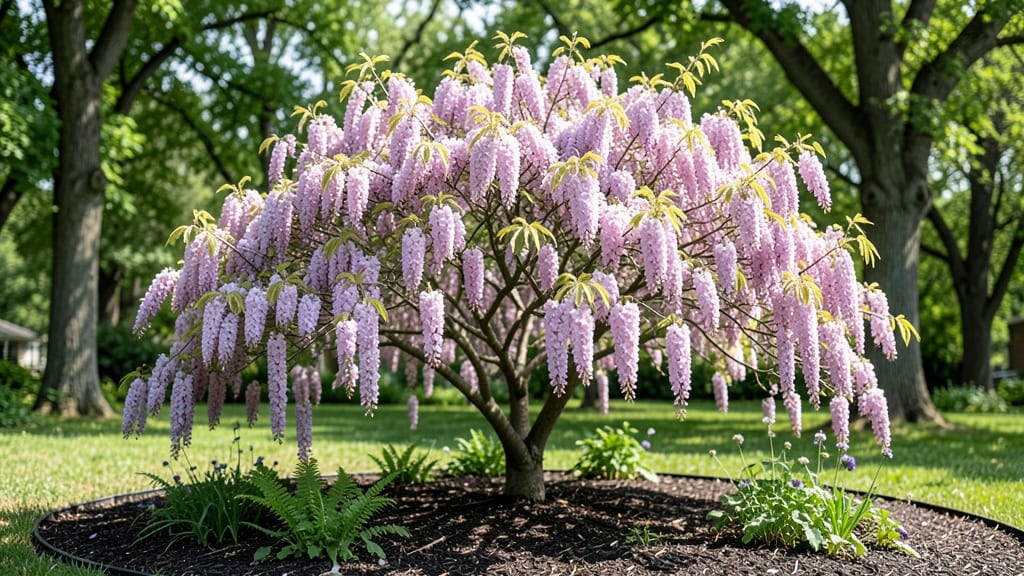
Pink flower clusters that turn heads every spring aren’t just pretty—they’re a game-changer for your yard’s curb appeal. 🌸 I’ve planted three different trees with showstopping pink blooms, and the right one can transform a boring fence line into a fragrant, pollinator-friendly privacy screen that lasts all year.
The secret lies in matching the tree to your space: Cercis canadensis (eastern redbud) for early spring drama, Prunus serrulata (Japanese cherry) for dramatic canopies, or Lagerstroemia (crape myrtle) for heat-tolerant, long-blooming color. Each brings its own texture and seasonal interest—from velvety foliage to winter bark.
You’ll end up with a garden that hums with bees in May, casts dappled shade in summer, and still looks elegant when the petals fall. The best part? These trees work as focal points, borders, or even shade providers—no more sacrificing beauty for function.
Here’s how to pick the perfect one for your climate and design goals—plus companion plants that make the show even better.
📚 In This Guide
- What you need
- Instructions
- Tips and common mistakes
- Wrapping up and next steps
What you need
- ● Pruning shears (bypass or anvil type) – Choose sharp, high-quality shears (e.g., Felco or Fiskars) with a 6–8” blade for precision cuts.
- ● Loppers – For thicker branches (1–2” diameter), opt for bypass loppers with a 10–12” reach.
- ● Pruning saw (if needed) – For branches over 2” thick; a curved blade (e.g., blank">Corona) works best.
- ● Gloves (cut-resistant) – Heavy-duty leather or synthetic gloves (e.g., blank">Frogg Toggs) to protect hands from thorns or splinters.
- ● Ladder or step stool – Aluminum or fiberglass ladder (extendable for tall trees) or a sturdy 3–4 ft. stool for lower branches.
- ● Disinfectant (70% isopropyl alcohol or bleach solution) – 1 part bleach to 9 parts water to sterilize tools between cuts and prevent disease.
- ○ Sealing wax or pruning paint – Optional but helpful for large cuts (>1” diameter) to protect against pests.
- ● Heavy-duty trash bags – For collecting pruned branches (1–2 large bags per session).
- ● Safety gear – Safety glasses, long sleeves, and closed-toe shoes to shield from debris.
- ● Weather check – Prune on a dry, calm day (avoid wind or rain). Early morning or late afternoon is ideal.
- ● Tree identification – Confirm your tree’s species (e.g., Cercis canadensis – Eastern Redbud, or Lagerstroemia – Crape Myrtle) to avoid damaging blooms.
- ● Clean workspace – Clear the area beneath the tree of tools, pets, or bystanders.
- ● Sharp tools check – Test shears/loppers on a small branch—if they crush instead of cut cleanly, sharpen or replace.
- ● Pole pruner – For high branches (12–20 ft.), extends reach without a ladder.
- ● Tree tie or zip ties – To secure branches if heavy pruning causes instability.
- ● Notebook & pen – Sketch a quick map of cuts or note branch directions for reference.
- ● Compost bin access – For repurposing small pruned branches as mulch.
How to plant a tree with pink flower clusters for season-long beauty
Here's how to create a stunning, low-maintenance privacy screen that blooms spring through fall.
🌱 Step 1: Choose the Right Tree for Your Space
For vibrant pink flower clusters, consider Japanese cherry (Prunus serrulata) or crape myrtle (Lagerstroemia)—both thrive in full sun and handle varied soil types. I always check the mature height (20-30 feet) to ensure it fits your yard. Plant in groups of 3-5 for a natural, lush screen effect.
Check your hardiness zone—the tree must match your climate. For example, crape myrtles handle zones 6-9, while Japanese cherries prefer zones 5-8. If you're unsure, dig a 1-foot-deep hole and check the soil temperature in summer—ideal planting soil stays between 60-85°F.
🪴 Step 2: Prepare the Planting Site
Dig holes twice as wide as the root ball and the same depth. Space trees 8-12 feet apart for proper airflow and future growth. Loosen the soil at the bottom of the hole with a shovel or your hands—this helps roots spread faster. I always mix the native soil with compost (if not using pre-amended soil) to boost fertility.
Place a tree stake in the hole if your area gets strong winds. The stake should be 1/3 the height of the tree and positioned on the prevailing wind side. Avoid circling the trunk with wire—it can girdle the tree as it grows. Instead, use a soft tie that allows slight movement.
☀️ Step 3: Plant and Water for Establishment
Set the tree in the hole so the top of the root ball sits 1-2 inches above ground level—this prevents water from pooling around the trunk. Fill the hole with soil, pressing gently to remove air pockets. Water deeply until the soil is saturated 12 inches down. You'll know it's right when water pools briefly but drains within 10-15 minutes.
Mulch the base with 3 inches of organic mulch (like wood chips), keeping it 6 inches away from the trunk to prevent rot. Water twice weekly for the first month, then taper to once weekly once leaves appear. Overwatering now can suffocate roots—watch for yellowing leaves or soggy soil as warning signs.
✂️ Step 4: Prune and Maintain for Year-Round Health
Prune in late winter or early spring before buds swell. Remove dead, crossing, or weak branches first, then thin the canopy to allow light to reach the center. For crape myrtles, avoid "topping"—cutting the trunk to stubs—it invites disease. Instead, prune to maintain a natural shape and encourage dense blooms.
Fertilize in early spring with a balanced, slow-release formula (10-10-10). Apply 1 pound per inch of trunk diameter around the drip line, not the trunk. Water deeply after applying to help nutrients reach roots. In fall, add a 2-inch layer of compost to replenish soil nutrients for next year's blooms.
Tips & tricks for planting trees with stunning pink blooms
These simple strategies will help your privacy screen thrive and bloom spectacularly year after year.
Tree Selection Wisdom: Japanese cherry trees produce delicate pink clusters that appear earlier in spring, while crape myrtles offer bold, long-lasting blooms that last through summer and fall. I always check the mature height (20-30 feet) against my yard space—planting in groups of 3-5 creates a natural, lush screen effect that looks intentional from day one.
Soil Temperature Check: Before planting, dig a 1-foot-deep hole and check soil temperature—ideal planting soil stays between 60-85°F. If your soil is cooler than 60°F, wait a few days or plant in a slightly warmer microclimate. The roots need warmth to establish quickly, especially in cooler climates.
Watering Strategy: That 10-15 minute drainage test after watering is crucial—you want the soil to be saturated 12 inches down but not soggy. I set a timer and watch for pooling to disappear within those minutes. Overwatering in the first month suffocates roots, while underwatering stresses young trees. Yellowing leaves or soggy soil are your warning signs to adjust.
Pruning Pro Tip: When pruning in late winter, focus on removing dead, crossing, or weak branches first. For crape myrtles, avoid "topping" (cutting the trunk to stubs)—this invites disease. Instead, shape naturally to encourage dense blooms. I always prune after the first hard frost when the tree is dormant but before buds swell in spring.
Pro Tips for Tree With Pink Flower Clusters
- These simple strategies will help your privacy screen thrive and bloom spectacularly year after year.
- Tree Selection Wisdom: Japanese cherry trees produce delicate pink clusters that appear earlier in spring, while crape myrtles offer bold, long-lasting blooms that last through summer and fall.
- Soil Temperature Check: Before planting, dig a 1-foot-deep hole and check soil temperature—ideal planting soil stays between 60-85°F.
Frequently asked questions
Got questions about those stunning trees with pink flower clusters? You’re not alone! Here are some of the most common queries—and their answers—to help you grow, care for, and enjoy your blossom-filled privacy screen like a pro.
What’s the best time to plant a tree with pink flower clusters?
For optimal root establishment, plant in early spring (just as buds swell) or fall (4-6 weeks before frost). Avoid extreme heat or cold—these trees thrive in USDA Zones 5-9. Pro tip: Water deeply after planting and mulch to retain moisture!
How long does it take for these trees to bloom?
Patience pays off! Most varieties (like Cercis canadensis or Lagerstroemia) take 3-5 years to produce their signature pink clusters, though some fast growers (e.g., Cornus florida) may bloom earlier. Sunlight and soil health speed up the process.
Can I prune a flowering tree without ruining next year’s blooms?
Prune right after flowering (late spring) to avoid cutting off next year’s buds. Focus on:
Common culprits include:
If you need quick privacy + color, consider:
Warning: Never prune more than 25% of the tree in one season.
Why aren’t my pink-flowering trees blooming this year?
Fix it: Fertilize with high-phosphorus (for blooms) and adjust care!
What’s a great alternative if I want fast-growing pink flowers?
Tree
Growth Rate
Pink Blooms?
Lagerstroemia ‘Natchez’ (Crapemyrtle)
2-3 ft/year
Lavender-pink clusters
Cornus kousa (Kousa Dogwood)
1-2 ft/year
Pink-purple pom-poms
Weigela florida (Shrub)
2 ft/year
Funnel-shaped pink blooms
Wrapping up and next steps
Transforming your outdoor space with a tree adorned with pink flower clusters isn’t just about beauty—it’s about creating a serene, private haven that thrives year-round. From selecting the perfect variety to mastering pruning techniques, every step brings you closer to a lush, low-maintenance privacy screen that bursts with color. 🌸
Ready to take the next step? Start by sketching your space and choosing the right tree for your climate and sunlight. Then, gather your tools and dive in—your dream garden is just a few cuts away! Happy pruning!