
Blooming
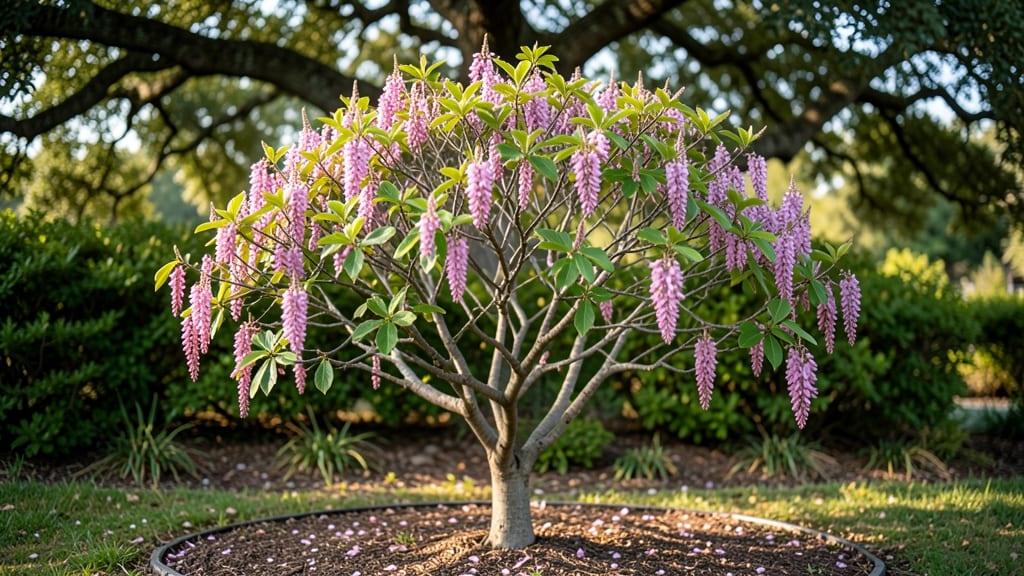
Your redbud tree’s post-bloom transformation starts with smart pruning. ✂️ After those stunning pink blooms fade, the real work begins—shaping the tree for lush summer foliage and long-term health without sacrificing next year’s flowers.
The key is timing: prune right after blooming (late spring) to avoid cutting off next season’s flower buds, which form on old wood. Focus on removing dead, crossing, or overcrowded branches—never more than 25% of the canopy at once.
Thin out the center to improve airflow and sunlight penetration, which keeps leaves vibrant and disease-free. You’ll notice new green shoots emerging within 4-6 weeks, signaling the tree’s energy shift from flowers to foliage.
By summer, your redbud will be denser, healthier, and ready for seed development—those distinctive seed pods add autumn interest too. This approach works for young saplings and mature trees alike. Just avoid heavy pruning in fall or winter, when the tree is dormant and vulnerable.
Let’s get that redbud looking its best year-round!
📚 In This Guide
- What you need
- Instructions
- Tips and common mistakes
- Wrapping up and next steps
What you need
- ● Pruning shears: Bypass pruners (sharp, clean, and disinfected with rubbing alcohol) for small branches (up to ½-inch thick). Quantity: 1 pair.
- ● Loppers: For medium branches (½-inch to 2-inches thick). Quantity: 1 pair with bypass blades for precision cuts.
- ● Pruning saw: For thick branches (2+ inches). Quantity: 1 with a curved or straight blade (avoid handsaws for safety).
- ● Gloves: Heavy-duty, cut-resistant gloves to protect your hands from thorns and rough bark. Quantity: 1 pair.
- ● Disinfectant: 70% isopropyl alcohol or a store-bought pruning sealant to prevent disease spread. Quantity: Small bottle or spray.
- ● Rag or paper towels: For cleaning tools between cuts. Quantity: 2-3.
- ○ Ladder (optional but recommended): Sturdy, extendable ladder (16-20 ft) if your tree is tall. Safety tip: Use non-slip feet and a spotter if working alone.
- ● Hand pruners: Compact bypass pruners for fine-tuning small branches (great for detail work). Quantity: 1 pair.
- ● Tree wound dressing: Controversial but some swear by it for sealing larger cuts (e.g., Tanglefoot Tree Wound Pruning Sealer). Quantity: Small jar.
- ● Work boots or closed-toe shoes: For ankle support and protection from debris.
- ● Safety glasses: To shield eyes from sawdust or flying debris.
- ● Trash bags or bucket: For disposing of pruned branches (check local regulations for debris disposal).
- ● Notebook & pen: To sketch your tree’s shape before pruning (helps visualize cuts!).
Step-by-step guide to pruning your redbud tree after bloom
Here’s how I revive your redbud’s shape and set it up for next year’s stunning spring display.
✂️ Step 1: Wait for the Right Time to Prune
Never prune immediately after the vibrant pink blooms fade—that’s when the tree is storing energy for next year’s flowers. Instead, wait until late spring or early summer, after new leaves have fully unfurled but before summer heat stress sets in. You’ll know it’s time when you see fresh, dark green foliage with no signs of stress.
If you missed the window, late summer or early fall works too, but avoid heavy pruning after mid-August in most climates. The tree needs time to harden off before winter. I always mark my calendar after bloom—this tree’s health depends on timing more than anything else.
✂️ Step 2: Remove Dead, Diseased, or Weak Branches First
Start by inspecting the tree for branches that are dead (brown, brittle), diseased (fungal spots, oozing sap), or crossing at sharp angles. These are your priority cuts—they’re already compromising the tree’s health. Use clean, sharp pruning shears to make your cuts at a 45-degree angle, about ¼ inch above a healthy bud or branch collar.
I never skip this step, even if it means removing just one branch. A single diseased limb can spread to the whole tree if left unchecked. If a branch is thicker than 2 inches, use a pruning saw instead of shears to avoid tearing the bark.
✂️ Step 3: Thin Out the Canopy for Better Airflow
Redbuds naturally grow with an open, airy habit, but over time, dense branches can block light and trap moisture. Look for branches that are rubbing against each other or growing inward—these need to go. Aim to remove about 10-20% of the total foliage to improve airflow and sunlight penetration.
I focus on the outer third of the tree first, since that’s where new growth emerges. Never remove more than 25% of the canopy in one year—this stresses the tree and can reduce next year’s bloom. Step back often to visualize the tree’s shape; you’re sculpting, not hacking.
✂️ Step 4: Shape the Tree for Balance and Structure
Now’s the time to refine the tree’s form. Redbuds respond well to light shaping, so I start by identifying the main scaffold branches—these are the thick, sturdy limbs that form the tree’s skeleton. Remove any that grow at sharp angles (less than 45 degrees) or are too close together.
For a more natural look, I leave some branches slightly uneven—redbuds aren’t formal hedges. If the tree leans one way, I avoid over-compensating; instead, I let it grow naturally and just prune to maintain its balance. The goal is a tree that looks intentional, not manicured.
💧 Step 5: Clean Up and Protect the Tree
After pruning, rake up all the clippings and dispose of them in the trash—never leave them on the ground. Diseased branches can reinfect the tree if left behind. I also sterilize my tools with rubbing alcohol to prevent spreading pathogens to the next tree I prune.
Finally, give the tree a deep watering to help it recover from the stress of pruning. Mulch around the base with 2-3 inches of organic mulch, keeping it 6 inches away from the trunk to prevent rot. This protects the roots and retains moisture for the tree’s next growth phase.
Tips & tricks for perfect redbud tree pruning after bloom
These pro tips will help you transform your redbud into a healthy, flourishing centerpiece year after year.
Timing is Everything: The late spring/early summer window isn't just about avoiding summer heat stress—it's about giving your redbud time to recover before winter dormancy. I've seen trees bloom poorly after being pruned too late because they couldn't properly store energy. Mark your calendar the day after bloom ends to catch this critical window. In colder climates, you might extend to early fall, but never after mid-August unless you're in a mild zone.
Tool Preparation Matters: Sterilizing your tools with rubbing alcohol isn't just about hygiene—it's about preventing fungal infections that can devastate your tree. I keep a small bottle of 70% isopropyl alcohol in my pruning kit and wipe down tools between every cut, especially when dealing with diseased branches. For larger cuts, I use a fresh disposable blade on my pruning saw to avoid cross-contamination. Sharp tools make cleaner cuts that heal faster, so always sharpen your shears before starting.
Structural Integrity Check: When shaping your redbud, focus on maintaining the natural vase shape that allows light to penetrate all the way to the center. I use the "thirds rule" as a guide: remove branches from the outer third first, then work inward. This creates an open framework that prevents dense growth. Remember, redbuds are light pruners—never remove more than 25% of the canopy in one year, or you risk reducing next year's spectacular bloom. Step back frequently to visualize the tree's overall structure.
Post-Pruning Care: That deep watering after pruning isn't just about hydration—it's about helping the tree recover from stress. I water slowly at the base until moisture reaches 6-8 inches down, then apply the 2-3 inches of organic mulch. The mulch acts like a blanket, protecting roots from temperature swings while retaining moisture. Keep mulch 6 inches away from the trunk to prevent rot—this is where many well-intentioned gardeners accidentally harm their trees.
Pro Tips for Redbud Tree After Bloom
- These pro tips will help you transform your redbud into a healthy, flourishing centerpiece year after year.
- Timing is Everything: The late spring/early summer window isn't just about avoiding summer heat stress—it's about giving your redbud time to recover before winter dormancy.
- Tool Preparation Matters: Sterilizing your tools with rubbing alcohol isn't just about hygiene—it's about preventing fungal infections that can devastate your tree.
Frequently asked questions
Got questions about your redbud tree after those stunning pink blooms fade? You’re not alone!
Here are answers to the most common queries—from pruning timing to troubleshooting—so you can keep your tree thriving all year.
When is the best time to prune a redbud tree after it blooms?
Prune your redbud tree right after blooming (late spring) to avoid cutting off next year’s flowers. This timing also gives you a clear view of the tree’s structure. Avoid heavy pruning in fall or winter, as it can stress the tree and attract pests. Light shaping is fine, but save major cuts for spring!
Can I prune a redbud tree in summer?
Summer pruning is possible, but it’s not ideal for redbuds. Heavy cuts in summer can stimulate weak, late-season growth that may not harden off before winter. If you must prune, do it early summer (June) and keep it minimal. Focus on removing only dead or diseased branches—save major shaping for spring!
What should I do if my redbud tree isn’t blooming after pruning?
If your redbud skips blooms, it might be due to over-pruning (cutting too many flower buds) or stress (drought, poor soil, or pests). Check for:
- Thin, leggy growth (sign of too much pruning)
- Yellowing leaves (possible nutrient deficiency)
- No new buds forming (could indicate root or pest issues)
Are there alternatives to redbud trees for low-maintenance blooms?
If redbuds feel high-maintenance, consider these equally stunning, low-fuss alternatives:
- Eastern Red Cedar: Drought-tolerant, evergreen, and pest-resistant with blue-green foliage.
- Serviceberry (Amelanchier): Blooms white in spring, produces edible berries, and has vibrant fall color.
- Dogwood (Cornus florida): Compact, shade-tolerant, and blooms white/pink in spring.
- Fringe Tree (Chionanthus virginicus): Fragrant white blooms in late spring, minimal pruning needed.
Why are my redbud leaves turning yellow after pruning?
Yellow leaves post-pruning usually mean nutrient stress or root disturbance. Try these fixes:
If yellowing spreads to older leaves, it may signal iron deficiency—use an iron chelate supplement.
Wrapping up and next steps
Your redbud tree’s post-bloom care doesn’t have to be intimidating—just a little intentional.
By pruning at the right time, shaping with confidence, and keeping an eye on its health, you’ll enjoy vibrant blooms and lush foliage for years to come. 🌸 Think of each trim as a conversation with your tree, guiding it to thrive in its own unique way.
Ready to take the next step? Grab your tools, mark your calendar for late winter or early spring, and give your redbud the love it deserves. Refresh your pruning checklist or browse common questions—your tree’s future starts with a single cut!