
Pruning
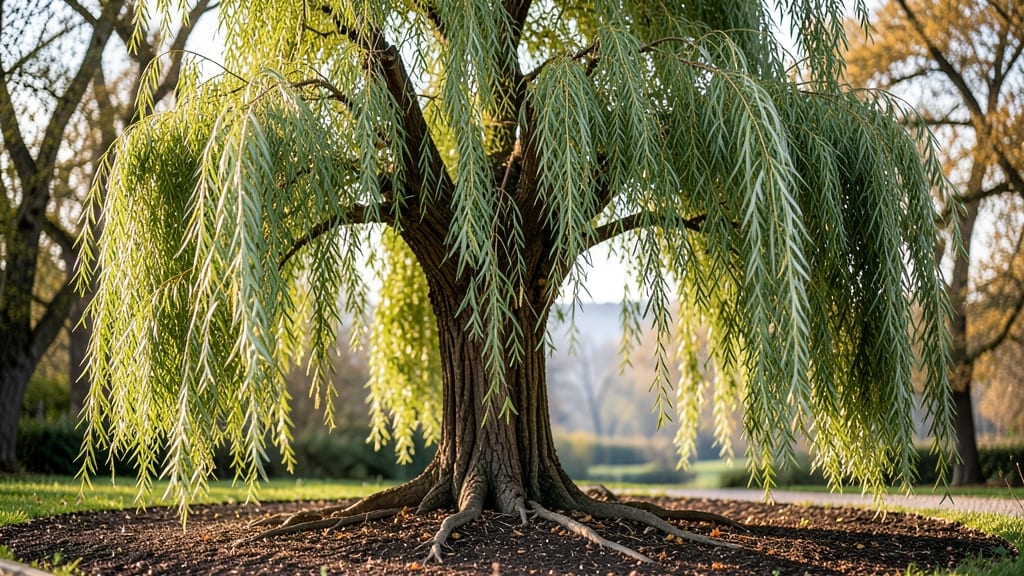
A weeping willow tree’s size can reach 30 to 50 feet tall with a sprawling canopy, making it a dramatic focal point in any landscape—but that growth happens fast.
If you're dreaming of a graceful, shade-providing weeping willow but fear it might swallow your yard whole, you're not alone. This tree can spread up to 15 feet per year under ideal conditions, turning a small garden into a woodland in just a few seasons.
The key to managing its size lies in understanding its growth habits and pruning strategies. Without intervention, its roots and branches will expand aggressively, potentially crowding out other plants or even damaging structures.
In this guide, I’ll break down how quickly it grows, when to prune for control, and whether it’s the right tree for your space—whether you have a sprawling backyard or limited room.


Weeping willow tree size: growth rate, mature dimensions & spread control tips
If you're considering planting a weeping willow tree (Salix babylonica), its rapid growth rate and mature size are both its allure and its challenge. This iconic tree can grow up to 15 feet per year in ideal conditions, reaching heights of 30-50 feet at maturity.
Its sprawling branches can spread 20-30 feet wide, creating a stunning, cascading effect—but also demanding careful planning to avoid overpowering your landscape.
The growth rate varies by climate, soil moisture, and sunlight exposure. In USDA Zones 5-9, where it thrives, a weeping willow can add 3-5 feet annually in height and 5-10 feet in spread during its first decade.
Understanding these patterns helps you decide where to plant it—near water features, along property lines, or as a focal point in large gardens.
Below is a growth projection table showing how a weeping willow develops over 10 years, including height, width, and root spread. This visual helps you plan for its space requirements and pruning needs before committing to planting.
| Year | Height (ft) | Width (ft) | Root Spread (ft) | Climate Notes |
|---|---|---|---|---|
| Year 1 | 5-10 | 3-5 | 5-8 | Fastest in moist, sunny zones |
| Year 3 | 15-20 | 10-15 | 10-15 | Slower in cooler climates |
| Year 5 | 25-30 | 15-20 | 15-20 | Prune to control spread |
| Year 10 | 35-45 | 25-30 | 20-25 | Mature size reached |
| Mature (15+ yrs) | 40-50 | 30-40 | 25-35 | Regular pruning required |
Climate plays a critical role in a weeping willow’s growth. In humid, southern climates (e.g., Florida, Louisiana), these trees grow faster and larger due to abundant moisture and warmth.
In drier or northern regions (e.g., Zone 5), growth slows to 3-5 feet per year, with smaller mature sizes (closer to 30 feet tall). Always check your local USDA Zone and soil drainage before planting.
One of the biggest concerns with weeping willows is their aggressive root system. Roots can spread up to 3 times the canopy width, potentially damaging foundations, sidewalks, or septic systems if planted too close to structures.
To mitigate this, plant at least 50 feet away from buildings and install a root barrier if needed. A 4-foot-deep barrier made of corrugated metal or plastic can limit lateral root growth by 30-50%.
For smaller gardens, consider dwarf cultivars like 'Nana' or 'Pendula,' which max out at 15-20 feet tall but still require 10-15 feet of width. These varieties are ideal for urban landscapes or patio plantings, though they still need plenty of space for their roots.
Always research the specific cultivar before purchasing, as growth habits can vary significantly.
If you’re unsure about long-term space management, start with a container-grown sapling and monitor its growth for 1-2 years before transplanting to the ground. This gives you a realistic sense of how quickly it will expand in your specific microclimate.
Pair this with a pruning plan (we’ll cover this in the next section) to keep its size in check while preserving its iconic
When & how to prune a weeping willow for size control (step-by-step guide)
Pruning your weeping willow isn't just about shaping its graceful branches—it's the key to controlling its aggressive spread. Without proper pruning, this tree can grow 15 feet per year, quickly overwhelming your landscape.
The good news? Strategic pruning can reduce its width by 30-50% while maintaining its iconic weeping form. Timing and technique are everything, so let's dive into the essential steps.
First, understand that late winter to early spring (just before bud break) is the ideal pruning window for weeping willows. This timing minimizes stress on the tree while encouraging vigorous new growth. Avoid pruning in fall or winter, as this can leave wounds vulnerable to disease.
For established trees, you can also perform light maintenance pruning in late spring or summer, but never remove more than 25% of the canopy in a single session.
- 1 Gather the right tools: You'll need sharp bypass pruners for small branches, loppers for branches up to 2 inches thick, and a pruning saw for larger limbs. Don't forget gloves, safety glasses, and a ladder if needed.
- 2 Assess the tree's structure: Look for crossing branches, dead wood, and limbs growing toward the center. These should be your top priorities for removal. Also identify any branches that are too long and encroaching on your desired space.
- 3 Remove dead/diseased branches: Cut these back to the main trunk or a healthy lateral branch. Make cuts just outside the branch collar to prevent damage. For weeping willows, this often means removing up to 10% of the canopy in a single session.
- 4 Thin the canopy: Selectively remove 20-30% of the smallest branches to improve air circulation and light penetration. Focus on branches growing downward or inward. For size control, prioritize branches growing toward your property lines or structures.
- 5 Perform crown reduction: To limit the tree's width and height, shorten the outer branches by 1/3 to 1/2. Make cuts just above an outward-facing bud to encourage new growth in the desired direction. Avoid cutting back to stubs—this can kill the branch.
- 6 Clean up and sanitize: Remove all pruned debris from the area to prevent disease. Sterilize your tools with rubbing alcohol or a 10% bleach solution between cuts. Seal larger wounds with pruning sealant (optional for weeping willows, which heal quickly).
- 7 Monitor and maintain: Check your tree monthly during the growing season for new suckers or aggressive growth. Remove these promptly to maintain control. For young trees, consider annual pruning to establish good habits early.
Remember, weeping willows respond well to pruning, but they can also sprout vigorously if over-pruned. Never remove more than 25% of the canopy in a single year, and always prioritize structural integrity over cosmetic perfection. For trees planted near water features, be extra cautious—these trees thrive near water but can become invasive if un