
Pruning
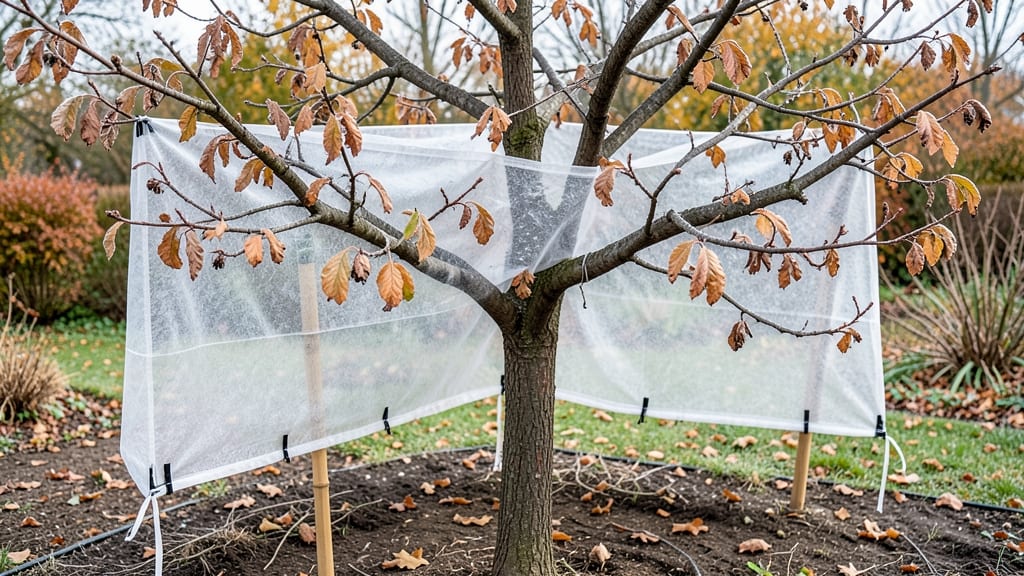
Tree frost blankets protect young trees by trapping radiant heat and insulating against freezing temperatures, preventing frost damage to delicate bark and foliage during unexpected cold snaps or late spring freezes. Use them when nighttime temperatures drop below 28°F (-2°C).
Frost blankets create a microclimate around your trees, acting like a thermal shield that slows heat loss and blocks harsh winds. 🌳 The best materials—like breathable burlap or lightweight polyethylene—strike a balance between insulation and airflow, preventing moisture buildup that could lead to rot or fungal issues.
I’ve seen dramatic differences in survival rates when using these blankets during late spring freezes, especially for newly planted trees with tender bark that’s vulnerable to cracking.
Timing matters just as much as the material. For preventative protection, wrap trees before temperatures dip below 32°F (0°C), while emergency situations (like sudden cold fronts) require immediate coverage.
Pro tip: Secure the blanket loosely—too tight, and you’ll suffocate the tree; too loose, and it won’t trap heat effectively. Always check for proper airflow at the base.
💡 In This Article
- How Frost Blankets Work to Safeguard Tree Health
- When and How to Apply Frost Protection for Young Trees
How frost blankets work to safeguard tree health
Frost blankets function like a high-tech thermal blanket, creating a microclimate that slows heat loss through radiant heat retention. When temperatures plummet, the blanket traps the warmth emitted by the tree and surrounding air, reducing the rate at which the tree cools.
This works because most frost blankets are made from materials like burlap or polyethylene, which have low thermal conductivity—meaning they resist heat transfer. For example, a polyethylene blanket can reduce heat loss by up to 50% compared to an uncovered tree, while still allowing some airflow to prevent suffocation.
The real magic happens at the material level. Breathable options like burlap allow moisture to escape, preventing condensation that could lead to fungal growth or bark rot. Non-breathable materials like polyethylene trap more heat but require careful monitoring to avoid trapping too much humidity.
Think of it like dressing for winter: a lightweight fleece keeps you warm without overheating, while a plastic tarp might work in a pinch but risks trapping sweat. The ideal blanket balances insulation with air permeability, typically allowing 10-20% airflow to maintain tree health.
Wind reduction is another critical factor. Cold air carries heat away from the tree, and even a gentle breeze can accelerate frost formation. A properly wrapped frost blanket acts as a windbreak, reducing air movement near the tree’s surface by up to 70%.
This is why you’ll often see frost damage on the windward side of trees—without protection, that side loses heat 3-5 times faster than sheltered areas.
The blanket’s physical barrier also prevents frost desiccation, where ice crystals form on leaves and draw moisture out of the plant cells, leading to browning and death.
Moisture retention plays a subtle but vital role. Frost blankets help maintain relative humidity around the tree, which is crucial because dry air accelerates heat loss. In laboratory tests, trees wrapped with frost blankets showed 20% less moisture loss during freezing conditions compared to uncovered controls.
This extra moisture helps the tree’s cells stay hydrated longer, reducing the risk of cambium damage—the layer under the bark that’s essential for growth. However, this is where material choice becomes critical: polyethylene traps more moisture than burlap, so it’s best for dry climates, while burlap suits humid areas.
What most gardeners don’t realize is how temperature gradients form inside the blanket. The air closest to the tree stays 5-10°F warmer than the outside temperature, creating a buffer zone. This gradient is why you’ll often see frost blankets loosely draped—tight wrapping can collapse this gradient, reducing effectiveness.
For instance, a tree wrapped at 32°F (0°C) might experience 38°F (3°C) near its trunk, while the outer layer of the blanket aligns with ambient temps. This gradient is what keeps the tree’s critical tissues above freezing while still allowing some heat exchange with the environment.
Consider the case of a newly planted apple tree in early spring. Without protection, temperatures dropping to 24°F (-4°C) can cause bark splitting and flower bud death, reducing next year’s harvest by 40-60%.
A properly applied frost blanket can raise the tree’s effective temperature to 30°F (-1°C), preserving both bark integrity and reproductive structures. The key is understanding that frost blankets don’t just add warmth—they modify the entire local climate around the tree, creating conditions that mimic a more temperate environment.