
Trees
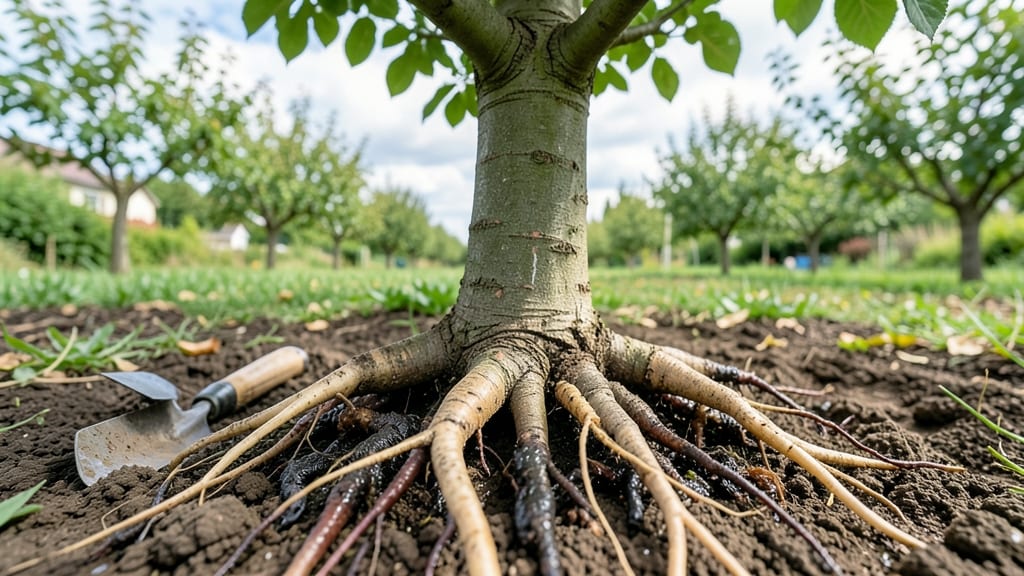
Your apple tree’s sudden decline might not be from the leaves—it’s the apple tree root problems that are silently strangling it. 🌳 Root rot and poor airflow can cripple even the healthiest trees faster than you’d think, but copper treatments and soil fixes can bring them back to life.
I’ve nursed back three trees using these exact methods after years of wilting and stunted growth.
The real villains are often hidden: waterlogged soil, compacted roots, or fungal infections that spread silently. You’ll spot the warning signs—yellowing leaves, mushrooms popping up at the base, or roots that smell like rot instead of fresh earth.
The good news? Copper fungicides and simple aeration techniques work better than you’d expect, even for mature trees.
Within weeks of proper treatment, you’ll see new growth pushing through the soil. The key is acting fast—once roots turn black and mushy, recovery gets harder. We’ll cover the step-by-step fixes that actually work, plus how to keep your tree thriving long after the crisis is over.
Perfect for home gardeners dealing with sudden decline, this approach works for both young saplings and established orchards. Let’s get those roots breathing again—your tree’s future depends on it.
Root Struggles Explained
Apple tree roots face a hidden battle beneath the soil—one that often goes unnoticed until it’s too late. Understanding why these issues arise is the first step to prevention and recovery.
Below, we break down the root causes of apple tree root problems, from soil conditions to environmental stress, with science-backed explanations.
Apple tree roots thrive in well-draining soil, but when water pools around them, it creates a suffocating environment. Root rot (often caused by Phytophthora or Pythium fungi) thrives in waterlogged conditions because:
- Oxygen depletion: Roots need oxygen to respire—just like humans. When soil stays soggy, oxygen levels drop, weakening roots and inviting fungal infections.
- Fungal growth: Waterlogged soil creates the perfect humidity for pathogens. Fungi release enzymes that break down root cell walls, leading to decay.
- Nutrient imbalance: Excess water leaches away essential nutrients (like nitrogen and potassium), starving the tree even as it appears "overwatered."
💡 Pro Tip: Test your soil’s drainage by digging a 12-inch hole and filling it with water. If it drains in less than 6 hours, you’re in the clear. If it pools for days, amend with sand, perlite, or compost to improve airflow.
Heavy clay or tightly packed soil restricts root growth by limiting space for roots to expand. Here’s how compaction harms apple trees:
- Reduced oxygen flow: Compacted soil acts like a brick, cutting off air to roots. Without oxygen, roots can’t absorb water or nutrients efficiently.
- Root strangulation: As roots grow, they struggle to penetrate dense layers, leading to shallow, weak root systems that topple in storms or dry spells.
- Heat stress: Dense soil retains heat, raising root zone temperatures beyond the tree’s tolerance (ideal root temp: 50–70°F).
✨ Fix It: Aerate compacted soil with a manual fork or core aerator in early spring. Mix in organic matter (compost or leaf mold) to loosen the soil naturally.
Pathogens like Armillaria mellea (honey fungus) or Erwinia bacteria exploit stressed roots, but they rarely attack healthy trees. Here’s how infections take hold:
- Entry points: Wounds from pruning, burrowing animals, or physical damage create gateways for pathogens.
- Weakened defenses: Trees under stress (drought, poor nutrition) produce fewer phytoalexins—natural compounds that repel fungi.
- Spore spread: Fungal spores hitchhike on tools, water, or wind, landing on fresh cuts or decaying roots.
🔥 Prevention: Sterilize pruning tools with 70% isopropyl alcohol between cuts. Avoid overwatering, and mulch with cedar chips (natural fungicide properties).
Apple tree roots are sensitive to temperature swings. Too cold or too hot disrupts their ability to absorb water and nutrients:
- Frost damage: Roots freeze when temps drop below 28°F, causing cell membranes to rupture. Thawing accelerates decay.
- Heat stress: Soil temps above 90°F denature enzymes needed for nutrient uptake, leading to wilting even when water is available.
- Dormancy disruption: Sudden warm spells in winter trick roots into growing, only to be killed by a late frost.
🌡️ Solution: Mulch with 4–6 inches of wood chips to insulate roots in winter and retain moisture in summer. Drip irrigation can also cool root zones during heatwaves.
Apple trees demand specific nutrients, and deficiencies weaken roots over time. Common culprits:
| Nutrient | Root Symptom | Cause |
|---|---|---|
| Nitrogen (N) | Stunted root growth, yellowing leaves | Leached away by overwatering or poor soil |
| Phosphorus (P) | Dark, purplish roots; slow flowering | Bound in alkaline soils or over-fertilized with nitrogen |
| Potassium (K) | Root rot susceptibility; weak structure | Lost in sandy soils or overwatered conditions |
| Calcium (Ca) | Blossom end rot (in fruit), brittle roots | Acidic soil or excessive potassium |
🎯 Action Step: Conduct a soil test (via local extension services) and amend with balanced fertilizer (10-10-10) or lime (for calcium). Avoid synthetic fertilizers—they can burn roots.
Root problems often start small but escalate quickly. By addressing these causes—drainage, compaction, pathogens, temperature, and nutrition—you’ll give your apple tree the fighting chance it deserves. Next, we’ll dive into diagnosing symptoms so you can act fast.
Fixing Apple Tree Roots Naturally
Now that you know the signs and causes of apple tree root problems, let’s tackle them head-on with practical, effective solutions.
Whether your tree is struggling with root rot, compacted soil, disease, or poor drainage, these fixes will help restore health—without breaking the bank or the tree’s spirit! 🌱
---
If your apple tree’s roots are waterlogged and rotting, act fast to save it.
#### 🍳 Step 1: Improve Soil Drainage - Raise the soil level (if possible) by adding a 2–4 inch layer of gravel, sand, or compost around the base (but not touching the trunk). - Install a French drain if water pools heavily—dig a shallow trench (12–18 inches deep) filled with gravel and a perforated pipe to redirect excess water. - Avoid overwatering—stick your finger in the soil 2 inches deep; if it’s damp, wait before watering again.
#### 👨🍳 Step 2: Apply Copper-Based Fungicide Root rot is often fungal, and copper is a natural, OMRI-listed solution. - Mix copper sulfate (1 tsp per gallon of water) and apply it to the soil around the roots (avoid direct trunk contact). - Spray foliar copper (like Bordeaux mixture) on leaves to prevent airborne fungal spread. - Reapply every 2–4 weeks until new growth appears.
#### ⏰ Step 3: Prune Affected Roots (If Severe) - Only do this if the tree is beyond saving with drainage alone—use sterilized pruners to cut away black, mushy roots (healthy roots are firm and white). - Do not prune in wet soil—wait for dry conditions to prevent further infection.
--- If roots are struggling due to hard, clay-heavy soil, they’ll suffocate. Here’s how to fix it:
#### 🔪 Step 1: Core Aeration (Best Method) - Rent a manual or gas-powered aerator (or hire a pro) to punch 3–4 inch holes 6–12 inches deep around the tree’s drip line. - Fill holes with compost or sand to improve airflow and nutrient absorption.
#### 💡 Step 2: Mulch Properly - Remove old mulch (if compacted or too thick) and replace with 2–4 inches of wood chips or straw. - Keep mulch 6 inches away from the trunk to prevent rot. - Water deeply after applying to help it settle into the soil.
#### ✨ Step 3: Plant Cover Crops (Long-Term Fix) - Sow clover or grass around the tree (but not too close) to break up soil naturally with roots. - Mow or trim cover crops before they seed to avoid competition.
--- An ounce of prevention is worth a pound of cure! Follow these easy habits to keep your apple tree’s roots happy:
#### 📊 Water Smarter, Not Harder - Deep water 1–2 times per week (instead of daily shallow watering) to encourage deep root growth. - Use drip irrigation to avoid wetting leaves (which spreads disease). - Check soil moisture—stick a screwdriver in; if it goes in easily, you’re overwatering.
#### 🥗 Soil Care Year-Round - Test soil pH (ideal for apples: 6.0–6.5) and amend with lime (to raise pH) or sulfur (to lower it) if needed. - Add compost annually (spring or fall) to improve structure and fertility. - Avoid heavy foot traffic near the tree—compacted paths = stressed roots.
#### 🍎 Monitor & Maintain - Inspect roots every spring for signs of rot, pests, or girdling. - Prune surface roots that circle the trunk (they strangle the tree over time). - Avoid tilling near the tree—roots are shallow and can be easily damaged.
--- If your apple tree is severely rotted, dying despite fixes, or in a high-water area, consult an arborist. They can assess whether rootstock replacement or soil replacement is needed—sometimes, saving the tree means going big!
--- Remember: Healthy roots = happy tree = more apples! With these fixes, your apple tree will bounce back stronger than ever. 🍏💪 Now go give those roots the TLC they deserve!
Frequently asked questions
How do I tell if my apple tree has root rot?
Look for black, mushy roots that smell foul—healthy roots are firm and white. Above ground, watch for yellowing leaves, stunted growth, or mushrooms at the base (a sign of fungal infection). If the tree wobbles easily or leaves drop suddenly, roots are likely rotting.
Can I save an apple tree with severe root damage?
Yes, but act fast! Prune away black, decayed roots (with sterilized tools), improve drainage with gravel or compost, and apply copper fungicide. For mature trees, consult an arborist—they may recommend rootstock replacement if damage is extensive.
Why does my apple tree’s soil stay waterlogged even after rain stops?
Clay-heavy soil or poor grading traps water. Test drainage by digging a 12-inch hole and filling it with water—if it doesn’t drain in 6 hours, amend with sand or perlite. For severe cases, install a French drain to redirect excess water.
Is copper sulfate safe for my apple tree’s roots?
Yes, when used correctly! Mix 1 tsp per gallon of water and apply to soil (avoid trunk contact). Copper is a natural fungicide that kills root rot pathogens without harming the tree. Reapply every 2–4 weeks until new growth appears.
How often should I aerate compacted soil around my apple tree?
Do it once a year in early spring using a manual fork or core aerator. Fill holes with compost or sand to improve airflow. For clay-heavy soil, repeat annually or plant cover crops (like clover) to break up compaction naturally.