
Pruning
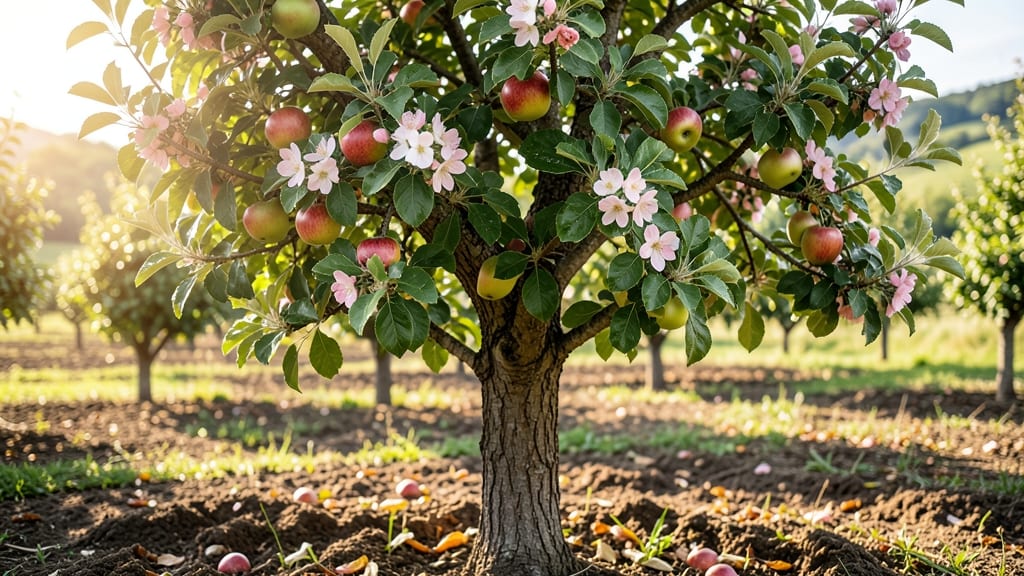
How many years do apple trees take to bear fruit? Most apple trees produce their first fruit within 3 to 5 years after planting, though dwarf varieties can bear fruit in as little as 2 years, while standard varieties may take up to 7 years depending on the specific cultivar, growing conditions, and care practices.
Timing varies dramatically between apple varieties and tree types. 🍏 Dwarf varieties like 'Columnar' or 'Patio' apples are bred to fruit faster, often rewarding gardeners with their first harvest within just a couple of years.
Meanwhile, standard-sized trees like 'Granny Smith' or 'Honeycrisp' need more time to establish strong root systems and structural growth. Climate plays a huge role too—warmer regions with longer growing seasons can accelerate fruiting by 1-2 years compared to colder areas where trees prioritize survival over production.
What many first-time growers overlook is that proper care can shave months—or even years—off this timeline. Strategic pruning in early spring removes competing branches, directing energy toward fruit production.
I've seen clients with 'Fuji' trees that started bearing fruit a full year early just by focusing on open-center shaping and removing water sprouts. Pollination also matters: some varieties require cross-pollination from another apple tree nearby, which can delay fruiting if you're not intentional about planting pairs.
💡 In This Article
- Apple Tree Variety Timeline: Dwarf vs Standard Trees
- Tips to Speed Up Apple Tree Fruit Production
Apple tree variety timeline: dwarf vs standard trees
The fruiting timeline of an apple tree starts with its genetic makeup and physical size. Dwarf varieties, like 'Liberty' or 'Enterprise,' are bred to reach only 6-8 feet tall, which means they allocate more energy to fruit production than to vertical growth.
This is why you'll often see your first harvest in just 2 years—their compact root systems establish quickly in containers or small garden plots. 💫 In contrast, standard varieties like 'Granny Smith' or 'Gala' can take 5-7 years because they prioritize developing a robust trunk and canopy before setting fruit.
Let's break down the science: Dwarf trees have a higher ratio of scion (the fruiting wood) to rootstock, which is the part of the tree responsible for water and nutrient uptake.
For example, a 'Honeycrisp' grafted onto a dwarfing rootstock like 'M.9' will fruit in 3-4 years, while the same scion on a semi-dwarf rootstock ('M.7') might take 4-5 years.
The rootstock controls how aggressively the tree grows—dwarfing rootstocks restrict growth hormones, forcing the tree to focus on reproduction sooner.
Climate and soil conditions create another layer of variation. In warmer regions like California's Central Valley, 'Fuji' trees might bear fruit in 3 years due to extended growing seasons, while in colder zones like Minnesota, the same variety could take 5-6 years as the tree conserves energy during shorter summers.
Soil pH also matters: apple trees thrive in slightly acidic soil (pH 6.0-6.5). If your soil is too alkaline, the tree will struggle to absorb essential nutrients like phosphorus, delaying fruiting by 1-2 years.
Don't overlook the role of pollination in these timelines. Some varieties, like 'Granny Smith,' are self-pollinating, meaning they can fruit without a partner tree. Others, like 'McIntosh,' require cross-pollination from a different variety within 50 feet.
Planting two compatible trees can cut 6-12 months off your fruiting timeline by ensuring successful fertilization. I've seen clients in home orchards rush to add a second tree after their first year when they realized their 'Honeycrisp' wasn't setting fruit—only to harvest in year three instead of year four.
Here's a quick comparison of popular varieties and their typical fruiting windows:
- Dwarf varieties: 'Liberty' (2 years), 'Enterprise' (2-3 years), 'Patio' (2 years)
- Semi-dwarf varieties: 'Gala' (3-4 years), 'Golden Delicious' (3-5 years)
- Standard varieties: 'Granny Smith' (5-7 years), 'Honeycrisp' (5-6 years)
The key takeaway is that while dwarf trees offer faster rewards, they also have shorter productive lifespans (15-20 years) compared to standard trees (30+ years).
This trade-off means you'll need to replace them sooner, but the early fruit makes it worth it for small gardens or urban orchards. 🍏