
Size
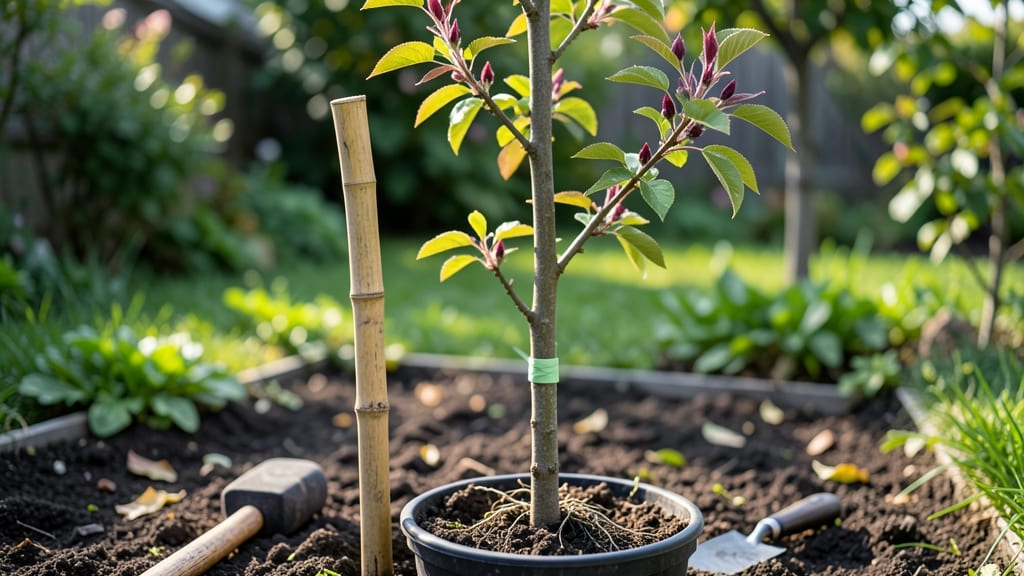
To stake a tree to grow straight, position a sturdy support at a 45-degree angle near the trunk, tie it loosely with soft material (like tree ties or cloth), and adjust as the tree grows to prevent trunk damage. This method balances stability against wind with natural movement, avoiding over-tightening that restricts growth.
Young trees often need this support because their stems are too thin to stand upright against wind or their own weight. Timing matters: stake immediately after planting, but check ties every 3-6 months—roots strengthen quickly, and stakes should come out once the tree can support itself. 🌳 The 45-degree angle distributes pressure evenly, while soft ties prevent bark damage from friction.
For delicate species like fruit trees, use wider ties; for robust ones, a single stake suffices.
Common mistakes include using hard materials that cut into the trunk or stakes too close to the base, which can hinder root spread. Always bury the stake one-third of its length for stability, and never stake mature trees—this can weaken their natural resilience.
Seasonal adjustments are key: tighten ties in windy months but loosen them as the tree grows.
💡 In This Article
- When and How to Stake Young Trees Properly
- Best Staking Materials and Techniques for Different Tree Types
When and how to stake young trees properly
Young trees need staking primarily because their stems are too slender to resist wind forces or their own weight. The science here involves torque resistance—a tree's ability to withstand bending.
A sapling's thin trunk can bend up to 30 degrees before permanent damage occurs, while a mature tree can handle 45 degrees or more.
Staking provides temporary support while the tree develops a stronger vascular system and root structure. 🌱 The ideal time to stake is immediately after planting, when roots are establishing but haven't yet developed sufficient anchorage.
Positioning the stake correctly is critical for stability. Plant the stake at a 45-degree angle about 6-12 inches from the trunk (closer for smaller trees, farther for larger ones) and bury it one-third of its length to prevent uprooting.
This angle distributes lateral pressure more effectively than vertical stakes, which can cause the tree to lean. The stake should be placed on the side where prevailing winds push the tree—typically the south or west side in temperate climates.
For example, a 5-foot-tall tree might need a 4-foot stake buried 18 inches deep.
Root development plays a huge role in staking duration. Most trees establish sufficient root depth in 1-2 years, at which point they can support themselves. However, shallow-rooted species like willows or poplars may need staking for 3 years or more.
Always check ties every 3-6 months—roots grow fastest during spring and early summer. The goal is to remove stakes as soon as the tree can stand upright without support, typically when the trunk diameter reaches about 1 inch at breast height (measured 4.5 feet above ground).
Over-tightening ties is a common mistake that leads to girdling, where the bark becomes constricted and can't transport nutrients. Use soft materials like tree ties made from recycled plastic or strips of old T-shirt fabric (which stretches as the tree grows).
These should be 2-3 inches wide and tied with a loose figure-eight pattern that allows the trunk to sway slightly—this natural movement actually strengthens the stem. For delicate trees like fruit orchards, consider spiral ties that automatically loosen as the trunk expands.
Seasonal adjustments are often overlooked but crucial. Tighten ties during winter wind storms (common in late fall and early spring) but loosen them in summer when growth is most active. The tree's cambium layer (the growth layer just under the bark) is most sensitive to pressure during these periods.
A good rule of thumb: if you can insert two fingers between the tie and the trunk, it's loose enough. Too tight, and you'll see darkened bark where the tie has cut into the tissue—this is irreversible damage. 🌿
For very young trees (1-2 feet tall), you might use a double-staking system—one stake on each side at 45-degree angles—to prevent twisting. This is especially useful for trees planted in exposed areas where wind comes from multiple directions.
The stakes should be positioned so they form a "V" shape when viewed from above, creating a natural tripod effect. Always use galvanized hardware to prevent rust from staining the bark, and avoid metal stakes that can conduct heat and damage the trunk in sunny conditions.