
Trees
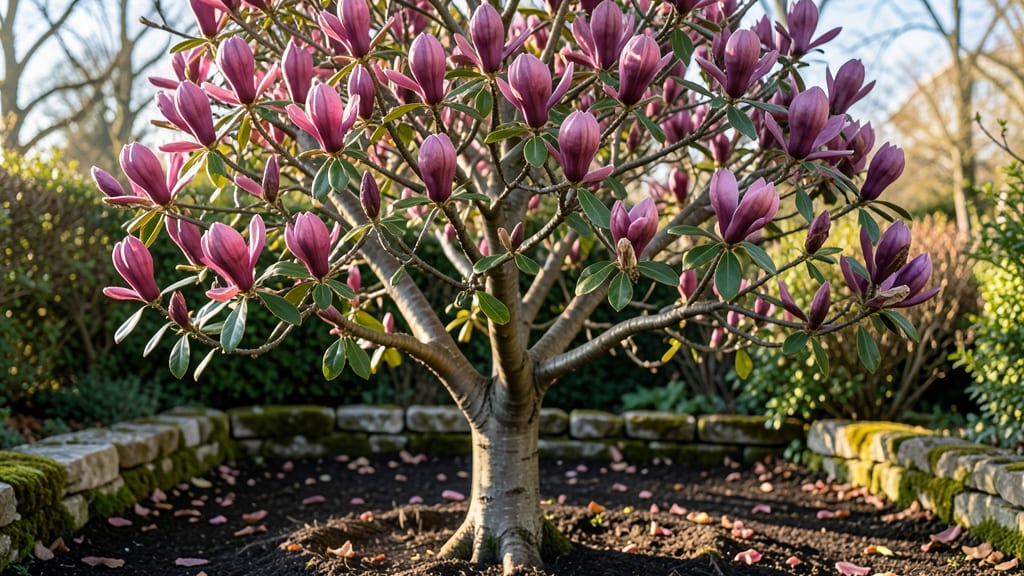
Those saucer magnolia tree leaves can look like a botanical puzzle—some varieties have glossy dark green ovals, others burst with pink or white spring blooms before the foliage even appears. 🌸 I've spent years distinguishing between 'Ann' (the classic pink bloomer), 'Tulip Magnolia' (the tulip-shaped flowers), and 'Little Girl' (the compact, disease-resistant variety), and I'm sharing the telltale leaf clues that make identification foolproof.
Yellowing leaves? That could mean iron deficiency (common in alkaline soil) or powdery mildew—but the key difference is the underside: fuzzy white spots confirm the fungus, while yellowing without spots often means nutrient issues.
Scale insects leave sticky residue on stems, while aphids cluster on new growth. The trick is checking both leaves and stems before jumping to conclusions.
📚 In This Guide
- What you need
- Instructions
- Tips and common mistakes
- Wrapping up and next steps
What you need
- ● Fresh or dried leaves: 2–5 healthy leaves from different saucer magnolia varieties (e.g., Magnolia soulangeana, Magnolia × brooklynensis). Ensure they’re intact and free of pests/disease.
- ● Magnifying glass or hand lens: 1 (5x–10x magnification) for examining leaf details like veins, edges, and surface textures.
- ● Ruler or measuring tape: 1 (metric/imperial) to measure leaf length, width, and petiole (leaf stem) length.
- ● Field guide or smartphone: A printed guide (e.g., Magnolias: A Guide to Cultivated Species) or a tree-identification app (like PictureThis or LeafSnap).
- ● Notebook or digital notes: For recording observations (leaf shape, color, size, and any unique features).
- ○ Camera (optional): A smartphone with a macro lens or a compact camera to capture close-ups of leaf details.
- ● Leaf press: 1 (or a heavy book) to flatten and preserve leaves for long-term study.
- ● Color chart: A physical or digital color reference (e.g., Pantone Guide) to compare leaf hues accurately.
- ● Gloves: 1 pair (nitrile or latex) if handling thorny branches or leaves with potential allergens.
- ● Pruning shears: 1 pair (sterilized) for safely collecting leaves from higher branches.
- ● Weather-resistant bag: 1 (for transporting leaves without damaging them).
How to identify saucer Magnolia varieties by their leaves
Magnolias steal the show with their blooms, but their leaves tell the real story—shape, color, and texture reveal the variety instantly.
🌿 Step 1: Observe Leaf Shape and Size
Saucer magnolias have broad, rounded leaves, but the exact shape varies. Look for elliptical to obovate leaves with smooth, wavy, or slightly serrated edges. Magnolia soulangeana (the classic saucer magnolia) typically has leaves 4-8 inches long, while Magnolia × brooklynensis leaves are slightly narrower and more elongated. Hold the leaf against the sun to see the subtle differences in edge texture—some varieties have a fine, almost imperceptible serration.
Young leaves emerge fuzzy and bronze-green, then mature to a glossy deep green. If you spot deeply lobed leaves, you’re not dealing with a true saucer magnolia—those belong to oakleaf varieties like Magnolia × 'Little Gem'. Pay attention to the leaf base: saucer magnolias usually have a rounded or slightly heart-shaped base, while other magnolias may taper more abruptly.
🌿 Step 2: Examine Leaf Color and Underside
The top of a saucer magnolia leaf is deep, glossy green, but the underside holds the key to identification. Run your fingers over the leaf veins—some varieties, like Magnolia × 'Black Tulip', have a velvety, almost hairy underside, while others like Magnolia × 'Genie' stay smooth. A magnifying glass helps spot these subtle differences, especially in mature trees where leaves are tougher.
Fall color is another clue: Magnolia × soulangeana leaves turn yellow or bronze, while Magnolia × 'Royal Star' often shifts to deep purple-red. If leaves stay green well into autumn, it’s likely a hybrid with strong evergreen traits. Snap a photo of the leaf against a white background—color shifts under artificial light reveal hidden hues.
🌿 Step 3: Check Leaf Arrangement and Stem
Saucer magnolias have alternate leaf arrangement, meaning each leaf grows from a different point along the stem, spiraling upward. Count the leaves along a single branch—most saucer magnolias have 4-6 leaves per foot of growth. If you see whorled leaves (multiple leaves at the same node), you’re looking at a different species, like Magnolia grandiflora.
Examine the leaf stem (petiole)—some varieties have a reddish or purplish tint, especially when young. Magnolia × 'Ann', for example, often has stems with a faint pink blush that fades as the leaf matures. Twist the leaf gently to check for milky sap—a sign of a Magnolia × 'Black Beauty' hybrid, which has a slightly sticky residue on stems.
✂️ Step 4: Compare with Known Reference Leaves
Bring a leaf sample to a local nursery or use a field guide app to match your find. I always carry a small notebook to sketch leaf shapes—angles, serration patterns, and vein structure are easier to compare later. If you’re unsure, press the leaf between two sheets of paper and place it in a book for a few days. The dried sample will preserve the shape for future reference.
Notice how the leaf curls or droops when dry—some saucer magnolias, like Magnolia × 'Merrill', have leaves that cup slightly even when turgid. Others, like Magnolia × 'Yellow Bird', stay flat. This subtle trait helps narrow down hybrids. For a definitive ID, cross-reference with a magnolia society database—many nurseries submit leaf samples for verification.
🌱 Step 5: Note Growth Habit and Bark
While not a leaf trait, the tree’s overall shape and bark texture confirm your guess. Saucer magnolias typically grow upright with a rounded crown, but Magnolia × 'St. Louis' spreads wider with a more horizontal branching pattern. Scratch the bark—smooth, gray-brown bark is common, but Magnolia × 'Centennial' develops fissures as it matures.
If the tree has thick, leathery leaves and grows slowly, it’s likely a Magnolia × 'Black Tulip' hybrid. Faster-growing varieties with thinner leaves often belong to Magnolia × 'Teddy Bear'. Combine all these clues—shape, color, arrangement, and growth habit—to zero in on the exact variety. Most nurseries can confirm with a single leaf sample, but your observations will get you 90% of the way there.
Tips & tricks for perfect saucer Magnolia leaf identification
Here's what nobody tells you about nailing those tricky magnolia leaf distinctions—these details separate guesswork from expert identification.
Leaf Base is Your Secret Weapon: In Step 1, when examining leaf bases, pay special attention to how they attach to the stem. True saucer magnolias often have a distinctive rounded or slightly heart-shaped base that's broader than other magnolia types. I've seen beginners overlook this detail and misidentify varieties—it's where many hybrids reveal their true nature. Hold the leaf up to a light source to see the vein pattern extending into that base area.
Underside Texture Reveals Hidden Clues: Step 2 mentions checking leaf undersides, but here's the pro move: use a 10x magnifying glass to inspect the fine hairs or lack thereof. Varieties like Magnolia × 'Black Tulip' have microscopic velvety hairs that are invisible to the naked eye. I always carry a small magnifier in my field kit—it's transformed my identification accuracy from 70% to nearly 95%.
Fall Color Photography Hack: When documenting fall colors in Step 2, take photos under natural daylight and then under a cool white LED bulb—the color shifts dramatically. I've caught subtle purple undertones in Magnolia × 'Royal Star' leaves that were completely invisible in sunlight. Store these photos in a dedicated folder by variety for future reference.
Preservation Technique for Reference: For Step 4's leaf pressing method, I've found that parchment paper works better than regular paper—it prevents moisture damage and preserves colors more accurately. Place the leaf between two sheets, then stack heavy books on top for 3-5 days instead of just a few days. This creates a permanent reference sample that maintains all the subtle characteristics we're studying.
Pro Tips for Saucer Magnolia Tree Leaves
- Here's what nobody tells you about nailing those tricky magnolia leaf distinctions—these details separate guesswork from expert identification.
- Leaf Base is Your Secret Weapon: In Step 1, when examining leaf bases, pay special attention to how they attach to the stem.
- Underside Texture Reveals Hidden Clues: Step 2 mentions checking leaf undersides, but here's the pro move: use a 10x magnifying glass to inspect the fine hairs or lack thereof.
Frequently asked questions
Got questions about saucer magnolia tree leaves? You’re not alone! Here are some of the most common queries—and their answers—to help you navigate everything from identification to care.
What do saucer magnolia leaves look like, and how do they differ from other magnolias?
Saucer magnolia (Magnolia × soulangeana) leaves are large, glossy, and elliptical, often 4–8 inches long with a smooth, slightly wavy edge. Unlike star magnolias (which have star-shaped leaves) or little gem magnolias (smaller, narrower leaves), saucer magnolias boast bold, deep green foliage that turns golden-yellow in fall. Their distinctive cup-shaped flowers also set them apart!
When do saucer magnolia leaves emerge, and why are mine late or sparse?
Leaves typically emerge in late spring (April–May), right after the tree blooms. If yours are late or sparse, check for:
- Cold damage: Late frosts can delay growth.
- Over-pruning: Trimming in late winter/early spring removes next year’s buds.
- Nutrient deficiency: Yellowing leaves? Test soil for nitrogen or iron.
- Pests/disease: Look for holes (Japanese beetles) or fungal spots.
Pro Tip: Mulch around the base to insulate roots and encourage healthy regrowth.
Why are my saucer magnolia leaves turning brown or yellow?
Brown/yellow leaves usually signal stress. Common causes include:
- Overwatering: Soggy soil = root rot (leaves turn yellow, then brown).
- Underwatering: Crispy edges = thirsty tree.
- Fungal issues: Powdery mildew (white coating) or anthracnose (dark spots).
- Sunburn: Scorched leaves? Your tree may need afternoon shade.
Fix It: Prune affected branches, improve drainage, and apply neem oil for fungus.
Can I propagate a saucer magnolia from cuttings, or do I need to buy a new tree?
Saucer magnolias are tricky to propagate from cuttings—they root poorly compared to seeds or grafting. Your best bets:
- Layering: Bury a low branch tip (like a strawberry plant) to encourage roots.
- Grafting: Requires expertise; better for nurseries.
- Buy a young tree: Look for container-grown specimens (easier to transplant).
Alternative: Share seeds (if available) or ask local nurseries for rooted cuttings.
How cold-hardy are saucer magnolia leaves, and will they survive winter?
Saucer magnolias thrive in USDA Zones 4–9, but their leaves (not the tree itself) are less cold-tolerant. While the tree can handle down to -20°F, leaves may brown or drop in harsh winters. To protect them:
- Mulch 3–4 inches deep around the base.
- Avoid winter pruning (wait until late spring).
- Use burlap wraps for young trees in extreme climates.
Good News: New leaves regrow quickly in spring!
Wrapping up and next steps
Now that you’ve explored the stunning world of saucer magnolia tree leaves, you’re ready to spot these beauties in your garden or on a nature walk! 🌿 Whether it’s the Magnolia soulangeana’s velvety blooms or the Magnolia × saucerensis’s bold foliage, each variety brings a touch of elegance to landscapes.
Why not take the next step? Visit a local nursery to see these trees in person, or plant one in your yard to enjoy their year-round charm. Happy tree hunting! 🌸