
Trees
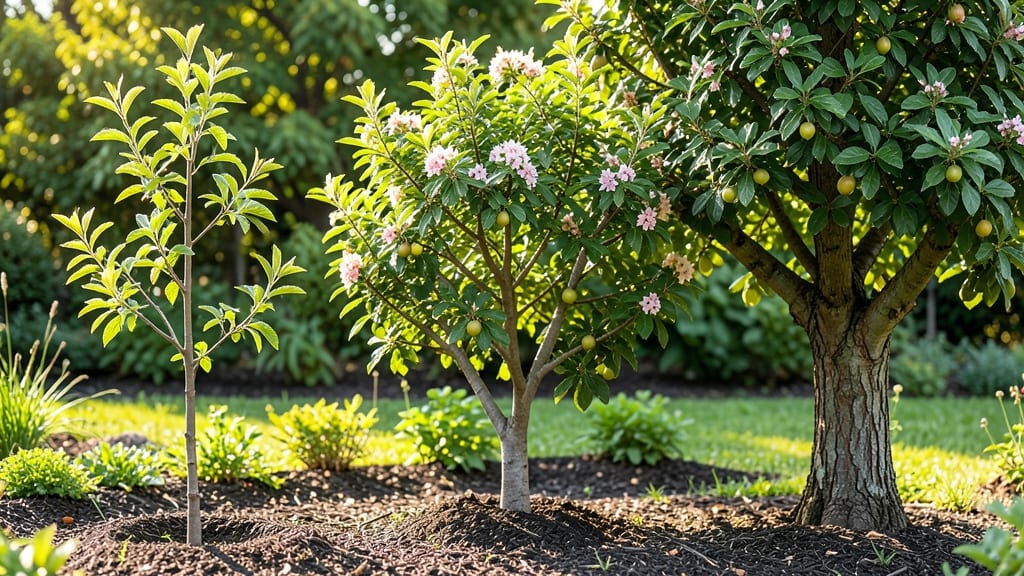
A plum tree's growth rate depends entirely on its variety, with some reaching maturity in just 3 years while others take nearly a decade to bear fruit.
Picture this: you plant a bare-root 🍑 plum sapling in spring, dreaming of summer harvests, only to watch it grow just a few feet in its first year. That’s normal—but it’s also where most gardeners give up. The truth? With the right care, your tree could surprise you.
Japanese plums like 'Santa Rosa' often flower by year three, while European varieties like 'Stanley' may need eight years or more. Climate, soil quality, and even pruning techniques play a bigger role than you might think in speeding up—or slowing down—that timeline.
In this guide, I’ll break down the key milestones by variety, share proven tips to accelerate growth, and help you spot the signs of a thriving tree before the first fruit even appears.


Plum tree growth rate by variety: fastest to slowest maturers
If you're dreaming of fresh plums from your backyard, patience is key—but some varieties deliver fruit years sooner than others. Japanese plums like 'Santa Rosa' can bear fruit in just 3 years, while heirloom European varieties like 'Stanley' may take 8+ years.
The difference comes down to rootstock, genetics, and growing conditions.
Dwarf varieties mature fastest, reaching fruit-bearing age in 3-5 years and staying compact (8-12 feet). Standard trees take longer (6-10 years) but grow 20-30 feet tall. Climate also plays a role—warmer zones speed up growth, while cooler regions may delay fruiting by 1-2 years.
Here’s how popular plum varieties stack up in terms of growth speed and maturity timelines, so you can choose the best fit for your garden’s timeline and space:
Japanese plums like 'Santa Rosa' and 'Methley' are the fastest maturers, ideal for impatient gardeners. Their dwarf rootstocks also make them perfect for containers or small yards. European varieties, however, prioritize fruit size and flavor over speed—think 'Stanley', which produces heirloom-quality plums but requires more space and time.
Hybrid varieties like 'Black Diamond' strike a balance, offering disease resistance and moderate growth rates (5-6 years). If you’re in a cooler climate, choose self-pollinating varieties like 'Larry Kelley' to avoid needing a second tree for cross-pollination.
For container gardening, opt for dwarf varieties like 'Methley' or 'Shiro'. These stay under 12 feet and fruit in 3-4 years, making them perfect for patios or balconies. Just ensure your container has drainage holes and 15+ gallons of soil to support root growth.
Pro tip: Plant bare-root trees in early spring for a 1-year head start. These young trees establish roots faster than potted varieties, shaving 6-12 months off your wait time for fruit. Pair this with well-draining soil and full sun (6+ hours daily) to maximize growth speed.
Remember,
Key growth milestones in plum trees: what to expect each year
Plum trees follow a predictable growth pattern, but their speed depends on variety, climate, and care. Understanding these yearly milestones helps you track progress and adjust your gardening strategy. From tiny saplings to fruit-bearing giants, each stage offers clues about your tree's health and needs.
In USDA Zone 6a, most plum trees reach maturity between 3 to 10 years. Japanese varieties like 'Santa Rosa' often fruit in just 3 years, while European types like 'Stanley' may take a decade.
Your tree's growth rate also hinges on sunlight exposure, soil quality, and consistent watering—all factors we'll explore in these milestones.
🌱 Plum Tree Growth Timeline
- 1 Year 1: Root establishment (2-4 ft tall). Focus on deep watering and mulching to protect roots. Leaves are small (2-3 inches) and sparse.
- 2 Year 2: Trunk thickens (6-10 ft). First bud formation appears. Prune to shape and remove suckers. Leaves grow to 3-5 inches.
- 3 Year 3: First blooms appear (spring). Tree reaches 10-15 ft. Flowers may produce small fruit, but not a full harvest. Fertilize with high-phosphorus for root growth.
- 4 Year 4-5: Full fruit production begins. Tree matures to 15-20 ft. Prune to improve airflow and sunlight penetration. Leaves reach 5-7 inches in length.
- 5+ Years 6-10: Peak production (20-30 ft). Thinner branches may need removal. Harvest fruit in July-August. Soil tests reveal nutrient depletion—amend with compost.
Climate plays a critical role in these milestones. In warmer zones (7-9), plum trees grow faster, often reaching maturity 1-2 years earlier. Conversely, colder zones (Zone 5 or below) may delay growth by 2-3 years due to shorter growing seasons.
Always plant after the last frost date—typically mid-April in Zone 6a—to avoid frost damage to new shoots.
Your care routine directly impacts these timelines. For example, dwarf varieties like 'Bonanza' mature in half the time of standard trees but require staking for support. Monitor trunk thickness annually: a healthy 1-year-old should have a 1-inch diameter, while a 5-year-old should measure 3-4 inches.
Thin fruit clusters in early summer to ensure larger, higher-quality plums.
Patience is key! Even if your tree doesn't fruit immediately, healthy growth in early years sets the stage for decades of harvests. Track milestones with photos and notes—you'll be amazed at how quickly those tiny saplings transform into productive trees.
With proper care, your plum tree could be bearing fruit in just 3-5 years! 🍑