
Pruning
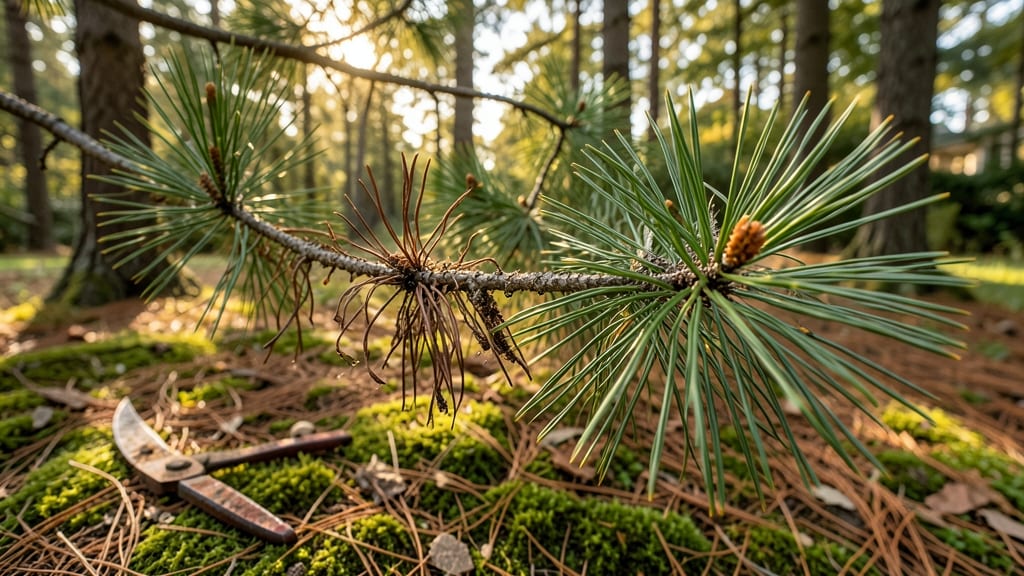
Your pine tree branches dying isn't just a cosmetic issue—it's a cry for help from a tree that might still be saved. 🌲 I've nursed back more than a few pines by spotting the early warning signs: brown needles that won't brush off, sticky resin leaks, or entire branches turning brittle.
The good news? Most cases respond to 3 targeted pruning fixes that stop the decline and restore growth.
First, we rule out the big culprits: fungal infections like needle blight (look for rust-colored spots), bark beetle damage (sawdust-like frass at the base), or environmental stress from drought or poor drainage. My first-year pine nearly died from overwatering—turns out, pines hate soggy roots.
The key is diagnosing correctly before pruning, because cutting diseased branches without addressing the root cause just speeds up the problem.
Once we identify the issue, the fixes become straightforward. For fungal problems, prune out infected branches 6 inches below the damage and sterilize your tools between cuts. Pest infestations? Focus on removing infested branches first, then treat the tree with horticultural oil.
Environmental stress? We adjust watering and amend the soil with organic matter to improve drainage. Within a season, you'll see fresh green needles pushing from the pruned areas.
Prevention is where the real magic happens. Mulch properly, water deeply but infrequently, and inspect your tree every spring for early signs. Pines are tough—they've survived wildfires for centuries.
With the right care, your tree can bounce back stronger than ever, and those dying branches will be nothing but a lesson learned. Let's get to work diagnosing yours.
Root Causes Behind Dying Pine Branches
When your pine tree’s branches start turning brown, dropping needles, or looking generally lifeless, the problem often traces back to a mix of environmental stressors, pests, or underlying health issues.
Understanding the specific triggers is key to diagnosing—and fixing—the issue before it spreads. Below, we break down the most common culprits, backed by science, so you can take targeted action.
Pine trees are resilient, but extreme weather can push them past their limits. Here’s how climate factors contribute to dying branches:
-
Drought Stress:
Pines rely on consistent moisture, especially in sandy or rocky soils where water drains quickly. When roots can’t absorb enough water, the tree triggers abscission—a natural process where it sheds needles and small branches to conserve energy. Signs: Needles turn yellow or brown from the tips inward, and branches feel brittle.
- Actionable Fix: Deep watering (1–2 inches per week) and mulching (2–3 inches of organic mulch) to retain moisture.
- Pro Tip: 💡 Water in the early morning to reduce evaporation and fungal risks.
-
Heat Scorch:
Sudden temperature spikes (especially above 90°F) can cause physiological drought, even if soil is moist. Needles may develop crispy, brown patches.
- Actionable Fix: Provide afternoon shade with temporary shade cloth or plant heat-tolerant pines (e.g., Pinus palustris for Southern climates).
-
Winter Desiccation:
Cold winds + low humidity = winter burn. Needles lose moisture faster than roots can replace it, leading to browning.
- Actionable Fix: Apply anti-desiccant sprays (like Wilt-Pruf) in late fall or wrap young trees with burlap.
Insects and fungi often work behind the scenes, weakening pine branches before you notice. Here’s how to spot them:
| Pest | Damage Signs | Action Steps |
|---|---|---|
| Pine Beetles (e.g., Mountain, Southern) |
|
|
| Sphaeropsis Tip Blight (Fungus) |
|
|
| Spider Mites |
|
|
Pines thrive in acidic, well-draining soils (pH 4.5–6.0). When soil conditions are off, branches suffer—often silently.
-
Nitrogen Deficiency:
Yellow needles (especially older ones) signal nitrogen starvation. Pines need this nutrient for chlorophyll production.
- Fix: Apply slow-release nitrogen fertilizer (e.g., sulfur-coated urea) in early spring.
- ✨ Organic Boost: Mix composted pine needles into soil (pines recycle their own needles!).
-
Compacted or Alkaline Soil:
Poor drainage or high pH (above 7.0) locks out nutrients. Roots suffocate, leading to branch dieback.
- Fix:
- Test soil pH (use a home test kit).
- Amend with sulfur or peat moss to lower pH.
- Aerate soil with a garden fork or core aerator.
- Fix:
-
Iron Chlorosis:
Yellow needles with green veins? Iron deficiency (common in alkaline soils) blocks chlorophyll.
- Fix: Apply chelated iron fertilizer (e.g., Ironite) in early spring.
Even well-intentioned pruning can harm pines if done wrong. Here’s how human error causes branch death:
-
Over-Pruning:
Removing >25% of the canopy in one session stresses the tree, leaving it vulnerable to pests/disease.
- Fix: Prune in stages (e.g., 10% per year) and avoid topping (cutting back to a stub).
-
Improper Cuts:
Tearing bark or leaving stubs invites fungal infections (e.g., Armillaria root rot).
- Fix:
- Use clean, sharp tools (sterilize with rubbing alcohol).
- Make cuts just outside the branch collar (the swollen base where the branch meets the trunk).
- Seal large cuts (>2 inches) with pruning sealant (optional for pines, but helpful in wet climates).
- Fix:
-
Mechanical Injury:
Lawnmower strips, string trimmers, or even snow removal equipment can girdle branches (damage the vascular tissue).
- Fix:
Revive Your Tree With These Fixes
When your pine tree’s branches are struggling, the good news is that many issues can be reversed with the right care. Below, we’ve mapped out targeted solutions for each common cause of dying pine branches—plus prevention tips to keep your tree thriving long-term.
Follow these steps to nurse your pine back to health and avoid future damage.
---
Cause: Overwatering, underwatering, or poor soil drainage suffocates roots, leading to brown, brittle branches.
How to Fix It: 💧 Step 1: Check Soil Moisture - Stick your finger 2–3 inches deep into the soil. If it’s dry, water deeply. If soggy, hold off until it drains. - Pro Tip: 🌡️ Use a moisture meter for accuracy—pines prefer soil that’s evenly moist but not waterlogged.
🚰 Step 2: Improve Drainage - If your soil is heavy clay, mix in 3–4 inches of compost or sand to aerate roots. - For container-grown pines, ensure pots have drainage holes and elevate them to prevent water pooling.
💧 Step 3: Water Correctly - Deep water 1–2 times per week (more in extreme heat). Avoid shallow sprinkling, which encourages weak roots. - Prevention: 🎯 Mulch around the base (2–3 inches deep) to retain moisture and regulate temperature.
---
Cause: Sawfly larvae, bark beetles, or fungal diseases (like needle blight) weaken branches, causing them to yellow or die back.
How to Fix It: 🔍 Step 1: Identify the Culprit - Sawfly larvae? Look for white, worm-like pests on needles—they skeletonize foliage. - Bark beetles? Check for sawdust-like frass near branch bases or tiny holes. - Fungal disease? Spots, mold, or needles that turn purple/brown and drop early are red flags.
🛡️ Step 2: Apply Targeted Treatments - For sawflies: Spray branches with neem oil or insecticidal soap (repeat every 7–10 days). - For bark beetles: Prune and burn or bag infested branches immediately.
Use permethrin-based sprays for severe cases. - For fungal issues: Apply a copper fungicide (like Bordeaux mixture) early in the season.
🌿 Step 3: Boost Tree Health - Fertilize lightly with a balanced, slow-release fertilizer (10-10-10) in early spring to strengthen defenses. - Prevention: ✨ Prune in late winter to improve airflow and reduce humidity (which fungi love).
---
Cause: Overcrowded branches, deadwood buildup, or improper pruning block sunlight and airflow, inviting pests/disease.
How to Fix It: 🔪 Step 1: Remove Dead or Diseased Branches - Cut 1–2 inches above a healthy bud or lateral branch using clean, sharp pruners. - Pro Tip: 🌟 Sterilize tools with rubbing alcohol between cuts to prevent spreading disease.
🌞 Step 2: Thin the Canopy - Focus on crossing branches or those growing inward—remove up to 25% of the canopy to improve light penetration. - Avoid topping (cutting the main leader), as this stresses pines.
⏰ Step 3: Time It Right - Best time to prune: Late winter/early spring (before new growth) or summer (avoid fall, which stresses the tree). - Prevention: 💡 Inspect branches annually and prune small issues before they spread.
---
- Soil Test: Check pH—pines prefer acidic soil (pH 5.0–6.5). Amend with sulfur or peat moss if needed. - Avoid Over-Fertilizing: Too much nitrogen causes soft, weak growth vulnerable to pests. - Monitor Stress Signs: Wilting, needle drop, or resin buildup? Act fast—stress invites problems.
Remember: Pines are resilient! With the right fixes, you can revive dying branches and keep your tree lush for years. Start with the issue that matches your tree’s symptoms, and don’t forget—prevention is the best cure. 🌲✨
Frequently asked questions
1Why do my pine tree branches turn brown in patches instead of all at once?
Patchy browning usually signals a localized issue like fungal infections (such as Sphaeropsis tip blight) or pest infestations (like pine beetles). These problems often start in specific branches before spreading. Check for black fungal spores or sawdust-like frass at branch bases—these are key clues. The good news is that targeted pruning (cutting 3-4 inches below infected areas) and fungicides can stop the spread.
2Can I save a pine tree if half its branches are already dead?
Yes, but act quickly! First, remove all dead/diseased branches back to healthy wood to prevent further stress. Then focus on root health: test soil moisture and pH, and adjust watering (pines hate soggy roots). For severe cases, a balanced fertilizer (10-10-10) in spring can help revive remaining branches. With proper care, many pines bounce back within 1-2 growing seasons.
3How do I tell if my pine tree is dying from overwatering vs. underwatering?
Overwatered pines show yellowing needles, mushy bark, and roots that smell rotten when pulled gently. Underwatered trees have brittle, brown needles (starting at tips) and dry soil 2-3 inches deep. The fix: For overwatering, improve drainage with compost; for drought, water deeply 1-2 times per week and mulch heavily. Both issues require adjusting soil conditions first.
4Is it safe to prune my pine tree in summer?
Summer pruning is generally safe for pines, but avoid extreme heat (above 90°F). Focus on removing only dead/diseased branches—never more than 25% of the canopy at once. The best time is actually late winter/early spring when the tree is dormant. If you must prune in summer, do it in early morning to reduce stress. Always sterilize tools between cuts!
5What's the fastest way to tell if my pine tree has a pest problem?
Look for these red flags: sawdust-like frass at branch bases (bark beetles), white worm-like larvae on needles (sawflies), or fine webbing (spider mites). Shake branches over white paper—pests will fall onto it. For beetles, tap branches: a hollow sound means they've hollowed out the wood. Act within 2 weeks of noticing these signs to prevent spread.
- Fix: