
Pruning
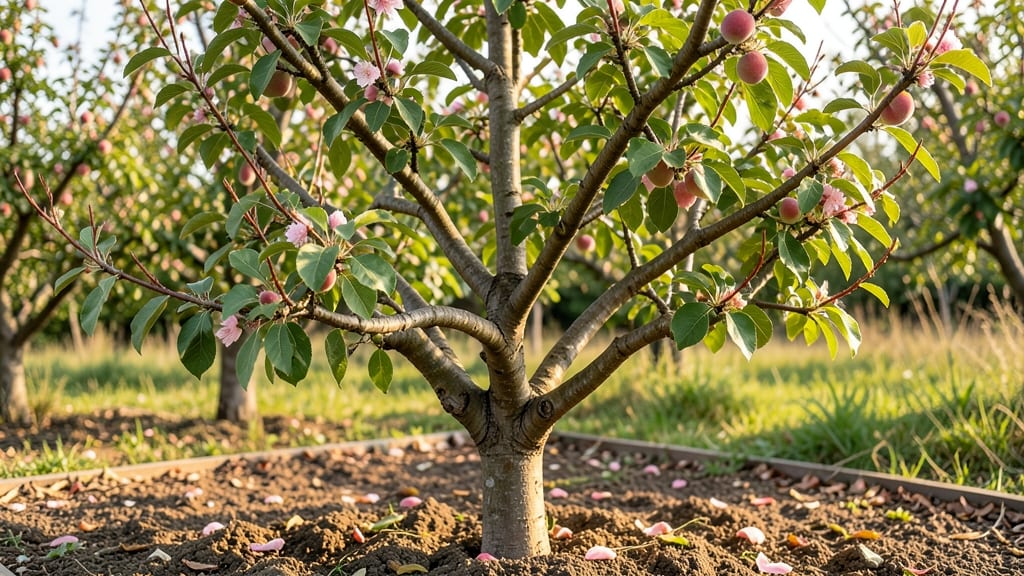
Peach tree branches need three strategic cuts to stay healthy year-round—skip them, and you risk weak growth, disease, or even losing limbs. ✂️ I’ve seen peach trees go from struggling to thriving in just one season after fixing these three common mistakes: timing, technique, and tool prep.
The biggest issue? Pruning at the wrong time—too early and you invite pests, too late and frost damage sets in. Start in late winter (before buds swell) to shape the tree, then do light cleanups in early summer to remove suckers and water sprouts.
Sterilize your tools between cuts to stop fungal spread—bleach or rubbing alcohol works perfectly.
You’ll notice stronger branches, more fruit, and fewer pests after just one season. The key is cutting back dead wood first, then thinning crowded limbs to improve airflow. A properly pruned peach tree produces 20-30% more fruit and resists disease better than neglected ones.
For frost-prone areas, wrap young trees in burlap after pruning to protect new growth. Monitor for brown spots or holes—those are signs of disease or pests, and they need immediate action. With these cuts, your peach tree stays productive for decades.
📚 In This Guide
- What you need
- Instructions
- Tips and common mistakes
- Wrapping up and next steps
What you need
- ● Pruning shears: Bypass pruners (sharp, clean, and disinfected with rubbing alcohol or bleach solution—1 part bleach to 9 parts water). Size: 6-8 inches for medium branches.
- ● Loppers: For thicker branches (½–1½ inches in diameter). Quantity: 1 pair.
- ● Pruning saw: For branches larger than 1½ inches. Type: Curved-tooth saw for clean cuts.
- ● Gloves: Heavy-duty, cut-resistant gloves (e.g., mechanics’ gloves or gardening gloves with reinforced palms).
- ● Disinfectant solution: As mentioned above (or hydrogen peroxide at 3%). Quantity: Small spray bottle or bucket.
- ● Rags or paper towels: For wiping tools between cuts.
- ○ Marking twine or flags: Optional but helpful for tagging branches to prune later.
- ● Pruning sealant: For large wounds (e.g., tree wound dressing or beeswax-based sealant). When to use: Only if the cut is >4 inches in diameter.
- ● Ladder or step stool: For tall trees (ensure it’s stable and rated for your weight).
- ● Safety glasses: Protect your eyes from debris.
- ● Notebook & pen: To sketch your tree’s structure before/after pruning.
- ● Compost bin or bag: For collecting pruned branches (great for mulch!).
Instructions for pruning peach tree branches year-round
Here's the simple, science-backed approach I use to keep my peach tree producing fruit for decades.
✂️ Step 1: Winter Dormancy Pruning (Late February)
When the tree is fully dormant but before buds swell, grab your sharp pruning shears and remove dead, diseased, or crossing branches first. These are the ones that look brown or mushy inside when you cut them—never leave these on the tree. I like to make cuts just outside the branch collar, where the branch meets the trunk, to prevent wounds from healing poorly.
Next, thin out branches that rub against each other. You'll see these as pairs growing toward each other—they'll eventually tear each other's bark. Aim to remove 20-30% of the tree's total branches in this step. This opens up the center for airflow and sunlight, which peach trees crave. Watch for water sprouts (fast-growing vertical shoots) and cut those back to a bud or remove them entirely—they drain energy from fruit production.
☀️ Step 2: Summer Light Pruning (June-July)
After the tree finishes flowering but before harvest, do a quick check for suckers (shoots growing from the base or roots) and overly vigorous branches. These are the ones growing like crazy with no fruit—cut them back to a leaf bud or remove them completely. I do this with my hands or small pruners, keeping cuts clean and angled slightly downward to shed water.
Look for branches with fruit spurs (short, stubby branches with clusters of fruit). If these are growing too densely, thin them out to improve air circulation. You'll see the best fruit on branches that get 6-8 hours of sunlight daily—this is your goal. Never remove more than 10% of the tree's branches in summer, or you'll stress the tree right before harvest.
⏰ Step 3: Post-Harvest Cleanup (Late August-September)
After you've picked the last peaches, do a final prune to remove any dead or dying branches that might have escaped you earlier. These are the ones with no leaves and dry, brittle wood. Cut them back to healthy wood or the branch collar. This is also the time to thin out the canopy if it's getting too dense—peach trees need light to penetrate all the way to the center.
Look for shoots growing from the trunk or scaffold branches (the main branches that form the tree's structure). These are called water sprouts or basal shoots, and they steal energy from fruit production. Cut them back to a bud or remove them entirely. This final cleanup ensures the tree goes into winter strong and ready to bloom again next spring.
Tips & tricks for pruning peach tree branches
Here's what nobody tells you about keeping your peach tree thriving year after year.
Timing is Everything: The winter pruning window in late February is critical—it's when the tree is fully dormant but before buds begin to swell. If you prune too early, you risk exposing the tree to late frosts that can damage new growth. I've seen trees pruned too late in March develop weak shoots that struggle with spring's demands. Mark your calendar for that precise window when the mercury consistently stays above freezing but before the buds show any signs of life.
Branch Collar Matters: When making cuts in Step 1, always cut just outside the branch collar—the swollen area where the branch meets the trunk. This is where the tree's natural healing begins. I learned this the hard way after making cuts too close to the trunk, which led to slow-healing wounds and potential entry points for disease. A good rule of thumb is to make your cut at a 45-degree angle just beyond where the branch collar begins to swell.
Sunlight Strategy: The goal of summer pruning is to ensure every branch gets that crucial 6-8 hours of sunlight daily. I use a simple trick: I stand in the center of the tree at midday and look outward. Any branch casting a shadow on another needs attention. This sunlight exposure is what helps peaches develop their signature sweetness, so don't be shy about removing branches that are blocking light from reaching the center.
Tool Maintenance: Your pruning shears should be as sharp as the day you bought them. Dull blades tear bark and create jagged wounds that heal poorly. I clean and sharpen my shears after each pruning session—it takes just a few minutes and makes all the difference. For larger branches, I use a pruning saw with a fine-toothed blade to make clean cuts without crushing the wood. Never use hedge trimmers or loppers that aren't designed for tree pruning.
Pro Tips for Peach Tree Branches
- Here's what nobody tells you about keeping your peach tree thriving year after year.
- Timing is Everything: The winter pruning window in late February is critical—it's when the tree is fully dormant but before buds begin to swell.
- Branch Collar Matters: When making cuts in Step 1, always cut just outside the branch collar—the swollen area where the branch meets the trunk.
Frequently asked questions
Got questions about managing peach tree branches? You’re not alone! Pruning can feel tricky, but these answers will help you keep your tree thriving year-round. Whether you're a first-time pruner or just need a quick refresher, we’ve got you covered.
When is the best time to prune peach tree branches?
The ideal window for pruning peach trees is late winter or early spring (just before buds swell but before leaves appear). This timing minimizes disease risk and encourages strong new growth. Avoid pruning in fall—it can leave wounds vulnerable to fungal infections. For minor shaping, summer pruning is fine, but skip heavy cuts.
How do I know which branches to remove from my peach tree?
Focus on these four types: dead, diseased, or crossing branches (remove first!), then thin out crowded growth to improve airflow. Cut back water sprouts (fast-growing vertical shoots) and any branches growing inward. Aim to keep the tree’s structure open—this boosts fruit production and sunlight exposure.
What should I do if my peach tree branches are bleeding sap after pruning?
Sap bleeding is normal for a few days post-prune, especially in early spring. To speed healing, apply pruning sealant (like Tanglefoot Tree Wound Pruning Seal) to larger cuts (>½ inch thick). Avoid sealant on small cuts—air drying is better. Keep the area clean to prevent bacterial infections, and water the tree well to support recovery.
Can I use peach tree branches for anything other than pruning?
Repurpose
branches creatively:
- Mulch: Chop small branches into wood chips for garden beds (avoid diseased wood).
- Firewood: Dry branches thoroughly for kindling or small fires (peach wood burns hot!).
- Art/Crafts: Use branches for wreaths, rustic decor, or even homemade trellises.
- Compost: Shred larger branches and add them to your compost pile (they break down slowly).
Why are my peach tree branches dying, even after pruning?
Dying branches could signal bacterial canker, fungal disease, or pest damage. Check for:
- Oozing cankers (bacterial canker) – Remove infected branches 6 inches below the lesion and sterilize tools.
- Powdery mildew or leaf spots – Prune affected foliage and apply copper fungicide.
- Boring insects (like peach tree borers) – Look for sawdust-like frass; treat with systemic insecticide.
If the tree is otherwise healthy, it may just need time to recover. Pro tip: Test soil pH (peach trees prefer 6.0–6.5)—nutrient deficiencies can mimic disease symptoms!
Wrapping up and next steps
Pruning your peach tree branches isn’t just about shaping—it’s a year-round investment in healthier fruit, stronger growth, and fewer pests. By mastering the three strategic cuts (summer thinning, winter shaping, and cleanup), you’re setting your tree up for success with minimal effort. 🌿
Ready to take the next step? Grab your pruners, review your notes, and schedule your first pruning session—whether it’s a quick summer trim or a thorough winter overhaul. Your peach tree (and future harvests) will thank you!