
Pruning
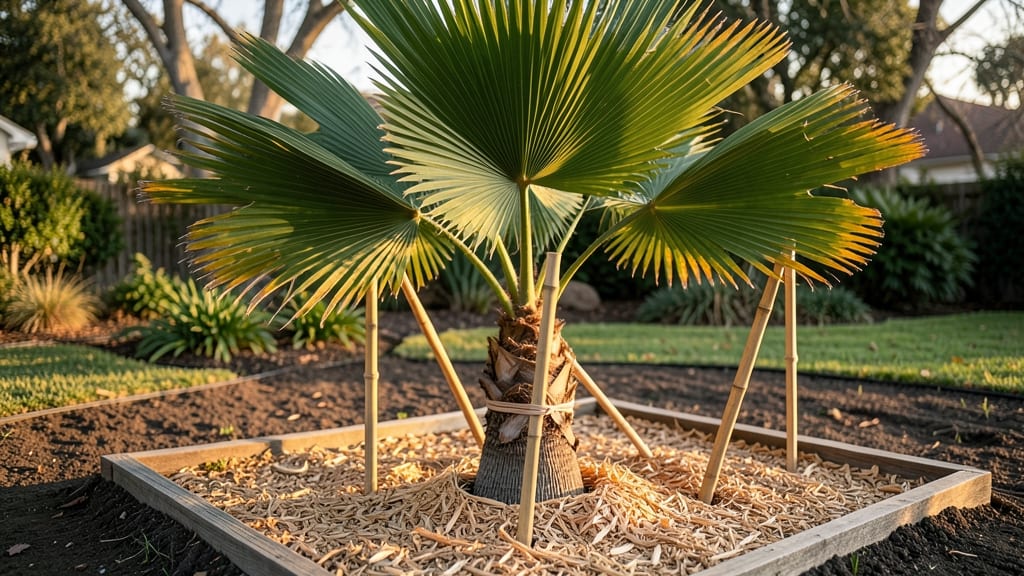
Staking palm trees isn’t just about preventing topples—it’s about giving them the confidence to grow straight and strong. 🌴 I’ve seen young palms lean dangerously in storms, but proper staking turns them into unshakable giants.
The right support keeps them upright, protects them from wind damage, and helps them recover from bends or breaks.
You’ll need 3-4 stakes per palm (depending on size), soft ties like horticultural tape or wide fabric strips, and a little patience. The stakes should be 1/3 the height of the palm and placed at a 45-degree angle, buried 6-12 inches deep for stability.
Avoid metal stakes—they can damage the trunk as the tree grows.
Once installed, check the ties every 2-4 weeks to loosen them as the palm thickens. Over-tightening can strangle the trunk, while too-loose ties won’t offer support. For hurricane-prone areas, add extra stakes or a windbreak—palms staked properly can survive 70+ mph winds without bending.
Royal palms, coconut palms, and young Mexican fan palms benefit most, but even mature trees can use support after storms. The key is adjusting as the tree grows—remove stakes gradually once the trunk is thick enough to stand alone.
With the right approach, your palms will grow tall, proud, and unshaken.
📚 In This Guide
- What you need
- Instructions
- Tips and common mistakes
- Wrapping up and next steps
What you need
- ● Stakes: 3–5 wooden, metal, or fiberglass stakes (4–6 feet long, 1–2 inches in diameter). Pro tip: 💡 Use treated wood or metal stakes for durability against rot or rust.
- ● Strap or Tie: 3–5 adjustable tree ties or wide nylon straps (3–4 inches wide) to avoid damaging the trunk.
- ● Hammer or Mallet: For driving stakes into the ground.
- ● Measuring Tape: To ensure stakes are spaced evenly (about 12–18 inches from the trunk).
- ● Gloves: Heavy-duty work gloves to protect your hands.
- ○ Shovel (Optional but Helpful): For digging holes or adjusting stake placement.
- ● Cable ties or zip ties (for securing straps temporarily).
- ● Concrete mix (if extra stability is needed for heavy palms).
- ● Tree guard or trunk wrap (to protect the palm from friction).
- ● Level or string line (to ensure stakes are straight and even).
How to stake palm trees for stability and strong growth
Here's the method I rely on to keep young palms upright and thriving—tested across windy coastal climates and container gardens alike.
🪴 Step 1: Choose the Right Stakes and Materials
For 4 palm trees, you'll need 4 bamboo stakes (3-4 feet tall) or sturdy wooden dowels, plus soft garden twine or wide nylon straps. Avoid metal stakes—they can damage tender trunks as the palm grows. I like bamboo because it's flexible enough to adjust as the tree sways but rigid enough to hold firm. Cut stakes to 2/3 the height of your palm to allow natural movement without over-restriction.
Dig a small hole near the base of the palm—about 6 inches deep and 3-4 inches from the trunk. Angle the stake slightly away from the tree (about 15-20 degrees) so it doesn't interfere with the trunk's natural growth. This slight lean mimics how palms grow in nature, preventing stress marks. Tap the stake firmly into the hole until it stands upright but doesn't wobble.
🌿 Step 2: Secure the Trunk Without Restricting Growth
Wrap the garden twine or strap around the trunk at one-third of its height, leaving a 1-inch gap between the tie and the bark. This small space prevents girdling as the palm thickens. I use a simple overhand knot followed by a figure-eight pattern to distribute pressure evenly. Pull the twine just tight enough to hold the trunk against the stake—you should be able to fit a pencil between the trunk and stake.
Add a second tie 6-12 inches below the first, creating an "X" shape when viewed from the side. This crisscross design provides stability without binding the trunk. Avoid wrapping the ties too tightly; new growth can be delicate, and constriction leads to stunted development or even bark damage. Check the ties weekly to ensure they haven't loosened or dug into the trunk.
☀️ Step 3: Position for Wind Resistance and Natural Movement
Place the stake on the leeward side of the palm—the side where wind typically pushes the tree. In coastal areas, this is usually the inland-facing side. The slight angle of the stake (away from the trunk) allows the palm to sway naturally, which actually strengthens its stem over time. You'll see this in mature palms—they're rarely perfectly straight because their movement builds resilience.
For container-grown palms, stake them immediately after repotting to prevent toppling as roots establish. In ground-planted palms, wait until the tree reaches 3-4 feet tall or shows signs of leaning before staking. This timing ensures the palm has enough energy to grow while still needing support. If your area experiences strong winds, consider adding a second stake on the opposite side for extra stability.
⏰ Step 4: Monitor and Adjust as the Palm Grows
Check the stakes and ties every 4-6 weeks to ensure they're still secure but not too tight. As the palm grows, you'll need to add more ties—aim for 3-4 ties total, spaced evenly up the trunk. When the palm reaches 6-8 feet tall, it should no longer need staking if the stakes were installed correctly. The goal is to train the trunk to stand on its own while preventing permanent bending.
Remove stakes gradually to avoid shocking the palm. Start by loosening the ties and leaving the stakes in place for 2-3 weeks to let the trunk adjust. Then remove the stakes completely. You'll know it's time when the palm holds its position even in gentle breezes. If you rush this process, the tree may lean permanently or snap under wind stress.
Tips & tricks for sturdy palm tree support
These practical insights will help you avoid common pitfalls and ensure your palms grow strong and straight.
Material Selection: When choosing stakes, opt for bamboo or wooden dowels—they're lightweight yet sturdy enough to handle coastal winds. I've found that bamboo's natural flexibility allows the stake to bend slightly with the palm, reducing stress on the trunk. Avoid metal stakes entirely; they can cause unsightly marks as the palm grows. For extra durability in sandy soils, consider treating wooden stakes with a non-toxic sealant to prevent rot.
Tie Placement Technique: In Step 2, when securing the trunk, remember that the one-inch gap between the tie and bark is non-negotiable. This space prevents girdling, where the tie cuts into the trunk as it thickens. I've seen palms develop permanent scars from ties that were too tight—trust me, it's worth the extra second to check with that pencil test. For larger palms, add a third tie at one-third of the remaining height to create an even distribution of support.
Wind Direction Strategy: The leeward side placement in Step 3 is crucial, but here's what nobody tells you—if your palms face multiple wind directions, consider rotating the stake position every 3-4 months to prevent one-sided growth. This mimics how palms naturally adjust to changing wind patterns. For container palms, position the stake on the side opposite the heaviest foliage to maintain balance.
Growth Monitoring: Those 4-6 week checks in Step 4 are your best defense against over-restriction. I've noticed that ties often loosen after heavy rains—make it a habit to check after storms. When adding new ties, space them 6-8 inches apart vertically to distribute pressure evenly. The goal is to create a "scaffolding" effect that supports growth without limiting it.
Pro Tips for Palm Tree Staking
- These practical insights will help you avoid common pitfalls and ensure your palms grow strong and straight.
- Material Selection: When choosing stakes, opt for bamboo or wooden dowels—they're lightweight yet sturdy enough to handle coastal winds.
- Tie Placement Technique: In Step 2, when securing the trunk, remember that the one-inch gap between the tie and bark is non-negotiable.
Frequently asked questions
Got questions about keeping your palm trees standing tall? Here are some of the most common concerns—and their answers—to help you stake like a pro!
When is the best time to stake a palm tree?
Stake your palm tree immediately after planting—especially if it’s young or in windy areas. The roots need time to establish, and stakes provide critical support during the vulnerable first 6–12 months. Avoid staking mature trees unless they’re already leaning or unstable.
How long should I leave the stakes in place?
Most palm trees can have their stakes removed after 1–2 years, once the root system is strong enough to support the trunk. Check for stability by gently tugging the tree—if it wobbles, leave the stakes a little longer. Over-reliance on stakes can weaken natural trunk strength.
Can I use bamboo stakes instead of metal or wooden ones?
Bamboo stakes are a great budget-friendly alternative—they’re flexible, lightweight, and biodegradable. Just ensure they’re thick enough (at least 1–2 inches in diameter) and secured tightly with soft ties (like tree straps) to avoid damaging the trunk as the tree grows.
What if my palm tree keeps leaning even with stakes?
If your tree persists in leaning, the issue might be root-bound or uneven soil compaction. Loosen the soil around the roots, add support stakes at a slight angle (toward the lean), or consider a guywire system for extra stability. If the trunk is already bent, it may not straighten—focus on preventing further damage.
Do I need to stake a palm tree in a sheltered location?
Not necessarily! If your palm is in a low-wind area (like a courtyard or screened patio), staking may not be essential—especially for species like Areca or Kentia, which grow slowly. However, staking can still help if the tree is top-heavy (e.g., after new fronds emerge) or if you’re planting in heavy clay soil.
Wrapping up and next steps
Mastering palm tree staking is your secret weapon for growing tall, healthy palms without the worry of them toppling over—especially in windy conditions! 🌴 With the right materials, techniques, and a little patience, you’ll give your palms the sturdy support they need to thrive.
Remember, consistency is key, so check and adjust stakes regularly as your tree grows.
Ready to take action? Start by assessing your palm’s needs today! Whether you’re prepping for a storm or just ensuring long-term stability, proper staking is a small effort with big rewards. Your palms will thank you—and so will your peace of mind! 🌿✨