
Pruning
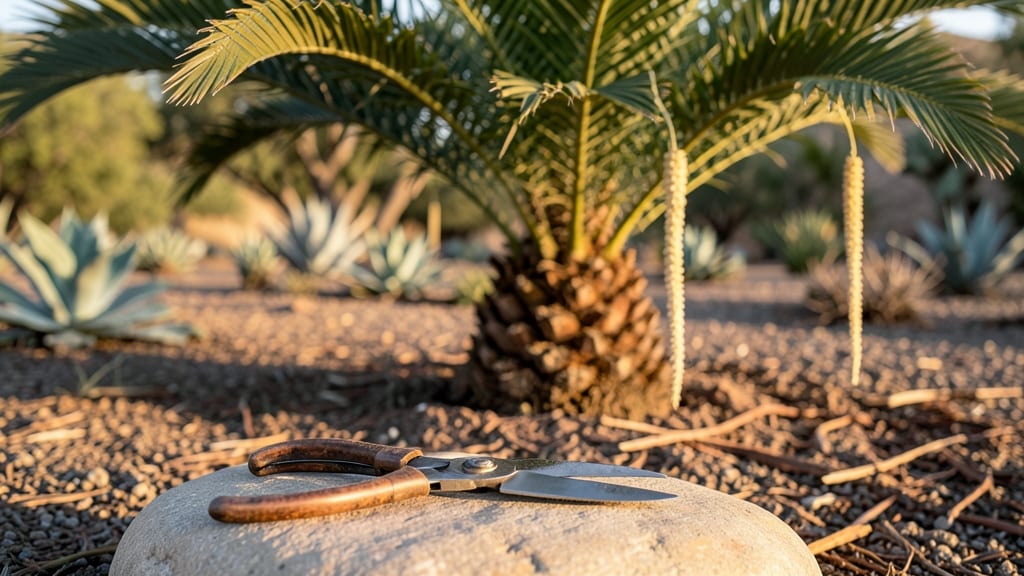
To identify male palm trees, look for long, drooping flower stalks called panicles that produce pollen, while female palms develop round fruit clusters. Male palms also lack the thickened base found on female flower stalks.
Male palm trees produce these distinctive panicles because their sole reproductive purpose is to create pollen clouds for fertilization. 🌿 Unlike female palms that invest energy in developing fruit, male palms focus entirely on flower production, which is why their stalks appear thinner and more elongated.
This difference becomes especially noticeable during flowering season, typically spring or summer, when male palms release visible pollen clouds that can even trigger seasonal allergies. The absence of fruit clusters is another key identifier, as female palms will develop berries or coconuts after successful pollination.
For practical identification, examine both the flower structure and overall growth patterns. Male palms often grow slightly faster since they don't allocate resources to fruit development. Their leaves may also appear slightly narrower at the base compared to female palms, though this varies by species.
Always check multiple trees in your area, as some palms like the Canary Island date palm can be dioecious (separate male and female trees) while others like the sago palm are monoecious (both sexes on one plant).
💡 In This Article
- Key Botanical Differences Between Male and Female Palm Flowers
- Field Guide: Visual and Growth Pattern Clues for Male Palms
Key botanical differences between male and female palm flowers
Male palm flowers evolve their distinctive panicle structure because their primary reproductive function is pollen production. These flower clusters—often 1-3 feet long—hang downward to maximize pollen dispersal by wind or insects. The individual flowers are tiny, packed tightly together, and lack the fleshy ovary found in female flowers.
This design allows male palms to produce massive quantities of pollen, sometimes visible as yellow clouds when disturbed. 🌿
The pollen itself contains 2-4 million grains per gram, far exceeding the needs of a single palm since it must fertilize female trees nearby. This evolutionary adaptation explains why male palms develop thinner stalks—they prioritize quantity over structural support.
In contrast, female palms allocate energy to developing fruit, creating thicker, more robust flower stalks with swollen bases that house the developing seeds. The contrast is especially striking in species like the coconut palm, where male flowers produce 100-200 times more pollen than female flowers need.
This reproductive specialization creates visible growth differences. Male palms often develop 20-30% faster in height since they don't divert resources to fruit production. Their leaves may also appear slightly more upright, as the plant directs energy upward rather than outward for fruit development.
The leaf bases typically remain narrower too, since female palms need broader leaf structures to support developing fruit clusters. This growth pattern becomes most apparent during the first 5-7 years of a palm's life.
Seasonal timing also reveals gender differences. Male palms flower 1-2 weeks earlier than females in most species, as they must release pollen before female flowers become receptive. The flowering cycle typically occurs during spring or early summer, when humidity and temperatures average 75-85°F—ideal conditions for pollen viability.
In tropical regions, some male palms may flower twice yearly, while females often flower annually or biennially due to the energy demands of fruit production.
Understanding these botanical mechanisms helps explain why male palms appear "weaker" structurally. Their flower stalks lack the fibrous reinforcement found in female stalks, which must support developing fruit.
The trade-off is clear: male palms sacrifice structural integrity for reproductive output, while females prioritize fruit development at the cost of slower growth rates. This fundamental difference forms the basis for all visual identification methods. 🌱