
Blooming
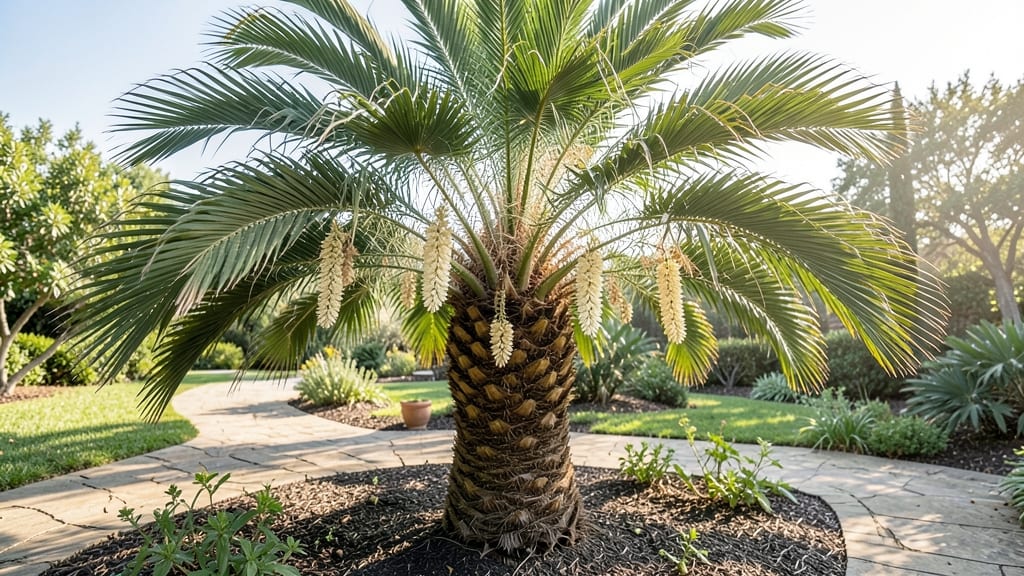
Palm trees grow long at varying rates by species, with some like the Mediterranean fan palm reaching 30-50 feet in 10-15 years, while others, such as the coconut palm, may take 20+ years to hit 60-100 feet. Growth speed depends on climate, soil, and care conditions.
Understanding how tall palm trees get depends on their species and growing conditions. 🌴 The Mediterranean fan palm's rapid growth contrasts sharply with the slow climb of coconut palms, which can take decades to reach their towering heights.
In ideal tropical climates, some species like the Mexican blue palm can even grow 3-5 feet per year during their prime, while temperate-zone palms often grow more slowly.
Proper soil drainage, consistent moisture, and full sun exposure significantly accelerate vertical growth, making these factors just as important as species selection when planning your landscape.
For those eager to see quick results, choosing fast-growing varieties and providing optimal care can make a noticeable difference in just a few years. The key is balancing patience with the right conditions—some palms simply need more time to reach their full potential height.
💡 In This Article
- Factors Affecting Palm Tree Height Growth
- Fastest-Growing Palm Tree Species for Quick Height
Factors affecting palm tree height growth
Palm tree height growth is primarily driven by their native climate zones. Tropical species like the coconut palm thrive in warm, humid environments where temperatures stay above 70°F year-round, allowing them to grow 2-3 feet annually during optimal conditions.
In contrast, temperate-zone palms such as the Mediterranean fan palm grow more slowly in cooler climates, typically reaching 1-2 feet per year due to seasonal dormancy. The key difference lies in photosynthesis efficiency—tropical palms maintain continuous growth cycles, while temperate species pause during winter months.
Soil composition plays a critical role in vertical development. Well-draining, slightly acidic soils (pH 5.5-6.5) with organic matter promote root expansion, which directly supports trunk elongation. For example, the windmill palm grows best in sandy loam soils where excess moisture drains quickly, preventing root rot that stunts growth.
Conversely, heavy clay soils can restrict root penetration by up to 30%, limiting a palm's ability to absorb nutrients and water needed for rapid height increases. Regular soil testing can reveal deficiencies that might be holding back your palm's growth potential.
Water availability creates another critical growth factor. While most palms prefer consistent moisture, overwatering can be just as damaging as drought.
The Mexican blue palm, for instance, grows 3-5 feet per year when given 1-1.5 inches of water weekly during its first five years, but excessive irrigation leads to weak, spindly trunks that struggle to support mature height.
Drip irrigation systems provide the most consistent moisture without oversaturating the root zone, which is particularly important in arid climates where evaporation rates exceed 0.25 inches per day.
Sunlight exposure directly influences a palm's growth rate through photosynthesis. Full sun conditions (6+ hours daily) maximize energy production, allowing species like the date palm to reach 60-100 feet in 20+ years.
In shaded conditions, growth rates can drop by 40-50% as the palm diverts energy to leaf production rather than trunk elongation.
The trade-off is visible in the leaf structure—sun-adapted palms develop thicker, more rigid leaves that support their vertical growth, while shaded palms often produce wider, floppier fronds that indicate stunted development.
Nutrient availability also creates measurable differences in growth patterns. Palm trees require specific micronutrients like magnesium and potassium for proper cell division in the growing tip. A deficiency in magnesium, for instance, can reduce growth rates by 25-30% as the palm struggles to produce chlorophyll efficiently.
Regular foliar feeding with palm-specific fertilizers containing 8-12-8 NPK ratios (nitrogen-phosphorus-potassium) can restore optimal growth conditions, particularly during the spring and summer growing seasons when most species experience their fastest height increases.
Seasonal variations further complicate growth predictions. Most tropical palms experience a natural slowdown during monsoon seasons when heavy rains can waterlog soils, while temperate species may enter dormancy during winter months. Understanding these cycles helps gardeners time pruning and fertilization for maximum impact.
For example, pruning dead fronds in late winter allows temperate palms to redirect energy to new growth as temperatures rise, potentially adding 6-12 inches more height during the subsequent growing season compared to unpruned counterparts.