
Trees
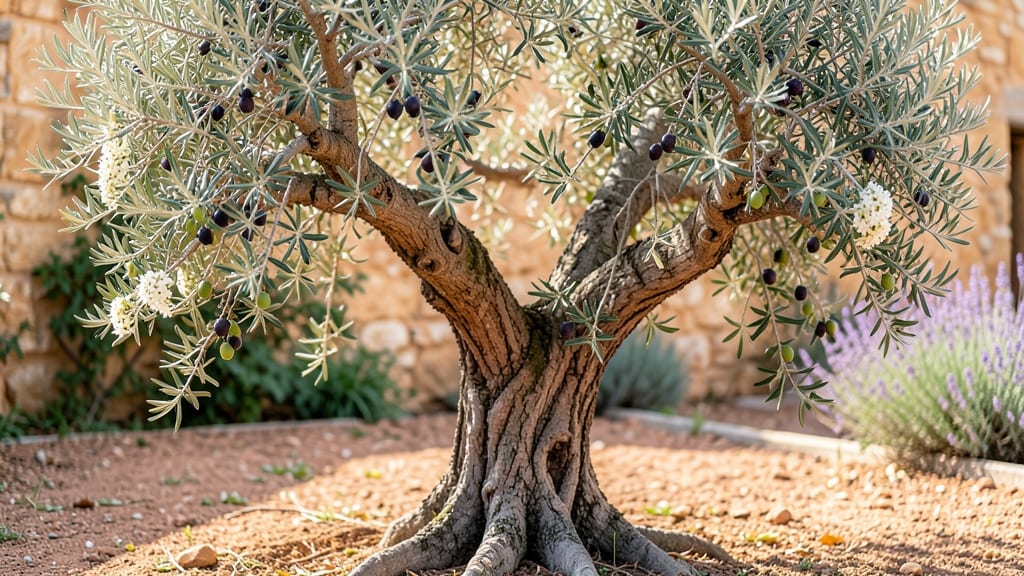
The olive tree hardy zone ranges from 8 through 10, where mature trees survive down to 20°F (-6.7°C), while younger trees need protection when temperatures drop below 30°F (-1.1°C). Strategic placement and mulching can help push their limits in slightly cooler climates.
The olive tree hardy zone determines whether your local climate is suitable for growing olives outdoors year-round. 🌳 For instance, coastal areas often experience milder winters due to ocean currents, allowing olives to thrive in zones 7b and 8a with proper care.
The key difference between mature and young trees lies in their root systems—established trees have deeper roots that insulate them better against brief cold snaps, while saplings are far more vulnerable to frost damage.
If you're in a marginal zone, consider these practical solutions: wrapping the trunk with burlap, using thick mulch around the base, or even growing olives in large containers that can be moved indoors during winter.
Some cold-hardy varieties like 'Arbequina' or 'Frantoio' can handle slightly cooler temperatures, making them excellent choices for gardeners pushing the limits of olive cultivation.
💡 In This Article
- USDA Zones for Olive Trees: Exact Cold Tolerance Limits
- Extending Olive Tree Growth in Marginal Zones
USDA zones for olive trees: exact cold tolerance limits
Olive trees naturally thrive in USDA zones 8 through 10, where winter temperatures rarely drop below 20°F (-6.7°C) for mature specimens.
The key difference lies in their biological adaptation: mature trees develop a robust root system that can extend 6-8 feet deep, allowing them to access groundwater and maintain cellular integrity during brief cold snaps.
Zone 8 experiences winters typically between 10-20°F (-12 to -6.7°C), while zone 10 rarely sees temperatures below 30°F (-1.1°C), making it ideal for olive cultivation. 🌿
The critical threshold occurs when temperatures fall below 28°F (-2.2°C) for extended periods—this triggers cellular damage in olive leaves and branches through a process called "freeze dehydration." Young trees, with their shallow root systems, are particularly vulnerable because their water uptake can't keep pace with frost-induced moisture loss.
In zone 7, where winters can dip to 0-10°F (-18 to -12°C), olives require winter protection or may only survive as container plants. Coastal areas often provide a 5-10°F advantage over inland regions due to maritime influence.
Duration matters just as much as temperature. A single night at 20°F (-6.7°C) may cause only superficial damage, while prolonged exposure below 25°F (-3.9°C) can kill the tree's cambium layer—the growth tissue responsible for new bark and wood formation.
This explains why mature trees often recover from brief cold snaps while young plants may perish. The olive's native Mediterranean climate, with its mild, wet winters, has shaped this delicate balance between cold tolerance and growth requirements. 🍃
Regional microclimates create significant variations within these zones. For example, Los Angeles (zone 10) can experience 30°F (-1.1°C) winters, while nearby inland areas may drop to 20°F (-6.7°C).
Similarly, Athens, Greece (zone 9) sees winters around 35-40°F (2-4°C), while higher elevations within the same region may fall to 25°F (-3.9°C). These microclimates explain why some gardeners successfully grow olives in zone 7b with proper winter care, while others in zone 8a struggle without protection.
Understanding these temperature thresholds helps explain why olive trees in colder climates often exhibit stunted growth or leaf damage in early spring. The plant's metabolic processes slow dramatically below 50°F (10°C), and any cold damage during dormancy can take months to manifest as brown, crispy leaves.
This delayed reaction is why many gardeners in marginal zones prefer cold-hardy varieties like 'Arbequina' or 'Frantoio,' which have demonstrated better recovery from winter stress. 🌱
For precise planning, consult your local USDA zone map and compare it with your area's historical low temperatures. Most weather services provide 10-year averages that account for climate variability—this data helps determine whether your olive tree will need winter protection or can thrive outdoors year-round.
The 30°F (-1.1°C) threshold for young trees isn't absolute; with proper mulching and wind protection, some gardeners successfully grow them in zone 7 with careful winter management.