
Pruning
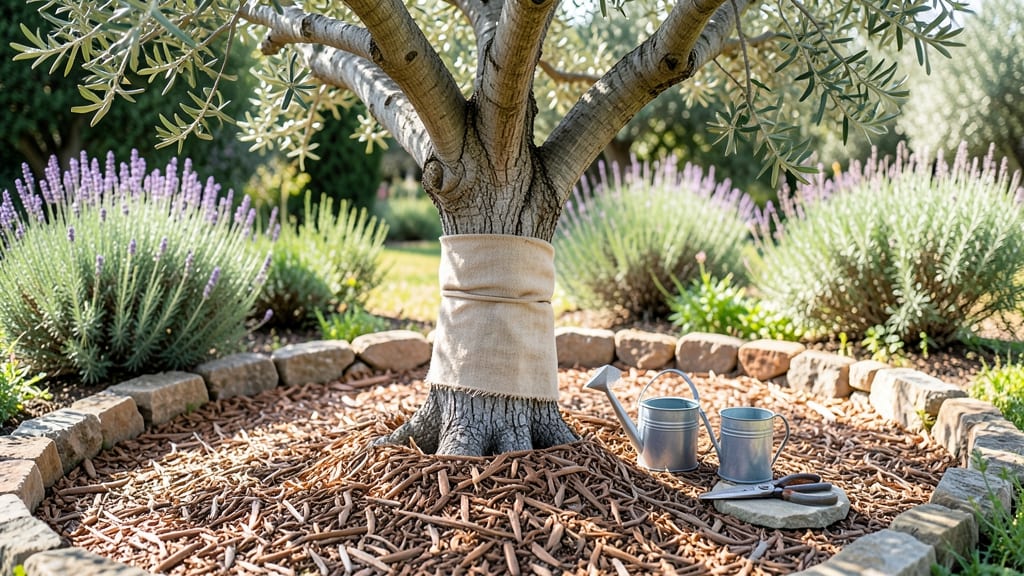
Olive tree care in winter transforms brittle branches into sturdy frameworks that survive frost and produce heavier harvests next year. 🌿 I’ve seen olive trees go from ragged to robust in just a few cuts—when done right. The key is timing: prune after the first hard frost but before new growth starts, usually in late winter or early spring.
You’ll need sharp pruning shears, a ladder (for taller trees), and a clear day to assess the branches. Focus on removing dead wood, crossing limbs, and any branches growing inward—these steps improve airflow and sunlight penetration.
For container-grown olives, prune more aggressively since they have less root space to support new growth.
After pruning, protect young trees with a thick layer of mulch (3-4 inches) to insulate roots from freezing temperatures. Water sparingly—olives need less in winter, and soggy soil can rot roots. In colder climates, wrap the trunk with burlap or use frost cloth to shield tender bark from harsh winds.
Common mistakes include pruning too late (which encourages tender new growth that can’t survive frost) or cutting too much at once (which stresses the tree). If your tree is in a temperate zone, you might skip winter pruning entirely and wait until late spring.
The goal? A tree that wakes up in spring ready to thrive.
📚 In This Guide
- What you need
- Instructions
- Tips and common mistakes
- Wrapping up and next steps
What you need
- ● Pruning shears: Bypass pruners (8-10" blades) for clean cuts on small branches (1/4"–3/4" diameter). Anvil pruners are a budget-friendly alternative but can crush branches.
- ● Loppers: 10-12" bypass loppers for medium branches (3/4"–2" diameter). Look for ratcheting handles for extra leverage.
- ● Pruning saw: Curved-tooth pruning saw for thick branches (2"+ diameter). A foldable design saves space.
- ● Gloves: Heavy-duty, cut-resistant gloves (e.g., mechanics or gardening gloves) to protect hands from thorns and sharp tools.
- ● Disinfectant: 70% isopropyl alcohol or 10% bleach solution (1 part bleach to 9 parts water) to sterilize tools between cuts and prevent disease.
- ○ Pruning sealant: Optional but recommended for large cuts (>1" diameter). Use a tree wound paint or pruning wax to seal and protect.
- ● Ladder or step stool: Aluminum extension ladder (12-16 ft) or a stable step stool for taller trees. Ensure it’s rated for your weight.
- ● Heavy-duty trash bags: 10-20 gallon bags for collecting pruned branches and debris.
- ● Work gloves with grip: For added comfort during extended pruning sessions.
- ● Safety glasses: Protect your eyes from debris, especially when using a pruning saw.
- ● Tree tie or twine: For securing branches if you’re doing structural pruning.
- ● Mulch (straw or wood chips): 2-3 inches of organic mulch to insulate roots after pruning.
- ● Watering can or hose: For a light post-pruning watering if your tree is in a dry climate.
Instructions for winter pruning your olive tree
Here’s how to prep your olive tree for winter—keeping it healthy while protecting it from frost.
🌿 Step 1: Time Your Pruning for Late Winter
Prune your olive tree after the last frost but before new growth begins—typically late February to early March in most climates. This timing ensures the tree isn’t stressed by cold while still having time to heal before spring. If you live in a warmer zone, wait until mid-March when temperatures stay above 40°F at night.
Olive trees are semi-dormant in winter, so they handle pruning better than in active growing seasons. Look for dry, brown leaves and bare branches—these are your cues that the tree is resting. Avoid pruning in deep winter (December–January), as the tree’s energy is focused on survival, not recovery.
✂️ Step 2: Remove Dead, Diseased, or Weak Branches
Start by cutting out any dead, broken, or diseased branches using clean, sharp pruners. Olive trees are prone to fungal issues, so sterilize your tools with rubbing alcohol between cuts. Look for blackened wood, peeling bark, or oozing sap—these are red flags. Remove these branches all the way back to the trunk or to a healthy lateral branch.
Next, thin out crossing or rubbing branches—these create wounds where pests and diseases can enter. Aim for an open canopy that allows sunlight and air to circulate. If a branch is less than ½ inch thick, you can snap it off by hand; thicker branches need pruners. Never leave stubs—always cut just outside the branch collar (the swollen area where the branch meets the trunk).
☀️ Step 3: Shape for Sun Exposure and Airflow
Olive trees thrive in full sun, so prune to open the center of the tree to 6–8 hours of direct sunlight daily. Focus on thinning out dense growth rather than just cutting back the ends—this prevents a "mushroom-shaped" canopy. Remove upward-growing branches that compete with the main structure, and shorten overly long branches by ⅓ to encourage bushier growth.
Step back and visualize sunlight paths—if you can’t see light reaching the inner branches, keep pruning until you do. Avoid heavy topping (cutting the top flat), as this stresses the tree. Instead, prune selectively to maintain a natural, balanced shape. If your tree is young, focus on removing water sprouts (fast-growing, weak shoots) to direct energy into stronger structure.
🪴 Step 4: Protect Against Frost and Wind
After pruning, cover the tree’s base with 3–4 inches of mulch (like wood chips or straw) to insulate roots from freezing temperatures. Avoid piling mulch against the trunk—keep it 2–3 inches away to prevent rot. For young trees or container-grown olives, wrap the trunk with burlap or frost cloth if nighttime temps drop below 25°F, but remove it by midday to avoid overheating.
If you’re in a windy area, consider staking taller branches to prevent them from snapping under ice or heavy snow. Olive trees are drought-tolerant but hate soggy roots, so ensure your drainage is excellent—especially if your tree is in a pot. Water deeply but infrequently in late winter (every 4–6 weeks) unless you’re in a drought-prone zone, where you might need to water monthly.
⏰ Step 5: Monitor and Adjust for Spring Growth
After pruning, watch for new buds—they’ll appear as small, green swellings along the branches in early spring. If you see yellowing leaves or stunted growth, you may have pruned too late or too aggressively. Olive trees are resilient, but over-pruning can weaken them for the next season. If this happens, skip heavy pruning next year and focus on light maintenance.
Once temperatures consistently stay above 50°F, fertilize with a balanced, slow-release fertilizer (like 10-10-10) to support new growth. Avoid high-nitrogen fertilizers, which encourage soft, frost-sensitive growth. Prune again in summer (June–July) if needed for shape or size control, but keep cuts small and minimal to avoid stress before winter.
Tips & tricks for winter olive tree pruning
Here's what I learned after years of winter pruning—these tricks keep your olive tree thriving through frost.
Timing is Everything: The late February to early March window is perfect because olive trees are semi-dormant during this period. If you're unsure about frost dates, check your local weather service or ask at a nearby nursery. I've seen trees stressed when pruned too early—wait until you see those dry, brown leaves as your cue. For container-grown trees, move them to a sheltered location if nighttime temperatures drop below 40°F, even after pruning.
Tool Prep Prevents Problems: Sterilizing your pruners between cuts is non-negotiable. I keep a small bottle of rubbing alcohol in my tool bag specifically for this purpose. Olive trees are particularly susceptible to fungal infections through open wounds, so don't skip this step. For larger branches, use a pruning saw—never try to cut branches thicker than ½ inch with hand pruners, as this can damage the tree and make clean cuts impossible.
Shape with Purpose: When you're thinning out dense growth in Step 3, remember that olive trees need that 6-8 hours of sunlight daily. I like to visualize the tree as a dome—you want sunlight to reach all the way to the center. For young trees, focus on removing those water sprouts (the fast-growing, weak shoots) to encourage stronger structural growth. These shoots compete with the main branches for nutrients and often result in weak, leggy growth.
Mulch Like a Pro: That 3-4 inches of mulch around your tree's base isn't just decoration—it's insulation. Use organic materials like wood chips or straw, but keep it 2-3 inches away from the trunk to prevent rot. For container-grown trees, consider adding a layer of bubble wrap around the pot before mulching—this adds extra protection against freezing temperatures. I've seen container trees suffer when their roots freeze, even when the above-ground parts look fine.
Pro Tips for Olive Tree Care Winter
- Here's what I learned after years of winter pruning—these tricks keep your olive tree thriving through frost.
- Timing is Everything: The late February to early March window is perfect because olive trees are semi-dormant during this period.
- Tool Prep Prevents Problems: Sterilizing your pruners between cuts is non-negotiable.
Frequently asked questions
Got questions about winterizing your olive tree?
You’re not alone! Here are answers to the most common concerns—from pruning timing to frost protection—so you can keep your tree thriving through the cold months.
When is the best time to prune an olive tree in winter?
Prune your olive tree after the first hard frost (typically late winter, around February or March in most U.S. zones). This timing helps avoid late-season growth that’s vulnerable to cold snaps. Wait until temperatures stabilize above freezing to prevent shock. Pro tip: If you missed winter pruning, light shaping in early spring is better than skipping it entirely!
How do I protect my olive tree from frost damage?
Olive trees are frost-resistant but young or potted trees need extra care. Use burlap wraps or frost cloth to shield the trunk and branches. Mulch the root zone with straw or wood chips (3–4 inches deep) to insulate roots. For potted trees, move them to a sheltered spot or indoors if temps drop below 20°F. Pro tip: Avoid watering before a freeze—wet foliage can turn to ice and damage branches!
Should I remove dead branches now or wait until spring?
Remove dead, diseased, or crossing branches anytime—even in winter—but avoid heavy pruning until after dormancy. Deadwood can harbor pests, so clean cuts with sterilized tools prevent spread. Wait for spring to shape the tree or reduce size to avoid stressing it during dormancy. Pro tip: Tag branches to prune in spring if you’re unsure whether they’re dead or dormant!
Can I plant an olive tree in winter?
Winter is a great time to plant olive trees in mild climates (zones 8–10). Bare-root trees planted in late fall or early winter establish roots before spring growth. In colder zones, wait until late winter/early spring (after the last frost) to avoid transplant shock. Water deeply after planting and mulch heavily to retain moisture and warmth. Pro tip: Choose a sunny, well-draining spot—olives hate soggy roots!
What if my olive tree’s leaves turn brown in winter?
Brown leaves are normal in winter dormancy, but crispy or blackened leaves signal frost damage. Prune affected branches in spring. If the tree looks otherwise healthy (new growth in spring), it’s likely just shedding old foliage. Pro tip: Avoid fertilizing in winter—it encourages tender growth that freezes easily!
Are there olive tree varieties that handle winter better?
Yes! Arbequina and Manzanillo varieties are more cold-hardy (down to 10–15°F). For colder zones (below 10°F), consider ‘Sylvestra’ or ‘Frantoio’, which tolerate brief chills. Always check your zone’s microclimate—sheltered spots can extend hardiness by 5°F or more. Pro tip: Mature trees often handle frost better than young ones—patience pays off!
Wrapping up and next steps
Caring for your olive tree in winter doesn’t have to be daunting—with the right pruning techniques and a touch of frost-resistant know-how, you’ll set the stage for vibrant growth and abundant harvests come spring! 🌿✨ Remember, the key is timing (prune before the first frost), precision (focus on open centers and dead branches), and patience (let your tree recover naturally).
Now that you’re armed with expert tips, roll up your sleeves and give your olive tree the winter TLC it deserves! Next, why not explore seasonal feeding strategies or identifying common olive tree pests to keep your tree thriving year-round?