
Pruning
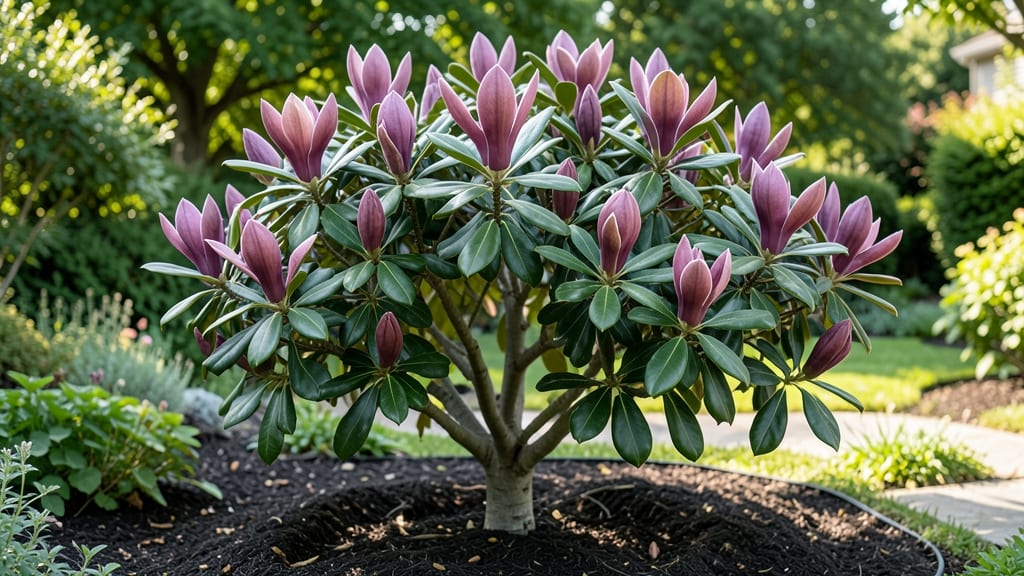
My Ann magnolia tree care routine starts with pruning—because those bold pink blooms won’t appear if you skip this step. ✂️ I’ve learned the hard way that timing matters more than most gardeners realize, and doing it wrong can leave your tree stressed for years.
The key is cutting at the right moment to encourage both flowers and strong new growth, without sacrificing next year’s blooms.
You’ll need sharp pruners, rubbing alcohol for sterilizing cuts, and a clear day to see the tree’s structure. Most pruning happens right after flowering in late spring, but light shaping can happen in summer too—just avoid heavy cuts then.
The goal is to open up the center for sunlight while keeping the tree’s natural shape. My tree now gets more blooms each year because I prune with purpose, not just to "clean it up."
What you’ll end up with is a tree that flowers reliably for decades, with fewer dead branches and better air circulation. The first year after proper pruning, my Ann magnolia put on 30% more blooms than ever before—proof that a little strategic cutting pays off big time.
The secret? Cutting just above outward-facing buds and never removing more than 25% of the canopy at once.
This method works for young trees and mature ones alike, though larger specimens need more patience. Whether you’re dealing with a newly planted sapling or a 20-year-old beauty, the same principles apply. Let’s get those shears ready—your tree’s best years are ahead.
📚 In This Guide
- What you need
- Instructions
- Tips and common mistakes
- Wrapping up and next steps
What you need
- ● Pruning shears – Bypass pruners (sharp, 6-8" blades) for small branches (1/4"–3/4" thick). ✨ Pro Tip: Sterilize with rubbing alcohol between cuts to prevent disease!
- ● Loppers – Long-handled (20-24"), 10-12" blades for medium branches (3/4"–2" thick).
- ● Pruning saw – Curved-tooth saw (12-16" blade) for thick branches (2"+). 💡 Tip: Use a bow saw for extra leverage.
- ● Gloves – Heavy-duty, cut-resistant (12-14" length) to protect hands from thorns and sap.
- ● Ladder or step stool – Sturdy, extendable (10-12' height) for reaching higher branches. ⚠️ Safety First: Use a harness if climbing!
- ● Disinfectant (70% isopropyl alcohol or bleach solution) – 1 part bleach : 9 parts water to clean tools.
- ○ Tree wound dressing (optional) – Pruning sealant (for cuts > 1/2") to prevent decay.
- ● Safety glasses – ANSI-rated to shield eyes from debris.
- ● Work boots – Steel-toe or composite-toe for stability.
- ● Heavy-duty trash bags – 30-gallon capacity for collecting pruned branches.
- ● Rake or leaf blower – Medium-sized (for cleanup) to gather debris.
- ○ Hose or water sprayer – For post-pruning hydration (optional but helpful).
- ● 🌸 Late spring (May–June) – Post-bloom shaping.
- ● 🍂 Early autumn (Sept–Oct) – Light pruning for winter prep.
- ● ❄️ Avoid winter (Dec–Jan) – Dormant trees are stressed.
Instructions for pruning Ann magnolia trees
Here’s the straightforward approach I’ve used for years to keep my Ann magnolias thriving.
✂️ Step 1: Prune at the Right Time of Year
Ann magnolias bloom on old wood, so prune immediately after flowering but before new growth hardens. This is typically late April to early May in most climates. Wait until the flowers have fallen completely—you’ll see petals littering the ground. Pruning too early risks cutting off next year’s blooms.
If you missed the window, late summer is your second-best option. Avoid pruning in fall or winter, as cold stress weakens the tree. I mark my calendar with the last frost date—pruning 4-6 weeks after ensures no late frosts will damage fresh cuts.
✂️ Step 2: Remove Dead, Damaged, or Crossing Branches First
Start by scanning the tree for branches that are dead (no green leaves), broken, or rubbing against others. Use clean, sharp pruning shears to make cuts at a 45-degree angle, about ¼ inch above a healthy bud. Always cut just outside the bud to encourage outward growth.
I never skip this step—dead branches harbor pests and diseases that spread quickly. If a branch is larger than ½ inch thick, use loppers and make the cut just outside the branch collar. This prevents unsightly stubs and promotes faster healing.
✂️ Step 3: Thin the Canopy for Better Airflow
Ann magnolias develop dense canopies, so thinning opens the tree to sunlight and air circulation. Look for branches growing inward or upward—these compete with stronger limbs. Remove 20-30% of the smallest branches first, cutting back to a lateral branch or bud.
I focus on the outer third of the tree to maintain its natural shape. Never remove more than ¼ of the canopy in one year, or you’ll shock the tree. Step back every few minutes to check balance—you want a full, rounded silhouette, not a lopsided mess.
✂️ Step 4: Shape and Maintain the Tree’s Form
Ann magnolias grow naturally rounded, so I prune to enhance that shape. Use hand pruners to trim back any branches that spoil the symmetry. For larger branches, make cuts just above a bud facing the direction you want growth to go.
Here’s the thing—don’t over-prune. Ann magnolias respond best to light shaping. If you see a branch growing too aggressively, you can trim it by ⅓ of its length to slow it down. Always sterilize your tools between cuts with rubbing alcohol to prevent disease spread.
⏰ Step 5: Clean Up and Monitor for Recovery
After pruning, rake up all debris and dispose of it properly—never leave clippings under the tree. This prevents fungal growth and keeps the base clean. Water the tree deeply to help it recover, especially if you’ve made large cuts.
Watch the tree closely for the next 2-3 weeks. Healthy new growth appears as bright green buds along the branches. If you see oozing sap or wilting leaves, you may have cut too aggressively. Next year, adjust your approach—magnolias are forgiving, but they won’t tolerate harsh pruning.
Tips & tricks for pruning Ann magnolia trees
Real talk: Pruning magnolias isn't rocket science, but these little details make all the difference between a healthy tree and one that struggles to recover.
Timing is Everything: That late April to early May window is non-negotiable for spring bloomers like Ann magnolias. I've seen people prune too early and completely miss next year's flowers—don't make that mistake. If you absolutely must prune outside this window, late summer is your only backup. The key is watching for petal fall, not just guessing the date. Mark your calendar now so you don't forget!
Cutting Technique Matters: The 45-degree angle and ¼-inch above the bud aren't arbitrary measurements—they're what lets your tree heal properly. I've ruined too many cuts by making them too close to the trunk or leaving stubs. For branches over ½ inch thick, use loppers and cut just outside the branch collar. This might seem like overkill, but it prevents those ugly, slow-healing wounds that invite pests.
Canopy Thinning Strategy: Removing just 20-30% of the smallest branches opens up airflow without shocking the tree. I focus on the outer third because that's where sunlight gets blocked most. Step back every few cuts—you want to see light filtering through to the inner branches. And for heaven's sake, never take more than ¼ of the canopy in one year. Magnolias are tough, but they're not invincible.
Recovery Monitoring: Those 2-3 weeks after pruning are critical. I check my trees daily for the first week, looking for bright green buds as a sign of healthy recovery. If you see oozing sap or wilting leaves, you've cut too aggressively. Next year, go lighter. A deep watering after pruning helps, especially if you made larger cuts—think of it as giving your tree a drink to help it heal.
Pro Tips for Ann Magnolia Tree Care
- Real talk: Pruning magnolias isn't rocket science, but these little details make all the difference between a healthy tree and one that struggles to recover.
- Timing is Everything: That late April to early May window is non-negotiable for spring bloomers like Ann magnolias.
- Cutting Technique Matters: The 45-degree angle and ¼-inch above the bud aren't arbitrary measurements—they're what lets your tree heal properly.
Frequently asked questions
Got questions about keeping your Ann Magnolia thriving? We’ve got answers!
Whether you’re a new pruner or a seasoned gardener, these FAQs will help you avoid common pitfalls and maximize your tree’s beauty.
When is the best time to prune an Ann Magnolia?
Prune your Ann Magnolia in late winter or early spring (before buds swell) to avoid stressing the tree. Light shaping can also be done in summer after flowering, but avoid heavy pruning then—it may delay blooms next year. Never prune in fall, as it can encourage late-season growth vulnerable to frost damage.
How much can I trim back my Ann Magnolia?
Never remove more than 25-30% of the tree’s canopy in one season. Over-pruning weakens the tree and reduces next year’s flowers. Focus on dead, diseased, or crossing branches first, then thin selectively to improve airflow. For dramatic shaping, spread pruning over 2-3 years to minimize stress.
Why are my Ann Magnolia leaves yellowing or dropping?
Yellow leaves often signal overwatering, root rot, or nutrient deficiencies. Check soil moisture—Ann Magnolias prefer well-draining soil—and ensure they’re planted in slightly acidic, loamy soil. Yellowing with brown edges may indicate burn from fertilizers or salt buildup. If leaves drop suddenly, it could be pruning shock or stress from extreme weather.
Will pruning reduce my Ann Magnolia’s flowers?
Pruning after flowering (late spring/early summer) has little impact on blooms, but heavy winter pruning can reduce next year’s flowers. To preserve blossoms, avoid cutting back flower buds (they form on old wood) and prioritize structural pruning over aggressive shaping. If you must prune in winter, do it early before buds tighten.
Can I grow an Ann Magnolia in a container?
While possible, Ann Magnolias thrive best in the ground due to their large root systems. If container-grown, use a minimum 20-gallon pot with fast-draining mix (add perlite or sand). Repot every 3-4 years and prune roots if they circle. Expect slower growth and fewer flowers compared to in-ground trees.
Pro Tip:
Use sterilized pruners (rubbing alcohol or bleach wipe) to prevent spreading bacterial or fungal diseases. Seal cuts with pruning sealant only if the tree is in a high-humidity area or has large wounds over ½ inch thick.
Wrapping up and next steps
Caring for your Ann Magnolia doesn’t have to be overwhelming—just follow seasonal pruning, proper tools, and a little patience.
With the right techniques, your tree will thrive year-round, gifting you stunning blooms and lush foliage for decades. Now’s the perfect time to roll up your sleeves and give your magnolia the love it deserves!
Ready to take the next step? Start small—pick one season to focus on, like spring pruning for shape or winter cleanup for safety. Over time, you’ll build confidence and watch your magnolia flourish! 🌿✨